The guide separates offshore casino legality from bank-linked payment options, deposit claims and withdrawal processing evidence.

For anyone in Australia, the legal starting point is the operator’s conduct, not the payment label shown on a website. The Interactive Gambling Act 2001 makes it unlawful for an operator to provide real-money online casino services to people physically located in Australia. That prohibition covers casino-style offerings such as poker, blackjack, roulette and pokies. Calling a service offshore, or describing a payment route as bank-linked, does not change the rule.
The Act does not explicitly make an individual player’s use of an offshore casino a criminal offence. That distinction matters, but it is not an endorsement or a guarantee of safety. The legal prohibition is directed at providing the service to Australians; it does not create a local entitlement to use an offshore operator. The Australian Communications and Media Authority (ACMA) oversees enforcement of the Act. Offshore services are also subject to access blocking and enforcement measures, so apparent availability at a particular moment should not be mistaken for lawful local provision.
The possible operator penalties underline where the statutory focus lies. The maximum daily penalty is $360,000 for an individual who violates the Act and $1.8 million for a body corporate. Those figures are penalties under the legislation, not a statement that a player faces those fines merely for using an offshore site. The distinction between the operator’s prohibition and a player’s position should be kept clear.
If you send money to an offshore casino, Australian consumer law does not protect you in the way it would protect you in a transaction with a local business covered by Australian rules. You may have limited practical options if the operator disputes a balance, delays a payment, closes an account or stops responding. A payment being processed through a familiar Australian service would not, by itself, make the casino an Australian-regulated business or give you local consumer protections against it.
That is the central risk in assessing any claim about a casino site that accepts Osko in Australia. A payment method and the legal status of the service are separate questions. Even if a site displays a local payment option, that display cannot make the underlying casino service lawful for operators to provide to Australians, nor does it establish that the operator is accountable under Australian consumer law.
Treat claims about offshore access and payment support with that distinction in mind. The relevant legal question is not simply whether a transfer appears possible. It is whether the operator is permitted to offer the real-money casino service to people in Australia. Under the Interactive Gambling Act, it is not. A working payment route would not alter that position.
No local licence or consumer safeguard should be inferred from a payment logo, a site’s wording, or the fact that a page can be reached. The regulator’s role is to enforce the Act, while the player’s lack of explicit criminal liability does not remove the financial and consumer-protection risks of dealing with an offshore operator.
The distinction is narrow, but important.
Australian consumers are accustomed to moving between payment types rather than relying on one method for every purchase. Contactless credit and debit cards are accepted almost everywhere in the country, as are mobile wallets such as Google Pay and Apple Pay. Services linked to banks, including PayPal, are also part of the mix. That familiarity describes everyday payment habits; it does not establish which methods an online gambling service can legally accept or support.
The distinction matters when you compare payment options. A method’s broad availability in Australian shops is not proof that it can be used for online gambling. Nor does a familiar brand name tell you whether a particular service permits a transaction. Payment choice depends on the context, not just the logo.
Bank-linked services may appeal to people who prefer not to enter card details for every purchase. Cards and mobile wallets may feel more familiar to others. There is no universal winner: the relevant criterion is how a method fits your own payment habits and the rules that apply to the transaction. A popular everyday option is not automatically an appropriate gambling payment route.
Attention: A payment method's broad availability in Australian shops is not proof that it can be used for online gambling.
Osko is often associated with the broader conversation about bank-connected payments, but that association should not be treated as confirmation of casino support. Keep the categories separate: general acceptance across Australia, a payment provider’s functions, and an operator’s permitted payment arrangements are different questions. Familiarity alone settles none of them.
A useful comparison starts with what you can establish without assumptions. Identify whether a method is a card, a mobile wallet or a bank-linked service, then consider whether its use is permitted in the relevant setting. Do not infer online gambling availability from the fact that Australians use a payment method widely elsewhere. That is a category error, not a payment shortcut.
The local picture is varied, but the key point is simple: Australians are comfortable switching among cards, wallets and bank-linked services. That flexibility is about consumer habits, not a recommendation to use any of them for gambling. Familiar does not mean authorised.
A claim that an Australian online casino accepts Osko needs more than a mention of the payment service. It should identify what the operator actually supports, and in what part of the account process. Without that distinction, “accepts Osko” can leave you unsure whether the claim refers to adding funds, receiving money, or merely an option discussed elsewhere.
The wording matters. A page may mention Osko alongside other payment methods without confirming that it is available to customers in Australia. A general explanation of bank-linked payments is not proof of casino support, either. Treat the claim as unverified unless it connects Osko directly to the operator’s payment information and makes clear what the option is intended to do.
Look for a clear, specific statement rather than a broad headline. Does the wording say Osko is available to Australian customers, or does it just include the term in a list? Does it distinguish deposits from withdrawals? If those details are absent, the claim does not establish what you need to know.
The cashier is the relevant place to verify an operator’s stated payment options, but a passing reference on a promotional page is not the same as a clear listing there. Even a listing should be read carefully: an option shown for depositing does not, by itself, confirm that the same route can be used to withdraw. Payment claims need to match the particular transaction they describe.
Be cautious with pages that use “Osko casino” as a label but provide no explanation of the relationship between the service and the operator. A label may attract attention; it does not demonstrate that the payment route is supported. Names of payment services can also appear in commentary, comparisons or search snippets without being an available cashier option.
The source changes how much weight to give a statement. An operator’s own payment terms can show what it says it supports, while an independent page may offer a summary that needs checking against those terms. Neither a headline nor a third-party description should be treated as confirmation if the underlying details are unclear.
A reliable assessment should let you trace the statement to a specific payment disclosure, not just repeat it. Check whether the disclosure is current and whether it applies to Australian customers. If the wording is vague, the page does not say who can use the option, or the details conflict across pages, you cannot safely infer that Osko is accepted.
Also distinguish a general payment explanation from casino-specific evidence. Information about how a payment service is described in Australia does not establish that a particular gambling operator offers it. That is a separate claim, requiring operator-specific support.
Payment availability and account verification are not the same thing. Online casinos commonly ask customers to complete identity checks before handling financial transactions. That requirement does not prove that Osko is available, nor does an Osko-related claim establish that an account has passed verification.
Keep the questions separate: what payment route is explicitly listed, what transaction it applies to, and what account checks are required before financial activity. Combining them into one broad claim can make a page sound more definite than its details justify.
For people in Australia, a payment claim must not be mistaken for confirmation that an offshore casino is lawful or locally approved. The Interactive Gambling Act 2001 prohibits operators from providing real-money online casino games to people in Australia. The law addresses operators; it does not make a payment-method label evidence of permission or consumer protection.
Australian consumer law does not protect players who use offshore casinos. That is a material limit, not a footnote to a payment comparison. A page discussing Osko should not present a payment option as reassurance about the operator, the legality of its services, or the safety of a transaction.
Use a simple standard when judging any statement about Australian pokies and Osko: it should be specific about the operator, the Australian customer context, and the transaction type, and it should be traceable to clear payment terms. If those elements are missing, the honest reading is that acceptance has not been established. A confident label is not evidence.
A deposit option shown on a cashier is not proof that a payment will be accepted. Availability can depend on the payment method, the operator’s settings and the issuing bank’s decision. For Australian residents, there is also an important legal boundary: real-money online casino services are prohibited for people in Australia. Payment information should not be read as an endorsement or an invitation to fund an account.
For card payments, distinguish between a card being usable for ordinary purchases and a gambling transaction being authorised. Australian banks may block gambling-related Amex payments at the issuer level. That means a transaction can fail even if a website displays Amex as an option. A specialist review has also reported that Amex may block payments to particular websites; that is a separate possible source of a decline, not a guarantee that every attempted payment will be treated the same way.
Legal Risk
Under the Interactive Gambling Act 2001, it is unlawful for operators to provide real-money online casino services to people physically located in Australia.
A failed payment therefore does not identify one cause by itself. The card issuer may have declined it, Amex may have blocked the merchant, or the payment option may not be available for that transaction. Do not keep resubmitting a declined payment in the hope that it will eventually pass. Check the issuer’s explanation through its official channel, and do not provide card details to an unverified site or person claiming to resolve the problem.
A cashier is a payment interface, not a confirmation that a particular route is suitable or lawful. If a payment method appears in a menu, that only tells you what the site is presenting at that moment. It does not establish that the bank will authorise the transaction, that the method is available to Australian users, or that the site is permitted to provide online casino games in Australia.
The same caution applies to requests to enter card information and a deposit amount. A displayed process is not evidence that the transaction will succeed. Before sharing financial details, consider whether you should be interacting with the service at all; a payment failure is not a reason to seek a workaround or switch to another card.
A request for an Osko deposit is different from a confirmed Osko payment option. The name of a bank-linked service appearing in a search result, a discussion, or a general payment description does not establish that an online casino supports it. The relevant distinction is between a casino-specific, current cashier display and a claim that merely uses the word “Osko.”
Do not infer support from an operator accepting bank transfers or from your own bank offering fast payments. Those are not the same thing as a verified Osko route for a particular casino transaction. Nor does a small suggested deposit amount establish that the payment method is available. The amount and the route are separate questions; neither should be assumed from a headline.
A request for an Osko deposit is not the same as a confirmed payment option; do not infer support from general bank transfer availability or suggested deposit amounts.
Payment menus can group unlike things together. A card, a mobile wallet and a service linked to a bank may each appear as a way to pay, but their presence in a menu does not make them interchangeable. Their authorisation can involve different providers, and a bank’s decision about one route does not establish what it will do with another.
For Australian readers, the practical point is not to find a route around a declined gambling payment. Card acceptance for ordinary contactless purchases says nothing conclusive about a gambling transaction. Likewise, a wallet being widely used for everyday payments does not demonstrate that it can fund an offshore casino account. Treat each claim as specific to the transaction and provider, not as a general promise.
If you encounter an Amex option, remember that issuer-level blocking may apply. If you encounter Osko wording, look for clear, current confirmation tied to the actual cashier rather than relying on an unconnected payment claim. Neither check changes the legal status of online casino services offered to people in Australia. A payment route is not permission.
If you’re looking for casino sites that accept Osko in Australia, check each site’s current payment options before depositing, as no Osko availability details are provided here. These verdicts highlight only the available facts about each operator.
GoldenCrown
Its stated licence is Curacao Gaming Control Board OGL/2023/176/0095, held by Hollycorn N.V. You’ll need to check the site directly for its payment options.
Lucky Dreams
Lucky Dreams lists a A$20 minimum deposit via POLi and a Curacao licence. You’ll need to check the site directly to see whether Osko is available.
House of Pokies
House of Pokies lists PayID payouts of 1–24 hours and a A$30 minimum deposit, with PayID deposits from A$10. Its source describes the licence as international but does not name the jurisdiction.
Vegaz Casino
Vegaz Casino lists Curacao licence OGL/2024/1335/0780 and a minimum deposit of EUR 20. Check the site directly for its Australian payment options.
Rollero Casino
Rollero Casino’s stated licence is Curacao Gaming Control Board OGL/2023/176/0095, held by Hollycorn N.V. You’ll need to check the site directly for payment details.
MrPacho
MrPacho lists a A$30 minimum deposit, with crypto payouts in 30–120 minutes and fiat payouts in 24–72 hours. Check the site directly to confirm whether you can use Osko.
Ricky Casino
Ricky Casino lists a A$20 minimum deposit, or A$30 to qualify for the bonus. Its stated payout times are under an hour for crypto and 1–3 business days for PayID.
DragonSlots Casino
DragonSlots Casino lists a Curacao Gaming Authority licence held by Jumpman Gaming Ltd. You’ll need to check the site directly for its payment options.
Wild Tokyo
Wild Tokyo lists a Curacao licence and a A$10 minimum deposit. Its stated payout times are 30–60 minutes for crypto and 1–5 days for fiat.
Kingmaker
Kingmaker lists a A$30 minimum deposit, with payouts taking about 90 minutes for crypto and 1–5 days for fiat. Check the site directly for current deposit methods.
“Best” has no useful meaning until you choose the criterion. A route that appears attractive for one reason may be a poor fit on another: acceptance, fees and transaction limits are separate measures, not a single score. For Australians comparing payment information, the relevant question is which attribute matters most to you—not which option has the strongest label.
| Criterion | What to compare | Why it matters |
|---|---|---|
| Acceptance | Whether the payment method is supported for the transaction you are considering | A route with a high limit is of little use if it is not accepted. |
| Fees | Any charge set by the payment provider or the operator | A fee can change the cost of using a route, even when the stated transaction amount stays the same. |
| Transaction limits | The minimum and maximum amounts permitted | Limits determine whether a route suits the amount you intend to move. |
| Consistency | Whether the same method is available for both incoming and outgoing transactions | Support for one direction does not establish support for the other. |
The available comparisons for card payments illustrate why these measures should stay separate. A specialist review reports that Visa may be accepted more widely at Australian online casinos than American Express. Another specialist review says Amex transaction limits can be higher than those for Visa or Mastercard. Those are different criteria, and neither statement establishes a universal rule for every operator. The relevant cashier terms determine the options in a particular case.
A sensible comparison therefore starts with a priority. If broad acceptance matters most, compare which methods are listed by the relevant service. If transaction size matters, compare the stated limits rather than assuming that one card network always permits more. If cost matters, look for the specific fee terms. A route cannot be called better on all three grounds when the available information points in different directions.
For Osko, the payment label alone cannot serve as a quality measure. Any comparison would still need clear information about acceptance, costs and limits; a method’s name does not answer those questions. Nor does a payment route determine the quality or features of a casino product. Keep those decisions separate.
Promotional wording such as “best” or “bonus” does not replace these checks. A list of sites is not a meaningful comparison unless it states the basis for inclusion and gives comparable details. Where the criteria are unclear, the ranking tells you little.
There is no universal winner. The better route, on a defined measure, is the one whose terms meet your needs and can be confirmed before you act. A confident label is not a criterion.
A payment method and a casino game answer different questions. Payment information concerns whether an account can be funded or winnings cashed out through a particular route. It does not show that a specific game has a special connection to that route, or that a game can be played using Osko.
That distinction matters when you encounter claims about games linked to Osko. A cashier may display payment options for an account, while the game catalogue is a separate part of the service. The presence of a payment name in one place cannot, on its own, establish that Osko is accepted for deposits or withdrawals; nor does it identify games associated with Osko. Treating those as one claim combines separate details.
The same applies to searches for Osko payment options alongside references to casino games. A game title or category does not verify how the operator handles money. To assess a payment claim, you would need clear information about the route and whether it applies to deposits, withdrawals, or both. Game descriptions cannot substitute for that. A label is not a transaction record.
One specialist review has reported that some Australian online casinos accept American Express deposits. That is a limited, changeable claim about a payment route, not evidence about Osko or about which games are available through any payment method. Keep those categories separate when reading payment information.
There is also a legal boundary behind this distinction. Under the Interactive Gambling Act 2001, it is illegal for operators to provide real-money online casino games, including pokies, to people physically located in Australia. The Australian Communications and Media Authority enforces the Act. Australian consumer law does not protect players who use offshore casinos, and the law does not make the player criminally liable simply for using an offshore site. Those points do not turn a payment claim into proof of a service’s legality or availability.
For a practical comparison, read payment details as account-funding or cash-out information, and game details as descriptions of entertainment. Do not infer one from the other. If a page links Osko and a game in the same sentence, look for a specific explanation of what the payment claim actually covers rather than assuming that the game itself “uses” Osko.
Separate categories. Clearer decisions.
A bank-transfer option and an Osko option are not automatically the same thing. If a payment description merely says “bank transfer”, that wording does not tell you whether Osko is supported. The distinction matters when you are checking whether a casino payment can be made through a particular service: the method should be identified by name in the cashier’s payment information, not inferred from a broad category.
That still does not make a payment claim a guarantee. Availability can depend on the operator’s stated terms and the account’s circumstances, so read the wording that applies to your own account before making a financial decision. Treat an Osko logo, a general reference to Australian bank payments, and explicit instructions naming Osko as different kinds of information. Only the last directly describes the route being claimed.
A specialist review has noted that bank transfers can involve longer waits and higher fees. That observation concerns bank transfers generally; it does not establish a particular Osko processing time or charge. Check the payment terms for the route actually presented rather than carrying over conditions from another transfer type.
Attention: A description that merely says "bank transfer" does not confirm that Osko specifically is supported.
There is also a legal boundary behind any discussion of offshore casino payments. The Interactive Gambling Act 2001 prohibits operators from providing real-money online casino games to people in Australia. A payment label does not change that status or make a service lawful for an operator to provide.
So, can you pay at a casino with Osko? The useful answer is conditional: look for an explicit Osko designation and terms that apply to that exact route. Do not treat “bank transfer” as proof, and do not assume that a payment method mentioned elsewhere will be offered in a cashier. A label is not a guarantee.
A withdrawal method is useful only if it is available for cashing out, not merely for adding funds. For Australian readers, that distinction sits within a wider legal limit: the Interactive Gambling Act 2001 prohibits operators from providing real-money online casino games to people in Australia. The Australian Communications and Media Authority enforces the Act. Australian consumer law does not protect players using offshore casinos, so a payment dispute may leave you without the protections you would expect from a locally regulated service.
That is a material risk, not fine print.
An Amex cash-out may be subject to a prior-deposit condition: the player must have funded the account with Amex before using it for a withdrawal. That makes the cashier’s withdrawal rules more important than a general statement that the card is accepted. A method listed for deposits does not, by itself, establish that winnings can be returned to it.
A specialist review reports that not all Australian-facing online casinos allow withdrawals to Amex. It also notes that some may impose an additional withdrawal fee. Those details can vary by operator, so treat them as terms to verify rather than a universal rule. If the cashier offers Amex for deposits but not withdrawals, you may need to use a different route to receive funds.
The same type of review gives a possible processing time of up to five days for Amex casino withdrawals to clear. That is a reported upper timeframe, not a promise that every payment will arrive within it. Check what the operator means by “processing”: a withdrawal can be marked as requested or approved before it has cleared through the payment route. Do not assume those labels describe the same stage.
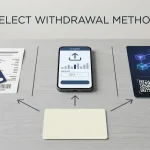
Searches for instant Osko withdrawals point to a clear expectation: winnings should arrive quickly through a bank-linked payment route. But the word “instant” is not a substitute for checking whether the route is actually offered for withdrawals, what conditions apply, and what the cashier says about timing. A payment method’s name alone cannot establish that a payout is available or immediate.
Treat deposit and withdrawal support as separate questions. A payment option may be visible when you add funds but absent from the cash-out screen. It may also be subject to account checks, operator rules or a requirement to use a previously used method. Read the withdrawal terms before depositing, especially if receiving funds by a particular route is essential to you.
Processing times can vary; for example, some reports indicate that Amex casino withdrawals may take up to five days to clear.
No timing claim should be read as a guarantee unless the operator’s terms make that commitment clearly. “Instant” may describe one part of a transfer rather than the whole journey from requesting a withdrawal to having cleared funds. The exact meaning matters.
Bitcoin and Ethereum are described as offering instant deposits and withdrawals with limited or no fees. That makes them a distinct comparison point when speed and payment cost are the criteria. It does not remove the need to check whether a route is available for withdrawals or what conditions apply to a particular account.
Bank transfers may involve longer waiting times and higher fees, according to a specialist review. That comparison is broad, not a prediction for every transfer. If you are weighing a bank-linked route against cryptocurrency, compare the actual withdrawal terms and fees rather than relying on a method label. A faster-sounding option is not automatically the better one if it cannot be used for your intended cash-out.
For any route, keep three details separate in your comparison: eligibility, fees and processing time. Eligibility answers whether you can use the method to withdraw at all. Fees tell you what may be deducted. Processing time describes how long the payout may take, and should be checked against the stated stage of the transaction. A route that performs well on one criterion can still be unsuitable on another.
Before making a payment decision, look for the cashier’s withdrawal options and the terms attached to them. Confirm whether the method is available for payouts, whether a previous deposit by that method is required, and whether a withdrawal fee may apply. If the terms are unclear, do not infer an answer from the deposit screen or from a general payment claim.
Keep a record of the relevant terms and any confirmation shown when a withdrawal is requested. If the amount or route offered at cash-out differs from what you expected, pause and seek clarification rather than assuming the payment will be redirected automatically. A payment route should be judged by what it permits at the point of withdrawal, not by how it was described elsewhere.
These checks cannot remove the legal and consumer-protection risks associated with offshore casino services in Australia. The Act targets operators, while Australian consumer law does not protect players using offshore casinos. That leaves payment conditions especially important to understand before funds are involved.
Fast is one criterion. Access is the first.
A payment route is not a feature of an individual game. If you are trying to establish whether Osko can be used in connection with online pokies, the relevant question is whether a payment service is available through an operator’s cashier—not whether a particular game “takes” it. Those are different claims, and wording that blurs them can make an unsupported payment promise sound game-specific.
The distinction matters because a page mentioning both Osko and slots does not, by itself, show that Osko is supported for deposits or withdrawals. Nor does a reference to a game establish that a payment route is available to Australian users. Treat each claim separately: what transaction is covered, which cashier option is named, and whether the statement applies to the relevant customer and location. If those details are absent, the claim remains unclear.
Identity checks are another separate requirement. Online gambling operators commonly ask customers to complete a Know Your Customer review before allowing financial transactions. That verification concerns the customer and account; it does not confirm that a particular payment method is offered.
For a careful comparison, keep the game description out of the payment column. Record only what the cashier or operator’s payment terms actually specify, and do not infer Osko support from a page about pokies. The game label proves nothing about the route.
Limits are set by each casino and can vary; check the cashier for the limits that apply to your account. Amex transaction limits are usually higher than those for Visa or Mastercard.
Jackpot City Casino, Spin Palace, Ruby Fortune, Ignition Casino, Joe Fortune, and PlayAmo are among the operators listed as accepting Amex deposits for Australian players.
Amex may block payments to a particular website, and Australian banks may also block gambling-related transactions on Amex cards. Acceptance varies between casinos.
Amex deposits are typically free, but a casino may add a 1.5% surcharge. A 3% currency conversion fee may also apply to Amex cards.
Deposits are typically free, though a casino may charge a 1.5% surcharge, and Amex cards incur a 3% currency conversion fee. Withdrawal fees may also apply, depending on the casino.
Some casinos do not allow withdrawals to Amex, and you generally need to have deposited with Amex first. Where supported, withdrawals can take up to five days to clear and may incur a fee.