A practical guide to checking current venue access and separating search claims from information the article can verify.
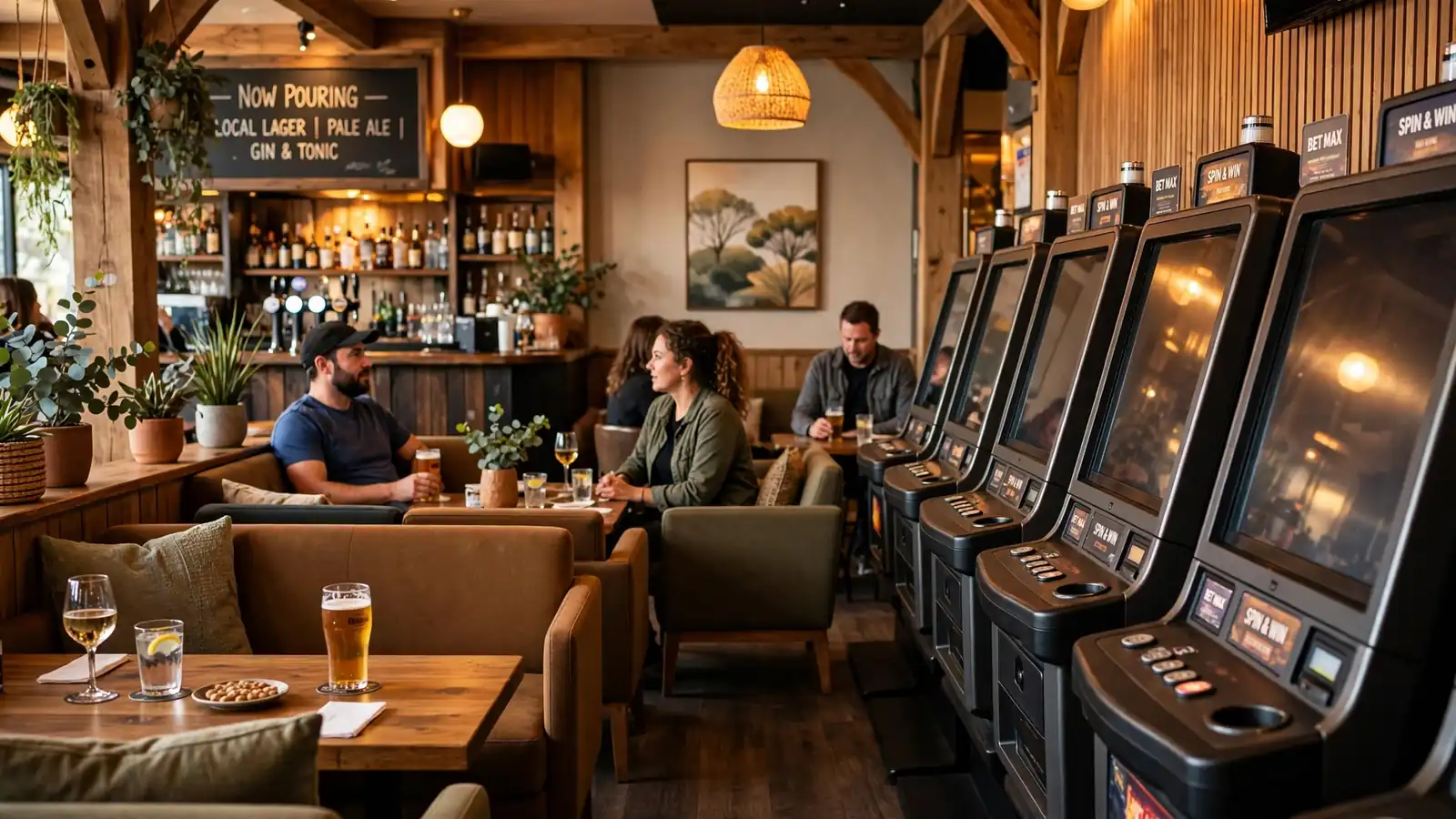
Before setting out for a Canberra venue, confirm that the place you intend to visit is open to visitors and that you can reach the relevant area once there. A map listing or an old directory entry may help identify a venue, but it is not confirmation of its current status. If your trip depends on playing pokies, make that distinction before you travel.
Start with the venue’s own information. Look for a current notice on its official website or its own social media account, then check whether the details refer to the venue itself rather than a separate dining, bar or event space. A building can remain open while a particular area is closed or unavailable. If the notice is unclear, contact the venue directly instead of treating an old listing as a live update.
When you call, keep the questions specific. Ask whether visitors can enter today, whether the area you plan to visit is accessible, and whether any temporary closure or event arrangement could affect your visit. If you need step-free access or another accommodation, ask about that directly as well. A general confirmation that a venue is operating may not answer the practical question you actually need answered.
Confirm the venue name and street address against an official source before leaving. Similar names, outdated map pins and third-party listings can point to the wrong entrance or a different business. If you are travelling by taxi, rideshare or public transport, use the address confirmed by the venue rather than relying on a shortened listing.
If your arrival depends on a particular entrance, ask which entrance visitors should use. This is especially useful when a venue has more than one public-facing area or when access arrangements may differ from the usual route. Do not assume that a door shown in a map photograph is open to visitors on the day you go.
Check the date of any online update. A post describing a past event or a notice that has not been refreshed cannot establish what is happening now. The same applies to a business directory that displays a status without saying when it was checked. Treat those details as leads, not confirmation.
If you cannot reach the venue, decide whether the trip is still worthwhile without a definite answer. That is a practical choice, not a reason to infer that the venue is open. If the visit would involve a long journey or a tight connection, it may be sensible to wait until you can confirm access through a current, venue-controlled channel.
Before leaving, note the confirmed address, the contact details you used and any directions the venue gave you. If the person you speak with confirms only that the premises are open, do not stretch that answer into confirmation that every area or facility is available. Ask a follow-up question if that distinction matters to your plans.
It can also help to check again shortly before departure if your plans are time-sensitive. An earlier confirmation is useful, but it cannot guarantee that circumstances will remain unchanged. If you are already on the way and receive new information, contact the venue before changing your route or continuing to the destination.
Keep the visit plan flexible. A venue may be accessible while a particular space is temporarily unavailable; a public listing may also fail to show a change promptly. You do not need to resolve every uncertainty in advance, but you should know which details are confirmed and which are not. That makes it easier to decide whether to go, postpone or choose a different activity.
For a search such as “Canberra pokies open now,” the dependable answer is not a city-wide assumption. It is a current confirmation from the particular venue you intend to visit. Verify the place, the entrance and the access you need, then make the trip on that basis. If you cannot confirm those points, regard the status as uncertain rather than filling the gap with a guess.
This check is about reaching a venue, not judging its pokies or predicting a result. Keep those questions separate: access can be confirmed by the venue, while no visit-time check can establish what an individual spin will return. A simple distinction, but a useful one.
If you’re looking for pokies to play in Canberra in 2026, this list gives you a concise starting point for checking operators and the details that may matter to you. Consider each option in light of the licensing, deposit and payout information available.
GoldenCrown
GoldenCrown lists a Curacao Gaming Control Board licence, OGL/2023/176/0095, held by Hollycorn N.V. That licence detail gives you a specific point to check when assessing the operator.
Lucky Dreams
Lucky Dreams lists a Curacao licence and accepts a minimum deposit of A$20 via POLi. You can use those details to assess whether its stated licensing and deposit option suit you.
House of Pokies
House of Pokies lists an international iGaming licence, though the source does not name the jurisdiction. PayID withdrawals are listed at 1–24 hours, and the minimum deposit is A$30, with PayID deposits from A$10.
Vegaz Casino
Vegaz Casino lists a Curacao licence, OGL/2024/1335/0780, and a minimum deposit of EUR 20. Check whether that deposit currency and amount work for you.
Rollero Casino
Rollero Casino lists a Curacao Gaming Control Board licence, OGL/2023/176/0095, held by Hollycorn N.V. This gives you a specific licensing detail to consider.
MrPacho
MrPacho lists a minimum deposit of A$30. Its stated payout times are 30–120 minutes for crypto and 24–72 hours for fiat.
Ricky Casino
Ricky Casino lists a minimum deposit of A$20, rising to A$30 to qualify for the bonus. Its stated payout times are under an hour for crypto and 1–3 business days for PayID.
DragonSlots Casino
DragonSlots Casino lists a Curacao Gaming Authority licence held by Jumpman Gaming Ltd. You can use this licensing information as one point of reference.
Wild Tokyo
Wild Tokyo lists a Curacao licence and a minimum deposit of A$10. Its stated payout times are 30–60 minutes for crypto and 1–5 days for fiat.
Kingmaker
Kingmaker lists a minimum deposit of A$30. Its stated payout times are about 90 minutes for crypto and 1–5 days for fiat.
“Best-paying” sounds like a clear ranking, but it is only useful when you know what is being compared. A return-to-player percentage (RTP) describes a pokie’s return setting; it does not tell you what will happen in your session. For someone comparing pokies in Canberra, the key distinction is between a published setting and the result of an individual play.
A specialist review reports that some game providers let casinos choose between different RTP settings for the same pokie. As a result, a game’s return percentage can vary between casinos, even when the game itself looks identical. A game title alone is not enough to establish which setting applies at a particular venue. The setting, rather than the name on the screen, is the relevant comparison.
RTP can help you compare stated settings when reliable, specific information is available. It cannot establish that one venue’s machines are better overall, or that a particular pokie will pay you more during a visit. Nor does a search for the best pokies in Canberra identify a verified ranking by itself. Without comparable setting information, “best-paying” is a label, not a measurement.
Every spin is determined by a random number generator, and one spin does not depend on the result of the previous one. A run of losses does not make a win due, and a recent win does not make another win more likely on the next spin. The machine has no memory in the sense that matters to a player deciding what to expect from the next result.
This is why a return percentage should not be read as a promise that a certain portion of your own spend will come back. It is a setting used to describe the game’s return, not a schedule of payouts for a particular person or visit. Short sessions can produce outcomes that differ sharply from any broad return figure. A tidy percentage cannot tidy up randomness.
The practical comparison is therefore narrower than the phrase “best-paying pokies in Canberra” suggests. If two sources give different RTP figures for the same pokie, first check whether they refer to the same casino and the same setting. If they do not identify that detail, the figures may not be comparable. If no setting is disclosed, you cannot responsibly infer it from the game’s title, appearance or popularity.
When you encounter a payout claim about Canberra casino pokies, separate the claim into two questions:
These checks apply whether you are considering a venue in the city, the CBD, or a pokie you have seen discussed online. Location and game title do not answer the question of which RTP setting has been selected. Likewise, calling a pokie “popular” does not make it higher-returning.
If two pokies have clearly documented settings, those figures may offer one basis for comparison. They still do not settle which is “best” for you: your needs may involve different criteria, and no RTP setting removes the uncertainty of each spin. If the setting cannot be verified, the honest comparison is that you do not have enough information to rank the games by return.
Treat any claim that turns a general return figure into a near-term winning expectation with particular care. RTP can describe a setting; it cannot tell you whether a specific session will be profitable. That distinction is the useful answer behind the search for a “best-paying” pokie.
A search for online pokies in Canberra can blur two separate issues: what Australian law prohibits operators from offering, and whether an individual player is punished for playing. Those are not the same question. The distinction matters if you are considering real-money play or trying to judge whether a promised withdrawal is enforceable.
Under the Interactive Gambling Act 2001, companies cannot offer real-money online pokies to people in Australia without a domestic licence. No such licences have been issued, so there is no Australian-licensed online casino. The rule applies to online casino-style services, not just to a particular game or to the place where you happen to be sitting. Looking for a Canberra-branded service, a local bonus or a higher betting limit does not create a domestic licence.
The Act targets operators rather than individual players. The stated legal position is that Australians can play on offshore sites that accept them; that does not make the operator’s service licensed in Australia, or give the player the protections associated with a local casino. Nor does it establish that a particular site is safe, fair or likely to pay. A “no deposit” offer or a claim about real-money play changes none of those legal distinctions. Attractive wording is not a licence.
The practical risk becomes sharpest at withdrawal. If an offshore casino refuses to release your winnings, Australian players have no legal recourse in Australia against that refusal. A balance shown on a screen is not the same as money you can recover through an Australian-licensed casino framework. Before making any payment decision, consider that the complaint route may not provide an effective remedy here.
If you are assessing the terms of an offshore service, read its withdrawal rules and identity checks before depositing. Be prepared to provide identity and address documents before a first withdrawal, and check what evidence the operator requires. This is not a safeguard that makes an offshore operator locally accountable; it is a practical condition that can affect whether a cash-out is processed. If the operator disputes your documents or applies its terms against you, the Australian legal-recourse problem remains.
BetStop has a specific boundary: it applies to Australian-licensed operators and does not bind offshore sites. It should not be treated as a way to block access to, or impose an exclusion on, every offshore gambling service. If you rely on self-exclusion, that distinction is material. A tool’s name may sound broad; its reach is not.
Withdrawal Risk
Offshore casinos are not licensed in Australia, meaning you have no local legal recourse if a site refuses to release your winnings.
For someone comparing claims about the best-paying pokies, local availability and legal protection are separate criteria. A payout claim cannot establish that a site is licensed here, and a Canberra reference cannot establish that a service is a local venue or operator. The legal position is the same whether the offer is described as a high-limit game, a no-deposit bonus or online play near the city: the label does not change the status of the operator or create a remedy if winnings are withheld.
The useful comparison is therefore not an imagined ranking of offshore offers. It is between the apparent appeal of an online offer and the limited protection available if a dispute arises. In Australia, there is no licensed online casino to provide that local recourse. That is the decisive drawback.
A map can show that a place is near Canberra Airport, the CBD or another part of Canberra. That is a geographic result, not confirmation that a particular venue has pokies, admits visitors or is currently accessible. Keep those questions separate when deciding where to go.
For an airport-area search, first pin down what “near” means for your trip. You might mean somewhere within walking distance, a stop along your route, or a place reachable after you arrive in the city. Those are different criteria. A result that looks close on a map may not suit your transport plan, and a venue name or pin alone does not establish that pokie facilities are available there.
The same distinction applies to searches around the CBD and North Canberra. A location label can help narrow an area, but it cannot verify a venue’s facilities. Nor does a result mentioning Canberra Airport establish that the airport itself contains pokies. Treat each claim as something to confirm, rather than as a fact supplied by the map.
A useful comparison has three columns:
| What you need to know | What a geographic result can show | What still needs confirmation |
|---|---|---|
| Where a place is | A mapped position or area label | Whether the address and route suit your plans |
| Whether pokies are available | Not established by proximity alone | Whether the venue actually offers them |
| Whether you can visit | Not established by a map pin | Whether access is available to you |
This keeps the decision tied to the criterion that matters. If your priority is distance, compare locations using a defined starting point and travel method. If your priority is finding pokies, confirm the facility separately. A nearby result is not the same as a verified option.
Be cautious with broad phrases such as “near me” or “near the airport”: they can mean different things depending on where you are and how you plan to travel. “Near” has no useful meaning until you set a reference point. A location in the broader Canberra area may be relevant to one journey and impractical for another.
Do not infer a venue’s presence, facilities or access from a suburb name, a category label or a search result snippet. Look for a direct, current statement from the venue, and make sure it refers to the specific location you intend to visit. If the information does not identify that location clearly, it does not resolve the question.
A map result showing a venue is near the airport or CBD is a geographic fact, not confirmation that the venue has pokies or is currently open.
The sensible outcome may be to pause rather than travel on an assumption. A map is good at showing geography; it cannot, by itself, establish what facilities a venue provides. Use it to orient your plans, then rely on location-specific confirmation for the detail that determines whether the trip is worthwhile. Close enough is not confirmed.
When comparing Canberra pokies venues, “best” depends on the criterion. A venue-level safeguard is not a measure of machine returns, service or overall quality, but it can tell you something about how gambling-related concerns are meant to be handled.
Region Riverina reported a requirement for venues with more than 20 gaming machines to have a dedicated responsible gambling officer (RGO) on duty while those machines are operating, from 1 July. The report also describes a gambling incident register that venues will be required to maintain. These are oversight measures, not a rating system for clubs or other venues.
The RGO role connects the requirement to the period when machines are in use. The officer is dedicated to responsible-gambling matters, rather than simply being a name on a policy document. For a visitor, that gives a useful point of reference when considering what support is intended to be available at a larger gaming venue. It does not establish how a particular venue applies the role in practice, or whether any individual visit will involve contact with the officer.
The incident register serves a different purpose. It is intended to record occurrences, including situations where a patron’s behaviour indicates they may be at risk of, or affected by, gambling harm. Recording such incidents creates a venue-level account of concerns rather than treating each occurrence as an isolated interaction. The requirement concerns recording; it should not be mistaken for evidence that a specific incident has occurred at a particular Canberra venue.
Taken together, the RGO and register address two parts of oversight: having a designated person on duty while machines operate, and documenting relevant incidents. Neither tells you which venue is “best” by every criterion. If your priority is visible responsible-gambling support, these requirements are more relevant than a broad reputation claim, but they do not confirm the quality of a venue’s response or its specific arrangements.
They also do not provide a directory of Canberra pokies venues, establish which locations meet the machine threshold, or assess individual clubs in the CBD. A general description of a rule cannot substitute for venue-specific information. Keep the distinction clear: the reported requirements describe safeguards expected at qualifying venues; they are not proof that a particular venue meets the threshold or evidence of how its staff handle a concern.
For a practical comparison, treat oversight as one criterion alongside whatever else matters to you, not as a verdict. The RGO requirement concerns the time machines are operating, while the register concerns the recording of incidents associated with gambling harm. Those functions are distinct, and neither should be read as a promise of a particular outcome for a patron.
That is the relevant measure here: not which Canberra venue wins an undefined “best” label, but what venue-level reporting and support requirements are described. A safeguard is a starting point, not a score.
“Open all day” is a claim about a particular venue at a particular time, not a dependable description of pokies across Canberra. A general label can’t tell you whether a venue is open now, whether its gaming area is operating, or whether its hours have changed. Those details need to be checked against current information for the specific place.
Opening hours are not interchangeable. A venue’s overall trading hours may not establish the hours for every part of the premises, and a result describing a venue as open does not necessarily confirm that pokies are available at that moment. Treating those details as identical can turn a quick check into a wasted trip.
The same applies to searches for venues operating around the clock. The phrase “24-hour” may describe what someone is looking for; it is not proof that any particular Canberra venue provides continuous access to pokies. Nor does a broad city-level result establish a single schedule that applies across the city. The useful unit is the named venue and its current, stated hours.
For a check that answers “open now”, look for information tied to the venue itself and make sure it is current. If the status is unclear, contact the venue directly before relying on it. A listing that lacks a recent update, gives only general trading hours, or does not distinguish the gaming area from the rest of the venue should not be treated as confirmation. Search listings can be convenient; they are not a door sign.
A simple comparison helps:
| What you need to know | What a broad hours label can establish |
|---|---|
| Whether a named venue is open now | Not enough on its own |
| Whether pokies are operating at that time | Not necessarily |
| Whether a venue runs continuously | Only if current, venue-specific information confirms it |
| The hours for every Canberra venue | No single general label establishes them |
If you are comparing opening times, use the same test for each venue: confirm the date, the time, and whether the information refers to the gaming area. That makes the comparison meaningful. Without those details, one result may look more definite simply because it uses stronger wording—not because it answers your question.
There is no reliable shortcut from “24-hour” in a description to confirmed access at a particular hour. Check the specific venue’s current information, and treat anything less as unconfirmed. A small distinction, with practical consequences.
A Crown-branded pokies room in Canberra should not be treated as an established destination. A brand name in a venue description, a map result or a social post is not, by itself, confirmation that the venue exists at that location or offers pokies.
That distinction matters when you are trying to identify a particular room. “Crown” may be part of what you have heard or seen, but it does not establish where the venue is, what facilities it has, or whether those facilities are operating. No Canberra Crown venue can be presented as a confirmed option on that basis.
The same standard applies to claims about the “best” pokies room. Best by what measure? A room might be judged by location, accessibility, atmosphere or the games available, but those are different criteria, and none can be assessed for a Crown-branded Canberra venue without confirming the venue and its facilities first. A name alone cannot support a comparison. No substitute venue list follows from that gap.
Maximum cash payout claims need the same care. A figure should be tied to a specific machine and the terms that apply to it; it should not be assumed to describe every pokie in a room or a whole venue. Without a confirmed Canberra location and machine details, there is no reliable maximum to quote for Crown pokies in Canberra. Treat an unqualified payout figure as a claim to verify, not a promise.
If you encounter a listing or promotion using the Crown name, check that it identifies a real Canberra location and clearly states which venue and machines it refers to. Be alert to pages that blend brand names, locations and payout language without making those distinctions. A polished listing is not proof.
For this destination, the useful conclusion is narrow: a Crown venue and Crown pokies in Canberra are not established, so they cannot be assessed or ranked as a local option. That is not a claim about every Crown venue elsewhere. It is simply the limit of what can responsibly be said about Canberra.
For gambling in Australia, the age threshold is 18. That applies to pokies as well as other forms of gambling. If you are under 18, you are not legally old enough to gamble; being at a club or in the CBD does not change that rule.
For an adult comparing options, age is an access criterion, not a measure of quality. It cannot establish whether a particular club has pokies, where its machines are, or what conditions apply at that venue. Nor does meeting the age threshold prove that a particular venue is suitable for you. Keep those questions separate: the legal minimum is clear, while venue-specific details need to be checked with the venue.
If you are arranging a visit with someone younger, do not assume that the gambling area has the same access arrangements as the rest of a club. Ask the venue about its rules before relying on an assumption. This is particularly important when the visit involves a mixed-age group: the adult’s eligibility to gamble does not establish what a younger companion may access.
Self-exclusion is a responsible-gambling tool, but do not assume that a particular club offers a specific process or that one arrangement covers every place you might gamble. Ask the relevant venue how its process works before relying on it. BetStop has a narrower scope: it applies to Australian-licensed operators and does not bind offshore sites. It should not be treated as a universal block on gambling.
A useful comparison is therefore simple: the age threshold answers whether you are old enough to gamble; it does not answer whether a CBD club has pokies or whether its arrangements match your needs. If self-exclusion is relevant, the key criterion is whether the specific process covers the gambling you want to avoid. Confirm that directly rather than treating a general tool as a guarantee.
Attention The legal gambling age in Australia is 18; being in a CBD club does not override this requirement.
“Best pokies” only has meaning when you name the criterion. For this access question, the criterion is legal age: 18. A claim about a club’s machines, location, or access arrangements requires separate, current confirmation. No shortcut.
Parkes is a Canberra suburb, but a location name alone does not establish which local venues have pokies. If you are looking for a place to play there, distinguish the suburb you have in mind from details that can be confirmed about a specific venue. A general description of Canberra does not answer that more precise question.
The same distinction matters when weighing claims about the “best” pokies in Canberra. “Best” needs a criterion: a venue’s location, the games it offers, or a particular game’s return setting are different measures. A suburb label cannot establish any of them. Nor does it show that a particular machine is available at a particular address.
For an address-specific decision, look for information tied to the venue itself, such as its own current description of facilities. Treat broad listings and snippets as starting points, not proof that a machine is on site. If the detail affects your plans, confirm it directly with the venue before relying on it. That is a more useful distinction than turning a suburb name into a venue recommendation.
There is also a limit to what a location can tell you about a pokie’s potential returns. Some providers allow different return settings for the same game at different casinos, while every spin remains an independent random event generated by a Random Number Generator. Neither a Parkes address nor a “best pokies” label tells you which setting applies to a machine. A return figure, where one is stated, should not be treated as a prediction of your result on any individual spin.
So keep the location question narrow: Parkes identifies the area you want to visit; it does not, by itself, verify a venue, its machines, or a ranking. Compare only details you can tie to a named place and a clear criterion. Without that connection, a confident-sounding answer is just a suburb name doing too much work.
PayID is a way to address a bank transfer, not a description of how a pokie accepts money. It uses an alias—such as an email address, mobile number or ABN—in place of sharing account details. The service operates through Australia’s New Payments Platform (NPP), which major banks support and which encrypts transfers from end to end.
That explains the payment infrastructure. It does not establish that a Canberra venue has cashless pokies, that a machine accepts PayID, or that a particular payment setup is available in Newcastle. A payment system used for transfers should not be mistaken for evidence about a venue’s machines or facilities.
There is a separate legal distinction when PayID is discussed in connection with online gambling. The fact that a payment method can move funds does not make an online casino lawful in Australia, confirm that a site is fair, or reveal its game settings. The Interactive Gambling Act 2001 prohibits operators from providing real-money online casino games to people in Australia, and no Australian online casino licence has been issued. This is not an invitation to test offshore services.
If you use BetStop, remember that its protections apply to Australian-licensed operators; offshore sites are not bound by the register. That limitation matters when assessing any claims about blocking access or controlling gambling.
For a comparison between Canberra and Newcastle, keep the criteria separate: PayID describes a transfer mechanism, while cashless machine access is a venue-specific feature. Neither follows from the other. A useful claim about cashless pokies needs to identify the particular venue and explain its payment arrangements; a mention of PayID alone does neither.
Infrastructure is not venue evidence.
You must be at least 18 years old to gamble online in Australia.
You can legally play on offshore sites that accept Australian players, but companies cannot legally offer real-money online pokies to Australians without a domestic licence, and no such licences have been issued.
It is the amount you must bet before you can withdraw bonus-related winnings, usually calculated as a multiplier. For example, a $500 bonus with a 40x requirement means you must wager $20,000.
Yes. PayID is treated like any other qualifying deposit method at the recommended sites.