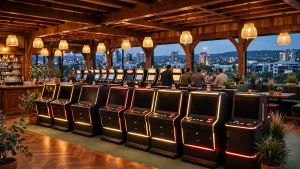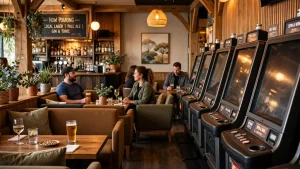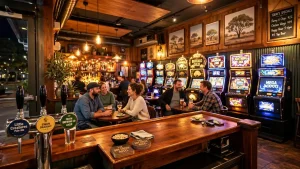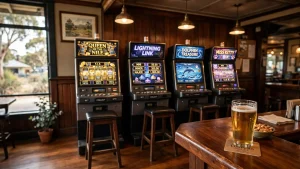
A practical guide to checking gaming-floor access, comparing Tasmanian venues, and understanding what online-pokies and payment searches can—and cannot—confirm.
Before setting out, check the venue’s current status through a channel it controls. A listing in a map app or an old directory entry can help you identify a place, but it may not reflect a temporary closure, a changed schedule or a restriction on access to the pokies area. Treat it as a lead, not confirmation.
Start with the venue’s official website. Look for a current notice about opening, closures or changes to gaming-floor access, rather than relying only on a general page describing the property. A venue can have several facilities with different operating arrangements. The restaurant, bar or accommodation desk being open does not by itself establish that the pokies area is available.
If the website does not answer the specific question, contact the venue directly using a phone number or contact form published on its own site. Ask plainly whether the pokies area is open on the day you plan to visit and whether anything affects access. If you are travelling a considerable distance, confirm again close to departure; an answer received earlier may no longer describe the situation.
“Open” can mean different things. A venue may be open to visitors while part of the property is closed, or it may have an event, maintenance work or a private function that changes access. A current check should therefore cover the part you intend to use, not merely whether the building is operating.
When contacting staff, keep the questions practical:
You do not need to infer a schedule from a search result or a sign photographed on an earlier visit. The useful answer is one tied to the date of your planned trip and the specific area you want to enter.
Recent posts on a venue’s own social channels can also reveal closures or changes. Check the date and make sure the account belongs to the venue. A post can be useful evidence of a change, but silence on social media is not confirmation that everything is operating as usual. If a post and the venue website disagree, contact the venue rather than choosing whichever answer is more convenient.
Map services, tourism directories and booking platforms can be useful for finding contact details, but their opening information may be supplied or updated on a different schedule from the venue’s own notices. Check when the information was last updated if that is shown. If it is unclear, verify directly.
The same applies to reviews and discussion boards. A visitor may describe what they saw on a particular occasion, not the venue’s status today. Comments can help flag something worth asking about; they cannot reliably settle a live opening question. Keep the distinction simple: a recent, direct confirmation is stronger than an undated listing or another visitor’s recollection.
If you cannot reach anyone, avoid treating that silence as a yes. Decide whether the journey is still worthwhile without certainty, or postpone until you can confirm. That is less exciting than setting off on guesswork. It is also more useful.
A broad search for pokies in Tasmania may return venues, old listings, general opening information and results from places outside the state. Read the location and date carefully. A result mentioning “Crown Tasmania”, for instance, is not proof that a Tasmanian pokies venue by that name is operating or open. Confirm the venue’s identity and location through its own current information before making plans.
A displayed opening time may refer to the venue as a whole rather than its gaming area. It may also describe a regular schedule rather than an exception-free promise. If the detail matters to your trip, ask the venue to confirm it directly. Do not assume that a page labelled “open now” has checked the exact facility you intend to visit.
A venue’s responsible-gambling arrangements are a separate question from whether you can visit at a particular time. A report by regionriverina.com.au described a requirement for venues with more than 20 machines to have a dedicated responsible gambling officer on duty while those machines are operating, with a one-month grace period for venues to introduce officers and remove signage. The report also described an incident register for recording occurrences, including behaviour that may indicate gambling harm.
Those measures concern venue responsibilities; they do not provide a live opening notice. Nor does seeing staff or signage confirm that a particular area is available to visitors at the moment you arrive. For the immediate decision, rely on a current venue-specific confirmation.
Once you know the venue is open, you can decide whether it suits your visit. That is a different assessment from checking today’s status: an open door settles only the first question.
If you’re looking for pokies options to consider in Tasmania in 2026, this list gives you a concise starting point. Check each operator’s terms and availability before you decide where to play.
GoldenCrown
GoldenCrown lists a Curaçao Gaming Control Board licence, OGL/2023/176/0095, held by Hollycorn N.V.
Lucky Dreams
Lucky Dreams lists a Curaçao licence and a minimum deposit of A$20 via POLi.
House of Pokies
House of Pokies lists an international iGaming licence, though the source does not name the jurisdiction. PayID withdrawals are listed at 1–24 hours, and the minimum deposit is A$30, with PayID deposits from A$10.
Vegaz Casino
Vegaz Casino lists Curaçao licence OGL/2024/1335/0780 and a minimum deposit of EUR 20.
Rollero Casino
Rollero Casino lists a Curaçao Gaming Control Board licence, OGL/2023/176/0095, held by Hollycorn N.V.
MrPacho
MrPacho lists crypto payouts in 30–120 minutes and fiat payouts in 24–72 hours. Its minimum deposit is A$30.
Ricky Casino
Ricky Casino lists crypto payouts in under an hour and PayID payouts in 1–3 business days. The minimum deposit is A$20, or A$30 to qualify for the bonus.
DragonSlots Casino
DragonSlots Casino lists a Curaçao Gaming Authority licence held by Jumpman Gaming Ltd.
Wild Tokyo
Wild Tokyo lists a Curaçao licence, a minimum deposit of A$10, and payout times of 30–60 minutes for crypto and 1–5 days for fiat.
Kingmaker
Kingmaker lists crypto payouts at about 90 minutes and fiat payouts in 1–5 days. Its minimum deposit is A$30.
“Best” only means something once you decide what you are comparing. For land-based pokies in Tasmania, a useful comparison is about the game in front of you: its published information, the way its features work and whether its format suits your preferences. A familiar title or a reputation for paying well cannot settle the question on its own.
Start with the information displayed on the machine. Check whether it provides a return-to-player figure, often shortened to RTP, and whether that figure is clearly tied to the version you are playing. A specialist review reports that some game providers let casinos choose from more than one RTP setting for a pokie. As a result, matching game names do not necessarily mean matching return percentages at different casinos. The name is not the full specification.
If an RTP figure is available, treat it as one comparison point, not a forecast of what will happen during your session. It describes a theoretical return across play, rather than promising that you will receive a particular amount back. A higher published figure may look stronger on paper, but it cannot tell you how a short session will go. If the machine does not make its relevant settings clear, there is no sound basis for assuming that another machine with the same title is configured identically.
Next, compare the rules and features you can verify. Read the paytable and game instructions before you play: they show how symbols, bonus features and eligible combinations are described. Check whether the controls and feature rules make sense to you, and whether the minimum and maximum options suit the amount you intend to stake. Do not infer a game’s rules from its artwork, theme or title. Similar presentation can hide meaningful differences.
A practical comparison table can keep these points separate:
| Criterion | What to check |
|---|---|
| Published return information | Whether an RTP figure is shown and clearly relates to that machine’s version |
| Rules | The paytable, symbol combinations and conditions for features |
| Controls | The available stake options and whether they fit your planned spend |
| Clarity | Whether the instructions explain what triggers features and how they work |
| Personal fit | Whether the pace, presentation and level of complexity suit you |
The last row is deliberately personal. One player may prefer a simple layout and easy-to-follow rules; another may enjoy features that require more attention. Those preferences can help you choose a game you understand, but they do not prove that it pays better. Keep preference and expected return in separate columns. Otherwise, an attractive theme can quietly become a financial argument. It is not one.
Most importantly, no individual spin can be read as a sign of what comes next. A Random Number Generator selects the result, and each spin is separate from the one before it. A run of wins does not make a loss due, and a run of losses does not make a win more likely on the next press. The machine has no memory to bargain with.
That independence also limits what a comparison can promise. Even when two games display comparable information, you cannot use recent results to forecast which will pay during your visit. Nor can a player’s story establish a dependable pattern. Stories describe particular outcomes; they do not show what the next spin will produce.
For the phrase “best paying pokies in Tasmania”, the sensible test is therefore not which title has the strongest rumour attached to it. It is whether you can verify the game’s relevant information, understand its rules and decide that its controls and format suit you. If return information is absent or unclear, mark that criterion as unknown rather than filling the blank with confidence.
This gives you a fair way to compare games without pretending the comparison can remove chance. A published setting can distinguish one version from another; rules can tell you how a feature works; personal preferences can identify a game you find easier to follow. None of those turns a random result into a predictable one.
The winner depends on your criterion. If your priority is clear rules, choose the option whose instructions you can readily understand. If your priority is a stated RTP, compare only figures that clearly apply to the version in front of you. If neither is available, the honest result is that you cannot establish which game is better on that measure. No ranking required.
A venue described as “near” an airport or CBD may still be inconvenient for your trip. The useful measure is not the label but the journey from your actual starting point: airport terminal, accommodation, workplace or another part of town. Before choosing a destination, enter the full venue address into a mapping service and compare the route with the places you will already be visiting.
For an airport arrival, check the route from the terminal rather than from the airport’s general map pin. Look at the road journey, likely transfer options and where you would need to be dropped off or collected. If you are hiring a car, confirm that the route works for your plans after the visit too. A short-looking line on a map is not the same as a simple trip.
Planning Your Journey
Identify the starting point
Determine your actual starting location, such as a specific airport terminal or accommodation address.
Map the full route
Enter the full venue address into a mapping service to compare the route with other planned visits.
Verify transport details
Check the road journey, transfer options, and specific drop-off points rather than relying on general map pins.
Record the data
Note the starting point, destination, route type, and estimated travel time for a consistent comparison.
The same applies when you are staying in a CBD. Search from your accommodation or the specific city address, then compare the proposed route with your transport arrangements. Walking distance, public transport and driving time are different measures; decide which one matters before comparing destinations. If you are travelling with others, check whether the return journey works for everyone, not just the person choosing the stop.
Use one consistent method for each possible venue. Record the starting point, destination address, route type and estimated travel time. This makes comparisons more useful than relying on descriptions such as “central” or “close to the airport”, which can mean different things depending on where you begin. If an address is missing or unclear, do not substitute a broad suburb name and treat the result as precise.
A search for pokies near a Tasmanian airport should also be treated as a location question, not proof that a venue is inside the airport or directly beside it. Check the exact address and the route from the terminal. Likewise, a search for venues near a Tasmanian CBD needs a specific CBD starting point: the centre of a city is not a single doorway.
North Tasmania is another broad area rather than a travel destination. Narrow it to the town or address you will be travelling from, then compare routes on the same basis. If your plans include both Tasmania and Victoria, keep the two parts of the journey separate. A map result for one state does not establish how practical it is to reach a destination in the other; account for the inter-state leg as part of the overall itinerary.
Before setting out, save the destination address and route details where you can access them during the trip. Build in a practical fallback if transport plans change, rather than assuming that the nearest result will remain the easiest option. Location is only one part of a decision, but it is the part you can assess against your own itinerary.
If you expect to gamble, consider setting deposit, loss and session-time limits before you leave. Self-exclusion is another standard responsible-gambling tool. These controls do not make a journey worthwhile by themselves; they help keep the visit within boundaries you have chosen in advance.
“Near” is not a route.
There is no useful single winner among Tasmanian pokies venues unless you first decide what “best” means for your visit. A venue may suit you because its staff explain available support clearly; another may be a better fit because its layout, facilities or general atmosphere match what you want. Compare the same criteria at each place, rather than treating reputation as a measure of quality.
A practical comparison can start with what you can confirm directly:
| Criterion | What to check |
|---|---|
| Responsible-gambling support | Whether staff can explain how to raise a concern and what assistance is available |
| Venue layout | Whether the space feels comfortable and easy for you to navigate |
| Facilities | Which amenities matter for your visit, and whether the venue confirms they are available |
| Practical fit | Whether the venue suits the purpose and style of visit you have in mind |
These are prompts for your own assessment, not claims that any particular Tasmanian venue offers a specific facility or standard. If you contact a venue, ask direct questions and compare the answers. If you visit, judge the experience against the same checklist. A vague reputation is a poor substitute for a specific criterion.
Responsible-gambling arrangements are also part of a venue-level comparison. A report published by regionriverina.com.au describes a requirement taking effect from 1 July: venues operating more than 20 gaming machines are to have a dedicated responsible gambling officer (RGO) on duty while those machines are running. The report also describes a requirement for venues to maintain a gambling incident register. It is intended to document occurrences such as behaviour indicating that a patron may be at risk of, or experiencing, gambling harm.
For you, the useful comparison is not simply whether a venue has a policy statement. Consider whether staff can explain how concerns are handled and how to approach the RGO. You can also ask how a patron can seek help if gambling is becoming harmful. Clear answers are more informative than a general assurance that support exists.
Keep the comparison focused on venue operations. The number of machines alone does not tell you whether a venue will suit you, and a polished setting does not establish how staff respond to a concern. Compare the practical details that matter to you, then give more weight to the ones you can verify directly.
A simple scorecard can make the decision less impressionistic: write down each criterion, record what the venue confirms, and note anything you could not establish. Do not fill gaps with assumptions. If one venue answers your questions clearly and another does not, that is a difference in the information available to you—not proof of a broader ranking.
The best choice depends on your priorities. Set those first.
Three different ideas can sit behind searches for pokies connected with Tasmania: playing online, finding machines aboard the Spirit of Tasmania, or locating a casino associated with the Crown name. They are not interchangeable. A vessel, a casino brand and an online gambling service are separate things, and a shared word in a search does not establish that they offer the same form of play.
For the Spirit of Tasmania, distinguish a question about entertainment during a crossing from a claim that pokies are available on board. The wording alone does not confirm that the ferry has gaming machines or an online gambling service. Treating it as a confirmed onboard option would turn an assumption into travel advice. If your interest is in playing at a land-based venue, that is a different question again; a ferry reference does not identify or verify a venue at either end of a trip.
The same caution applies to searches pairing Tasmania with Crown. The name by itself does not establish that a Crown casino operates in Tasmania, or that a particular venue there has pokies. Do not treat a result mentioning Crown as proof of a local casino, a machine listing or an invitation to play. A venue claim needs to identify the actual place and what it offers; the name alone cannot do that work.
No Local Licence
There is no Australian-licensed online casino, and offshore operators provide no legal recourse in Australia if they refuse to pay winnings.
Online real-money play has a different legal position. Under the Interactive Gambling Act 2001, companies cannot lawfully provide real-money online pokies to people in Australia without a domestic licence. No domestic licences for online casinos have been issued, so there is no Australian-licensed online casino. A welcome offer, a no-deposit promotion or a site that accepts an Australian registration does not change that distinction. An offer is not a licence.
The law is directed at operators, not individual players. Australians are not made legally liable simply for playing on an offshore site that accepts them. That does not make the arrangement equivalent to using a domestic casino: if an offshore operator refuses to pay winnings, an Australian player has no legal recourse in Australia to compel payment. The difference matters before money is deposited, not only after a dispute.
Keep the categories separate: ferry entertainment is not proof of onboard pokies; a casino name is not proof of a Tasmanian venue; and access to an offshore website is not evidence of an Australian licence. For any real-money online offer, the decisive issue is not how it describes itself, but whether the law permits the operator to provide that service to people in Australia. No local online-casino licence exists.
A claim that a venue has “24-hour pokies” can mean different things: the venue may stay open around the clock, its gaming area may have separate hours, or the wording may simply appear in an outdated listing. The phrase alone does not establish that pokies are available at any Tasmanian venue throughout the day and night.
Read the hours as a schedule, not a guarantee of machine access. A venue’s general opening times may not match the times its gaming area operates. If the published information does not distinguish between them, you cannot safely infer that pokies are available whenever the doors are open. A search result that uses “open now” is also only as useful as the timing and accuracy of the information behind it.
For a planned visit, look for an hours page maintained by the venue and check whether it describes the gaming area specifically. Pay attention to the day named, any stated exceptions, and whether the information is clearly current. If the wording is ambiguous or the page does not address pokies, contact the venue and ask directly about the hours that apply to the machines. That is more meaningful than treating “24-hour” as a confirmed feature.
Opening hours can also differ by day or change around public holidays and special events. A regular schedule may not cover those exceptions. Check the schedule for the date you intend to go, rather than assuming that a general listing applies unchanged. If you cannot confirm that the gaming area will be operating at the time you plan to arrive, avoid building your trip around that assumption.
This is a narrower question than whether a venue is open: a venue may be operating while its pokies are not available, or the hours shown may refer only to the wider premises. It is also separate from choosing which venue suits you. First establish what the stated hours actually cover; then decide whether they fit your plans.
A practical check should answer three things: whether the information is for the relevant venue, whether it covers the gaming area, and whether it applies to your intended visit. If one answer is unclear, treat the schedule as unconfirmed. Search wording is not an operating timetable.
If you do visit, set limits before you play. Deposit and loss limits, session time limits, and self-exclusion are responsible-gambling tools that can help you manage your activity. Availability of those tools does not make a long session a safer one. Check the hours, make a plan, and leave room to follow it.
A game’s familiar name is not evidence that it pays better in Tasmania. Reputation, popularity and a striking jackpot story tell you little about the return setting attached to a particular machine. To compare a claim, first ask what it is actually based on: a documented setting for that game, or simply the game’s name.
A specialist review reports that some providers let casinos choose between different return-to-player (RTP) settings for the same pokie. If that applies, two machines with the same title can have different theoretical return percentages at different casinos. The title alone cannot tell you which setting is in use. Nor does a figure quoted for one casino establish the setting at a Tasmanian venue.
That distinction matters when someone describes a title as one of the best pokies in Tasmania. “Best” needs a criterion. If the claim is about RTP, look for a return figure tied to the actual machine and setting, rather than a general statement about the game. If no setting is identified, the comparison is incomplete. A confident ranking does not fill the gap.
Even a known RTP setting is not a forecast for your session. Each spin is generated separately by a Random Number Generator, so the result of one spin does not determine the next. A run of wins does not make a loss due, and a losing run does not make a win more likely. Randomness has no memory.
Claims about maximum bets or maximum cash payouts need the same care. A game name by itself does not establish the bet options or payout terms of a particular machine. Those details need to be checked against information for the machine and venue in question; a general description of the title is not enough. Do not treat a headline figure or anecdote as a promise about what you can stake or collect.
The same test applies when a claim is attached to a particular place, including a locality such as Parkes. A place name beside a game title does not verify which machine is there, what setting it uses, or what outcomes it will produce. Keep the game, its configured setting and the individual spin separate. They are different things.
RTP Variation
A specialist review reports that some game providers allow casinos to choose from more than one RTP setting for the same pokie, meaning matching game names do not guarantee matching return percentages.
For a useful comparison, record the game title, the stated RTP setting and where that setting was confirmed. If the setting cannot be confirmed, mark it as unknown rather than filling the blank with a reputation-based guess. Then treat every spin as a fresh random outcome, not as proof that a game is “due”.
A name is not an edge.
A request for online pokies in Tasmania can sound like a local venue search, but an internet service is a different matter. Being physically in Tasmania does not create a separate legal route to real-money online casino games. There is no Australian-licensed online casino, and the Interactive Gambling Act 2001 prohibits operators from providing these services to people in Australia.
The law is directed at the operators offering prohibited services, not at individual players. That distinction does not make an offshore site safe or give you the protections available through an Australian-licensed online casino. No such local casino licence exists.
The Australian Communications and Media Authority (ACMA) enforces the Interactive Gambling Act. It blocks access to illegal offshore gambling sites, and internet service providers must comply with ACMA’s blocklist. This is an enforcement measure, not a recommendation of any site that remains accessible. A page opening on your device is not proof that its operator is authorised in Australia.
The same distinction applies whether you are in Hobart, elsewhere in Tasmania, or searching for pokies near a Tasmanian centre. Location wording does not change the national rules for online casino services. Nor does a claim that a site offers high-limit play establish that it can lawfully serve Australian customers.
If an offshore casino refuses to pay winnings, Australian players have no legal recourse in Australia. That leaves you without an Australian avenue to resolve the dispute. A promise on a website, a familiar game name or a payment option cannot replace that protection.
BetStop is also limited in scope: it applies to Australian-licensed operators and does not bind offshore sites. It should not be treated as a safeguard that will prevent access to, or activity with, an offshore casino. For anyone using self-exclusion, that limitation matters.
Search results can mix local venue information with online offers, even though they involve different services and risks. Keep the distinction clear: a result mentioning Tasmania is not evidence of an Australian licence, and accessibility is not regulatory approval. If your concern is whether an online operator can legally provide real-money casino games to people in Australia, the relevant point is straightforward: there is no Australian-licensed online casino.
The key comparison is not which site claims to pay best. It is whether the service has an Australian legal basis and whether you would have recourse if something went wrong. Offshore casino disputes do not provide that local remedy. A tempting promise is not protection.
If you are comparing pokies around Hobart’s CBD, separate the location question from the club question. A central address may suit a visit already planned in town; a club may matter more if you value a community setting or particular facilities. Neither label tells you how many machines are available, what games they offer, or whether a venue fits your needs. Those details need confirmation with the venue.
For a useful shortlist, record the venue name, address, contact details and the specific information you have confirmed. Ask whether pokies are available to patrons, what entry conditions apply and what facilities are accessible. Treat a club’s general description as background, not proof that it has a gaming area. Without current venue-level details, naming a “best” CBD club would be guesswork dressed as a recommendation.
The comparison depends on your criterion. If being in the CBD matters most, assess location and practical access. If a club environment is the priority, check its membership or visitor conditions and other facilities directly. If you want to know about the machines, ask the venue rather than inferring availability from a listing or a venue’s name. No universal winner. Just a better match for your priorities.
Self-exclusion is a separate consideration when planning a visit. Responsible-gambling tools include self-exclusion, along with deposit, loss and session-time limits. Ask the relevant venue how its own exclusion process works and what it covers before you attend; do not assume one arrangement applies everywhere. BetStop is not a substitute for a venue’s process: it applies to Australian-licensed operators and does not bind offshore sites.
A report by regionriverina.com.au describes venues being required to keep a gambling incident register, including records of occasions when a patron’s behaviour indicates possible gambling harm. For you, that makes the venue’s approach to staff support and responding to concerns a reasonable point to ask about, not a promise that any particular club has a specific procedure.
Keep the final comparison grounded in answers you can confirm. A club’s atmosphere, location and facilities may make it preferable for one visitor, while another person may prioritise access or its exclusion arrangements. Until a venue confirms the details, treat its listing as a starting point—not evidence that a particular pokies offer is available.
“Cashless pokies” describes a way of handling money at a venue; PayID is a bank-transfer identifier. They are not interchangeable terms. A mention of cashless play does not establish that a particular Tasmanian venue offers it, while information about PayID does not confirm that a venue has cashless pokies.
PayID works as an alias layer for the New Payments Platform (NPP). It lets a transfer be addressed using an email address, mobile number or ABN instead of bank-account details. The NPP is available through all major banks and encrypts transfers end to end. For real-money online play, using PayID requires linking it to a bank account first. That describes a payment mechanism, not an endorsement of a gambling service.
A specialist gambling-payment review reports that some Australian banks may block PayID transfers to known gambling merchants. A transfer that fails may therefore reflect a bank restriction; it does not establish anything about the venue or the game. Check with your bank rather than repeatedly attempting the payment.
Most importantly, PayID support is not evidence that an online casino is licensed, that its games are fair, or that its return-to-player settings are disclosed. Payment access and gambling oversight are separate questions. Do not treat a familiar payment option as a substitute for checking the legal position or understanding the risks.
If you are looking for cashless play in Tasmania, assess the specific venue’s own current information rather than inferring availability from payment terminology. The same applies to searches mentioning Newcastle in Tasmania: the place name alone does not verify a local pokies venue or its facilities. A payment alias cannot fill that gap.
Keep the categories separate: venue payment arrangements concern how a physical visit is paid for; PayID concerns transfers through the NPP. Useful distinction.
Yes, Australian players can legally play on offshore sites that accept them, but no Australian-licensed online casino exists. The law targets operators offering real-money online pokies without a domestic licence, and you have no legal recourse in Australia if an offshore casino refuses to pay.
Each spin is an independent random event determined by a Random Number Generator. Some games may also have different RTP settings at different casinos, so check the return figure for the version you are playing.
Yes, PayID is treated like any other qualifying deposit method at the recommended sites. Check the offer’s terms, including its wagering requirement and any cash-out cap on free-spin winnings.
Yes, some game providers allow casinos to choose from multiple RTP settings for a game. Check the RTP displayed for the specific version you are playing.