A practical look at free-play results, legal context, payment options and bonus terms when assessing online pokies.

Free-play pokies let you focus on the sequence of spins without making each result a measure of money won or lost. That can make the experience easier to observe: symbols appear, combinations form, and a round ends. But a run of results is not a forecast. It describes what happened in those spins, not what the next one is likely to show.
The key distinction is between observing an outcome and predicting one. A pokie uses a Random Number Generator (RNG) to determine each spin, and each spin is an independent random event. In practical terms, the result of one round does not provide evidence that a particular result is due in the next. A string of wins does not establish that another win is coming; a string without a win does not make a win overdue.
That independence matters because people naturally look for patterns. If the same symbol appears several times, it can feel as though the game is building toward something. If a near-miss appears, it may seem like the next spin is closer to a prize. Those impressions are part of how people interpret sequences. They do not change the random basis of the following spin.
Playing pokies for free can help you become familiar with the visible rhythm of a game: where its symbols sit, how a spin is presented, and what kinds of combinations appear on screen. You can notice whether the experience feels straightforward or busy, and whether you find the sequence engaging. Those are observations about your experience, not evidence about future results.
A session can also make the idea of randomness easier to grasp. The outcomes may appear in clusters or in a sequence that looks orderly. Human beings are good at seeing patterns, including in chance events. But a pattern noticed after several spins does not establish a rule that governs the next one. The RNG does not need to “balance” a session by producing a particular result after an apparent streak.
This is why a free-play run should be read as a sample of outcomes, not as a test that reveals what the game will do later. A small stretch of spins cannot settle whether a particular result is about to appear. It cannot show that a game has become more generous, less generous, or more likely to produce a feature. It can only show the outcomes that occurred during that stretch.
Free play cannot tell you what the next spin will be. Nor can it turn a past sequence into a reliable prediction. If a session produces several similar outcomes, that sequence remains a record of those outcomes; it is not a signal that the same thing will continue. If nothing notable appears for a while, that does not create a reason to expect a notable result immediately afterward.
This applies to individual spins and to impressions formed across a session. “It has to happen soon” is a familiar conclusion, but it does not follow from independent random results. The next outcome is not obliged to compensate for the previous ones. Randomness has no memory and no sense of fairness.
Free-play pokies are therefore useful for experiencing the act of spinning, but not for learning a winning pattern. You can judge whether you enjoy the presentation or find the pace appealing. You cannot use those preferences to infer what a later spin will produce. Keep those questions separate: one concerns how the game feels to you, the other concerns an unpredictable result.
A sensible way to use free play is to describe what you actually observed. You might say that a session felt lively, repetitive, or visually clear. Those statements are about your response. Avoid turning them into claims such as “the game is warming up” or “a win is due”; those describe a prediction that the observed sequence cannot support.
It also helps to notice how quickly a story can form around a handful of spins. A near-miss can feel significant because it resembles a successful combination. Repeated symbols can look like a clue. But resemblance and repetition do not alter the independence of the next result. The mind supplies a narrative; the RNG supplies an outcome.
Free spins, when encountered as part of a free-play experience, do not change this basic point. A sequence of spins is still not a promise about what follows. Treat each displayed result as an event in its own right rather than as a step in a plot with an expected ending.
The most useful conclusion from a free session is modest: you have seen some outcomes and formed an impression of the experience. That impression may help you decide whether you enjoy the style of play. It cannot certify a pattern, predict a result, or turn chance into a schedule.
A spin tells you what happened. Nothing more.
The central distinction is who the law regulates. Under the Interactive Gambling Act 2001, it is illegal for a company to provide real-money online pokies to people in Australia without a domestic licence. No domestic licences for online casinos have been issued, so there is no Australian-licensed online casino offering real-money pokies.
That prohibition concerns the operator’s conduct, not the individual player’s. An Australian player is not made criminally liable simply for accessing an offshore casino that accepts them. This does not make the service Australian-licensed, locally supervised or protected by Australian consumer remedies. Those are separate questions, and the distinction matters.
The law’s focus on operators can be easy to misread. It does not mean that an offshore casino has permission to provide its service in Australia. Nor does it mean that a player who can reach a website has found an approved or locally regulated option. The operator’s location, any overseas authorisation it may claim, and the player’s physical location are different matters; a foreign licence does not amount to an Australian licence.
Enforcement also affects access. The Australian Communications and Media Authority (ACMA) enforces the Interactive Gambling Act and can direct internet service providers to block access to illegal offshore gambling sites. A site appearing in a browser, or an account login page loading, is not evidence that the operator is authorised in Australia. Conversely, a block is an access measure, not a guarantee that every other risk has been resolved.
For a reader comparing real-money options, this means that “available” and “licensed here” cannot be treated as synonyms. A casino may accept Australian customers while remaining outside Australia’s licensing system. The law’s restriction on the company does not create a domestic regulator or complaint pathway for the customer.
The most consequential practical difference is what happens when there is a dispute. If an offshore casino refuses to pay winnings, an Australian player has no legal recourse in Australia against that casino. A balance shown on an account screen is not the same as a payment secured by an Australian-licensed operator or by Australian legal remedies.
No Legal Recourse
If an offshore casino refuses to pay winnings, an Australian player has no legal recourse in Australia against that casino.
That limitation is more than a technical footnote. It changes the meaning of any promise about a payout: the player may have no Australian route to compel the offshore company to honour it. A foreign operator’s terms, complaint process or overseas authorisation should not be mistaken for an Australian court or regulator that can require payment on the player’s behalf.
So the legal position has two parts that should be kept together. The Act prohibits companies from providing real-money online casino games to people in Australia without a domestic licence, and no such online casino licences exist. At the same time, the law does not impose criminal liability on an individual merely for playing through an offshore service that accepts them. Neither point cancels the other.
Being able to register, log in or place a bet does not establish that a service is lawful for the operator to provide in Australia. It also says nothing by itself about whether the service will pay a withdrawal, how a dispute would be handled, or whether Australian protections apply. Those conclusions cannot be drawn from access alone.
The same caution applies to labels such as “real Australian pokies.” That wording can describe the intended audience or style of a site, but it does not establish an Australian licence. There is no domestic online-casino licence behind such a claim. If a provider is offshore, any foreign regulatory status remains distinct from Australian authorisation and does not restore Australian legal recourse if winnings are withheld.
 Pokies by Region: Australian Casino and Game SearchesThe page groups Australian pokies and casino search topics by city and state, alongside online play, payout, keno and live-dealer terms.
 Pokies in Sydney: Finding and Checking Local VenuesLearn how to assess Sydney pokies listings and check venue locations and opening hours. A map pin alone does not confirm gaming…
A careful reading therefore separates three ideas: the operator-facing prohibition, the absence of player criminal liability simply for playing offshore, and the lack of Australian remedies against an offshore casino that refuses to pay. Collapsing these into a single claim—either “all play is illegal” or “players are fully protected”—would misstate the position.
For you, the useful conclusion is narrow, not promotional: the fact that an offshore site accepts Australian customers does not make it locally licensed, and acceptance does not secure a remedy in Australia if a payment dispute arises. Legal exposure and practical protection are not the same thing. That distinction is the point.
A “best” label does not tell you which pokie is a better fit. To compare experiences, separate the checks: what return setting is stated for the game, whether you can confirm the setting for the version being offered, and what you will need to provide before a withdrawal can be processed. These details answer different questions; a strong result on one does not settle the others.
RTP, or return to player, is a published percentage describing a game’s theoretical return over extensive play. It is not a promise about what you will receive in a session. Nor should you assume that a familiar title has the same RTP wherever it appears.
RTP Variability
Some providers allow casinos to choose between multiple RTP settings for a single pokie, meaning the same game can have different return percentages at different casinos.
A specialist review reports that some providers let casinos choose among multiple RTP settings for one pokie. That means the same game can be offered with different stated return percentages at different casinos. Treat the title and its setting as a pair: a game name alone is not enough to compare versions.
Look for the RTP displayed in the game information or rules, then check whether the casino identifies the setting that applies to its version. If the figure is absent, unclear or difficult to match to the game, you cannot make a meaningful RTP comparison from the title alone. Do not fill that gap with a percentage found elsewhere and assume it applies to the version in front of you.
A stated RTP can help distinguish game configurations, but it cannot identify a guaranteed winner. It describes a long-run theoretical measure, not the outcome of a particular spin or a short run of play. For a comparison, record the exact figure and where it is shown, rather than relying on a broad claim that a pokie has a “high RTP.”
A useful comparison keeps the criteria visible instead of collapsing them into a single score. For each game you are considering, note:
| Check | What to establish |
|---|---|
| Game identity | Is it the same title and version you intend to play? |
| RTP setting | What return percentage is stated for this casino’s version? |
| Disclosure | Can you find the setting in the game information or rules? |
| Withdrawal readiness | What identity and address documents may be requested before a first withdrawal? |
This is not a ranking. A version with a higher stated RTP may be preferable if that is your main criterion, while clear information may matter more if you cannot verify the setting elsewhere. The better choice depends on what you need to compare—and on whether the relevant detail is actually disclosed.
Keep game configuration separate from other considerations. A title’s RTP does not tell you what documents will be requested, just as a clear verification process does not establish the game’s return setting. Comparing those items in separate columns makes it harder for a polished game page or a broad “best” claim to stand in for the detail you are checking.
Game information is only one part of a practical comparison. Before deciding whether an experience suits you, check what identity verification may involve and when it is required. A specialist review reports that casinos may request verification before a first withdrawal, including photos of identification and proof of address; some may also ask for a selfie holding the identification document.
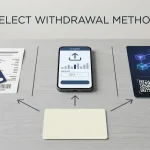
You should be ready to verify your identity and address before your first withdrawal. Check the operator’s stated document requirements and make sure you can provide the requested material. If the process is not explained clearly, that uncertainty is itself relevant to your comparison. A balance displayed on screen is not the same thing as a completed withdrawal.
The practical question is not simply whether a site mentions verification. Look for which documents it may require, whether the instructions explain how to submit them, and whether the timing is clear. Those checks help you understand what could be needed before funds are released. They do not guarantee that a withdrawal will be approved or say how long processing will take.
For a comparison of online pokies, write down the RTP shown for the specific game version and whether you could verify it in the game information. In a separate note, record the identity and address documents required before a first withdrawal. If either detail is unavailable, mark it as unknown instead of treating a promotional description as an answer.
That approach will not produce one universal winner. It gives you a more useful result: a clear account of which game setting is disclosed and whether you understand the verification step ahead. Specific checks beat labels.
PayID is not a separate bank account or a casino balance. It is an alias system connected to Australia’s New Payments Platform (NPP): instead of entering account details, a transfer can be addressed to an email address, mobile number or ABN registered for PayID. The NPP is available through all major Australian banks and protects transfers with end-to-end encryption. Those features describe the payment network, not the business receiving the money.
 Big Red Pokies Online in Australia: Free Play GuideLearn what free Big Red play can reveal about pace and appeal, and why each spin is separate and cannot predict a…
 Instant Payout Casinos in Australia: What to CheckLearn how withdrawal requests, account reviews and payment transfers differ, and why a stated processing speed does not guarantee when funds will…
To use PayID for a real-money casino deposit, you first need to link a PayID to a bank account. That requirement is easy to overlook when a payment page presents PayID as a simple button. The alias directs a transfer; it does not remove the bank account behind it or guarantee that the bank will approve a payment to a gambling merchant.
Before attempting a deposit, check the payment instructions shown by the service and your bank’s rules. PayID availability in your banking app does not mean every recipient or transaction will be accepted. A specialist review has reported that some Australian banks, including members of the Big Four, may block PayID transfers to gambling merchants they recognise. That is a reported possibility, not a promise that a particular bank will block or allow a particular payment.
A separate specialist review has also described Australian banks and card companies as increasingly blocking transactions to known gambling sites. Treat that as a reported trend, not a fixed rule for every institution or account. If a transaction is declined, do not assume that repeating it will solve the problem; check with your bank about its policy and the reason for the decline.
The distinction between payment methods matters. PayID sends a bank transfer using a registered alias. A card payment follows the card issuer’s processing and approval rules. Neither route should be treated as a workaround for a bank restriction, and a payment option appearing on a cashier page is not evidence that your bank will process it.
Attention: Some Australian banks, including members of the Big Four, may block PayID transfers to recognised gambling merchants.
The presence of PayID says nothing by itself about a service’s licensing, game settings or handling of withdrawals. It only identifies a way to address a transfer through the NPP. A familiar payment name can make a cashier look straightforward; it cannot establish how the recipient operates.
For a person trying to play Australian pokies online, the practical question is therefore narrower than “does it offer PayID?” Check whether your bank allows the intended transfer, whether the PayID details are registered and linked to your account, and whether the payment instructions match what your banking app displays. If anything differs, pause and confirm the details with the bank rather than sending money to an unfamiliar alias.
PayID can reduce the need to enter conventional account details for a transfer, but it does not make a deposit anonymous: the payment still originates from a linked bank account. Nor does NPP encryption guarantee a successful transfer. Approval remains subject to the bank’s controls and the recipient’s payment arrangements.
The same caution applies when comparing PayID with other deposit routes. A listed method is only a possible route, not a promise of acceptance, speed or suitability. Check the exact method and its conditions before acting, and do not infer trustworthiness from the logo alone. Payment mechanics are specific; conclusions about the service are not.
A request for a social-casino experience can mean something different from looking for real-money pokies. The label alone, however, does not tell you what a particular service offers. It may describe a play format without cash wagering, or it may be used loosely around products whose terms need closer inspection. The name is not a reliable description of the rules.
 Online Keno Casinos in Australia: Legal PositionLearn how the Interactive Gambling Act treats real-money online keno, why foreign licences do not authorize it, and ACMA’s enforcement role.
 Best Pokies in Adelaide: Venue Checks and AccessLearn how to check whether an Adelaide venue and its pokies area are open, compare venues, and understand the limits of online-play…
Before treating a service as a social game, read its own explanation of how play works. Check whether users stake money, whether prizes or credits can be exchanged for cash, and whether deposits or withdrawals are part of the product. Those details matter more than the word “social”. If real money is involved in playing casino-style games from Australia, the distinction is no longer merely about terminology.
The Melbourne wording adds a place, not proof. It does not establish that a Melbourne-based social casino exists, that a service is available to people there, or that any particular game can be accessed. A location in a title or promotional description is not evidence of local operation. Confirm what the service actually is and who can use it before drawing conclusions.
Keep three questions separate: Is the product genuinely social rather than real-money gambling? Is it available where you are? And what does its own description say about play and any prizes? A page that answers only one of these leaves the others unresolved. A familiar Australian phrase or local reference does not settle them.
This is also why “Aussie pokies” can be an imprecise label. It may refer to Australian-style wording or to the audience a page hopes to reach; it does not identify a verified game, provider or Melbourne service. If you are comparing information, look for clear descriptions rather than relying on labels, location names or broad claims.
Check if users stake money, whether prizes or credits can be exchanged for cash, and if deposits or withdrawals are part of the product.
For a Melbourne reader, the careful conclusion is modest: the wording points to an interest in social-style play in a particular city, but it cannot confirm that a suitable product exists. Do not infer availability from the phrase itself. First establish whether the experience is non-cash social play or real-money gambling, then assess the stated access conditions. Terminology is not a product check.
A web-based game, a newly released title and a lively-looking screen each describe a different thing. None tells you what the next spin will produce. Every pokie spin is an independent event determined by a Random Number Generator (RNG). A previous win, a run of losses or a change in the game’s appearance does not make a particular result due.
That distinction matters when you are looking for something new to play. A fresh title may offer different features or presentation, but “new” is not evidence of better odds or more predictable outcomes. Nor does the word “fun” tell you how a game behaves over time. Treat those descriptions as labels, not as information about the result of an individual spin.
The same limit applies to web play. The phrase can describe access through a browser, but it does not establish that a particular game or service works on your device. Check the actual access information before relying on a browser-based option; do not infer compatibility from a general claim about online play.
The practical comparison is not only about what appears on screen. Deposit limits can restrict how much you put in, while loss limits can set a boundary on losses. Session-time limits can help contain time spent playing, and self-exclusion provides an option to block your own access. These are standard responsible-gambling tools. Their presence does not change the RNG or make play predictable; they help set boundaries around it.
Look for the controls themselves and understand what each one does before playing. A limit is useful only if it reflects a boundary you are prepared to keep. If you are considering self-exclusion, note that BetStop applies to Australian-licensed operators and does not bind offshore sites. Australia has no Australian-licensed online casino, so BetStop should not be treated as a universal block on online casino access.
A neat interface is not a safeguard. A new release is not a forecast. Random means random.
Choosing an online pokies site means weighing the details that matter to you, such as licensing, deposit minimums and payout times. Use these operator notes to see which published facts are relevant to your play.
GoldenCrown
GoldenCrown lists a Curacao Gaming Control Board licence, OGL/2023/176/0095, held by Hollycorn N.V.
Lucky Dreams
Lucky Dreams lists a Curacao licence and a A$20 minimum deposit via POLi.
House of Pokies
House of Pokies lists PayID payouts in 1–24 hours and a A$30 minimum deposit, with PayID deposits from A$10. Its source describes the licence as international iGaming but does not name the jurisdiction.
Vegaz Casino
Vegaz Casino lists a Curacao licence, OGL/2024/1335/0780, and a minimum deposit of EUR 20.
Rollero Casino
Rollero Casino lists a Curacao Gaming Control Board licence, OGL/2023/176/0095, held by Hollycorn N.V.
MrPacho
MrPacho lists a A$30 minimum deposit. Its stated payout times are 30–120 minutes for crypto and 24–72 hours for fiat.
Ricky Casino
Ricky Casino lists a A$20 minimum deposit, or A$30 to qualify for the bonus. Its stated payout times are under 1 hour for crypto and 1–3 business days for PayID.
DragonSlots Casino
DragonSlots Casino lists a Curacao Gaming Authority licence associated with Jumpman Gaming Ltd.
Wild Tokyo
Wild Tokyo lists a Curacao licence and a A$10 minimum deposit. Its stated payout times are 30–60 minutes for crypto and 1–5 days for fiat.
Kingmaker
Kingmaker lists a A$30 minimum deposit. Its stated payout times are about 90 minutes for crypto and 1–5 days for fiat.
“Aussie pokies” is broad wording for pokie content associated with Australia. “Pokies” is the familiar Australian term; “Aussie” points to the market context, rather than identifying a particular game, provider or set of rules. The phrase alone tells you little about how a game works or what conditions apply. Treat it as a general label, not a precise description.
Age is one clear part of that context. In Australia, you must be at least 18 to gamble, including on online pokies. That minimum applies to gambling as a whole, not just to a particular type of game or venue. If you are below the legal age, online access does not change the rule.
The domestic regulator to know is the Australian Communications and Media Authority, or ACMA. It enforces the Interactive Gambling Act 2001. That makes ACMA and the Act useful reference points when you are trying to understand how online gambling fits into the Australian landscape. The regulator’s role is distinct from the everyday meaning of “pokies”: one describes the local term, the other describes a public authority and its enforcement responsibilities.
This distinction matters because familiar wording can sound more specific than it is. A page using Australian language is not, by that wording alone, identifying a game’s provider, settings or regulatory status. For those details, you need information about the particular game and the context in which it is offered. The label is only a starting point.
So, when you see “Aussie pokies” or a similar phrase, read it as a reference to pokies in an Australian context. Keep the age rule and ACMA’s enforcement role in view, but do not expect the phrase itself to answer more detailed questions. Broad label, limited information.
A bonus balance is not the same as withdrawable cash. The key figure is the wagering requirement: the number attached to the offer tells you how many times the bonus, or sometimes the deposit plus bonus, must be wagered before winnings become eligible for withdrawal. Check which base applies. The difference can be substantial.
A specialist review gives a clear illustration: a $500 bonus with a 40x requirement calls for $20,000 in bets before any winnings can be withdrawn. If the condition applies to a $500 deposit plus a $500 bonus at 35x, the turnover becomes $35,000. The multiplier alone does not tell you the full cost; first identify the amount it multiplies.
That is the useful calculation:
Use the offer’s stated terms, not an assumption based on its headline. A larger credit may look more generous while creating a much larger turnover target. The arithmetic is plain. The conditions are not always.
A specialist review suggests looking for requirements of 35x or lower and describes anything above 40x as punishing. Treat those figures as a comparison yardstick from that review, not a universal rule or a promise about any particular offer. The practical question is whether the required betting fits your budget and whether you would still consider the offer worthwhile if the balance never became withdrawable.
Read the rest of the conditions alongside the multiplier. Confirm whether the deposit is included in the calculation, which play contributes to turnover, and what happens if you stop before completing it. Do not count bonus credit as money you can cash out simply because it appears in your account.
Calculating Turnover
Identify the Base
Determine if the wagering requirement applies only to the bonus or to the combined deposit and bonus.
Apply the Multiplier
Multiply the identified base amount by the stated wagering multiplier (e.g., 35x or 40x).
Determine Total Bet
Calculate the total amount of bets required before winnings become eligible for withdrawal.
Free spins need their own check. A specialist review notes that winnings from free-spin offers may be subject to a cash-out cap. That means the amount you can withdraw could be limited even after the spins produce winnings. Find the cap and any related conditions before accepting the offer; the number of spins does not reveal the amount that can ultimately leave the account.
Compare the effective turnover and withdrawal conditions, not the promotional headline. If either is unclear, you cannot calculate the commitment with confidence.
“Top” is a verdict without a stated test. It tells you nothing about whether a service suits your priorities, and it cannot replace a comparison of practical terms. A useful assessment starts by naming the criterion: a low entry cost, or a withdrawal limit that would not stretch a large payout over a long period.
A specialist review reported minimum deposits of AU$10 to AU$20 at many operators it assessed, with some accepting AU$5. Treat that as a snapshot from that review, not a market-wide guarantee. Check the current terms for the specific service and note whether the minimum applies to the payment route you would use. A small minimum may matter if you want to limit the amount committed, but it does not establish anything about other terms.
Withdrawal caps deserve the same scrutiny. A specialist review reported that some casinos set weekly or monthly withdrawal limits between $5,000 and $10,000. Under such a cap, a $50,000 jackpot could be paid out over multiple years rather than at once. The headline amount is only part of the comparison; the schedule and cap affect when funds might actually reach you.
Put the details side by side:
| Check | What to record |
|---|---|
| Minimum deposit | The stated amount and any payment-method condition |
| Withdrawal cap | Whether it applies weekly or monthly, and its amount |
| Large-payout effect | How the cap could alter the time needed to receive a balance |
Read the terms, not the badge. A “top” label has no measurable value until the criteria behind it are clear. The better choice depends on which condition matters most to you—and whether the published terms answer it plainly.
A request for an Aussie pokies download is really a question about how the game is delivered: as software installed on a device, or through a website opened in a browser. Those are different formats, not evidence that one provides a better experience.
Treat claims about an app as claims to check, rather than proof of quality. A download label does not, by itself, establish who publishes the software, what permissions it requests, or whether it is suitable for your device. Likewise, a page opening in a browser does not establish how well it performs on a phone. The format alone settles very little.
Before installing anything, identify the publisher and read the requested permissions. Be cautious if an installation file comes from an unfamiliar page or asks for access that does not make sense for its stated purpose. Do not assume that a name, logo or app-store-style page confirms the publisher’s identity.
For browser access, avoid assuming that a page will work on every device or browser. Check the service’s own compatibility information and consider whether the page behaves as expected before entering personal details. A smooth-looking interface is not a test of fairness or reliability.
The practical comparison is therefore limited: an app involves installing software; browser access involves using a website. Neither label establishes performance, safety or game quality. If you cannot verify who provides the software or what it requires from your device, do not install it. A download is a format, not a credential.
Yes, Australian players are not criminally liable simply for playing on offshore sites that accept them. However, companies cannot legally offer real-money online pokies to Australians without a domestic licence, and no Australian-licensed online casino exists; players also have no Australian legal recourse if an offshore casino withholds winnings.
Yes. PayID is treated like any other qualifying deposit method at the recommended sites.
There is no strategy that can predict a winning result: each spin is an independent random event. Use free play to see whether you enjoy a game, not to look for patterns or decide that a win is due.
Yes. Some game providers let casinos choose from multiple RTP settings, so the same pokie can have different return percentages at different casinos.
E-wallets such as Skrill and Neteller are popular for their speed. Check the casino’s withdrawal options and any withdrawal limits before choosing a payment method.
It is the amount you must bet before bonus winnings can be withdrawn, calculated using a turnover multiplier. For example, a $500 bonus with a 40x requirement means $20,000 in bets; if the requirement applies to a $500 deposit plus a $500 bonus at 35x, it means $35,000 in bets.