The guide distinguishes physical-style machine language from digital play and sets out Australian legal limits and uncertainties around Bitcoin transactions.

The phrase “Dragon Link pokies machine” can point to two different ideas: a physical-style machine, or a digital game described using machine language. The distinction matters because a reference to a machine does not, by itself, identify what is being discussed. It may describe the familiar cabinet format people associate with pokies, or it may be shorthand for an online title. Those are related concepts, not interchangeable objects.
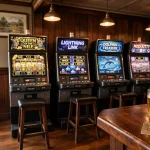
A physical pokie machine is a cabinet-style device encountered in a venue. Its screen, controls and surrounding hardware are part of the experience. When someone says “casino machine”, they may be picturing that complete piece of equipment, rather than the game software alone. In an online context, there is no physical cabinet in front of you. The game, if one is being referred to, is presented digitally on a screen.
That difference helps make sense of phrases such as “Dragon Link casino machine” and “Dragon Link slot machine online”. The first can sound like a reference to physical equipment; the second points toward a digital format. But the wording alone cannot establish whether either refers to a particular, identifiable Dragon Link game. Nor does adding “Australia” to the phrase prove that a physical machine or online title is available in the country.
If you’re looking for Dragon Link online pokies in Australia in 2026, this list gives you a concise reference for checking operator details before choosing where to play. Use the available licence, deposit and payout information to guide your own checks.
GoldenCrown
GoldenCrown lists a Curacao Gaming Control Board licence, OGL/2023/176/0095, held by Hollycorn N.V.
Lucky Dreams
Lucky Dreams lists a Curacao licence and a minimum deposit of A$20 via POLi.
House of Pokies
House of Pokies lists an international iGaming licence, though the jurisdiction is not named. PayID payouts are listed at 1–24 hours; the minimum deposit is A$30, with PayID deposits from A$10.
Vegaz Casino
Vegaz Casino lists Curacao licence OGL/2024/1335/0780 and a minimum deposit of EUR 20.
Rollero Casino
Rollero Casino lists a Curacao Gaming Control Board licence, OGL/2023/176/0095, held by Hollycorn N.V.
MrPacho
MrPacho lists a minimum deposit of A$30. Its stated payout times are 30–120 minutes for crypto and 24–72 hours for fiat.
Ricky Casino
Ricky Casino lists crypto payouts under 1 hour and PayID payouts in 1–3 business days. Its minimum deposit is A$20, or A$30 to qualify for the bonus.
DragonSlots Casino
DragonSlots Casino lists a Curacao Gaming Authority licence associated with Jumpman Gaming Ltd.
Wild Tokyo
Wild Tokyo lists a Curacao licence and a minimum deposit of A$10. Its stated payout times are 30–60 minutes for crypto and 1–5 days for fiat.
Kingmaker
Kingmaker lists a minimum deposit of A$30. Its stated payout times are about 90 minutes for crypto and 1–5 days for fiat.
“Pokie”, “slot” and “machine” also do different work in ordinary speech. In Australia, “pokie” is the familiar local term for this category of gambling game. “Slot” is another common label, while “machine” can suggest either the hardware or the game itself. People often combine the terms loosely. A sentence that calls something a “pokie machine” may mean the cabinet, the game running on it, or simply the general type of game. Context has to do the separating.
Online, the word “machine” is often figurative. A digital game can be described as a machine even though the player is interacting with software on a device rather than operating a cabinet. The screen-based presentation may resemble a familiar machine format, but that resemblance does not settle what the game contains, who made it, or whether a named version exists. Those details require evidence beyond a phrase.
The same caution applies to singular and plural wording. “Dragon Link pokie machine” sounds like one specific machine or title. “Dragon Link pokie machines” could refer to more than one cabinet, version or instance, but the plural does not prove that multiple versions are available. A search phrase can be grammatically suggestive without being a reliable description of a product.
Bitcoin introduces another separate meaning. A Bitcoin pokie is a digital slot-style game associated with Bitcoin as a payment method. That describes a payment category, not a particular title or machine. It does not show that a Dragon Link-branded game accepts Bitcoin, or that any specific game is connected to a particular payment arrangement. The name of a game and the way a service handles payments are separate questions.
A practical reading of these terms is therefore straightforward. If “machine” is used, check whether the surrounding wording means physical hardware or a digital game. If “online” appears, it signals a screen-based context, but it does not verify the identity or availability of a named title. If “pokies” or “slot” appears, it identifies the broad kind of game being discussed, not its precise version or features.
This matters because machine-like wording can make a digital reference sound more concrete than it is. A named machine might bring to mind a known cabinet, while an online phrase can sound like a direct counterpart. Yet a shared name does not establish that the physical and digital references describe the same product. It also does not establish that a particular online version matches a particular cabinet.
So, read “Dragon Link pokies machine” as an ambiguous label until the context makes clear whether it means physical-style equipment or a digital game. “Online” narrows the intended format, but not the identity or attributes of a title. The terms help describe the subject; they do not, on their own, verify it.
“Free play” and “real-money play” describe different ways of participating, not different guarantees about a particular game. Online pokies may be offered with either choice, but that general distinction does not confirm that a Dragon Link-branded game is available in either form. A title in a page heading or menu is not, by itself, evidence of what a particular version contains or permits.
The practical dividing line is whether the play involves money. With free play, the label indicates that the option is presented without real-money play. With real-money play, money is involved. That distinction matters more than wording such as “free slot” or “free pokies”: those phrases can appear in descriptions, but they do not establish the rules attached to a particular offer.
Free play can be relevant if your purpose is simply to see how an online game is presented without choosing real-money play. But the label alone does not tell you whether access requires registration, whether play is limited, or whether any displayed balance has value outside the game. Those details depend on the specific terms. Do not treat a “free” label as proof that every part of the experience is cost-free or that it leads to a cashable outcome.
Real-money play is a separate choice, not a more complete version of free play. It involves money, so the decision is materially different even if the screen or game name looks similar. A familiar title, shared artwork or matching menu label would not make the two forms interchangeable. Nor does the existence of a free option establish that a real-money option exists for the same title.
The most useful comparison is therefore about purpose and consequence:
| Criterion | Free play | Real-money play |
|---|---|---|
| Money involved in play | The option is presented as free | Money is involved |
| What the label establishes | A free-play choice is being presented | A real-money choice is being presented |
| What the label does not establish | Access conditions, limits or any cash value | Availability, game details or particular terms |
This is a narrow comparison by design. It avoids treating an unfamiliar label as a promise.
If you encounter a page describing free Dragon Link pokies, separate three things: the name used, the type of play offered, and the terms that govern it. The name does not verify a particular game. “Free” does not answer questions about access or restrictions. And a general statement that online pokies can be played free or for real money does not confirm that both choices apply to one named title.
The same care applies to phrases such as “free slot” or “play online free.” Read them as descriptions of a claimed play option, not as evidence of its conditions. If the page does not explain what “free” means in context, the label leaves an important point unresolved. A clear comparison needs a stated criterion; here, the criterion is whether the play involves money. Other details cannot be inferred from that alone.
A review should be read just as carefully. A review may discuss a title or a way of playing, but its presence does not turn a general description into confirmation of availability, features or terms. Keep the questions separate: What is being named? Is the described option free or real-money? What conditions are stated? If one answer is missing, do not fill the gap with an assumption.
There is no single option that is better for every reader: the relevant criterion is what you intend to do. If you want to avoid real-money play, focus on whether the option is explicitly presented as free and what its terms say. If money is involved, recognise that this is a different category of play, not merely a different button or display. Nothing about the word “free” should be taken as an invitation to move from one category to the other.
For Dragon Link specifically, the general distinction between free and real-money online pokies does not establish that a particular Dragon Link version exists, can be accessed, or offers both forms. Treat claims about a named version as claims that need their own supporting details. That is a more reliable basis for understanding the wording than assuming the game name settles the question.
Labels are not terms.
For anyone in Australia considering real-money online pokies, the central legal distinction is between what a player searches for and what an operator may lawfully provide. The Interactive Gambling Act 2001 prohibits online casino-style gambling services—including pokies, poker and table games—from being provided to people physically located in Australia. A game name or an offshore website’s willingness to accept an account does not change that restriction.
The law is directed at the service provider. It is not a general ban that makes an individual player liable to a fine or criminal prosecution simply for accessing an offshore casino. That distinction matters: the operator’s legal position and a player’s practical position are not the same question. It also does not turn offshore real-money play into a locally regulated activity.
A locally licensed online casino cannot lawfully offer real-money pokies to Australian residents. In practice, the operators discussed in this context hold offshore licences, primarily from Curacao eGaming or the Anjouan Gaming Authority. Those licences are issued outside Australia; they are not Australian authorisation to provide online casino games to people here.
Australian authorities actively enforce the restrictions on prohibited interactive gambling services, including through blocking. A site appearing online, or an account registration being technically possible, is not evidence that the service is lawful in Australia or that the operator is subject to Australian oversight. Availability and legal permission are separate issues.
The penalties set out under the Interactive Gambling Act are aimed at providers: the maximum daily penalty is $360,000 for an individual and $1.8 million for a body corporate. These figures should not be read as penalties for a player. The legal line is about supplying the prohibited service to people in Australia, not treating a player’s search for Dragon Link or another title as equivalent to operating a casino.
The more immediate concern for a player is recourse. Australian consumer protection laws do not apply to the offshore operators discussed here. If a dispute arises, you cannot assume that Australian consumer protections or a local casino regulator will provide a route to resolve it. An offshore licence does not fill that gap: it is not the same as Australian licensing, and it does not make Australian protections apply.
Legal Risk
Offshore operators are not covered by Australian consumer protection laws, meaning you may have limited or no recourse in the event of a dispute.
This difference is easy to miss when a site uses familiar payment language, displays a licence reference or accepts Australian details. Those features may tell you something about how the operator presents itself, but they do not establish that it can lawfully provide real-money pokies to Australians. Nor do they establish that you have local remedies if the operator handles a dispute poorly.
That matters particularly where the disagreement concerns access to an account, a balance or a payment. The legal restrictions explain why a locally regulated alternative is not available for real-money online pokies; they do not guarantee that an offshore operator will resolve an individual complaint. Treat the possibility of limited recourse as a material risk before making any decision, not as fine print to review after a dispute begins.
A comparison needs a clear criterion. If the criterion is whether the service is authorised under Australian law to offer online real-money pokies to people in Australia, an offshore licence does not satisfy it. If the criterion is whether Australian consumer protection law applies to an offshore operator, it does not. Those are the relevant distinctions; a polished site design is not a substitute for either.
You must be at least 18 to gamble with real money. That age requirement does not change the restriction on operators providing online casino services to people in Australia. Likewise, the fact that a player is not subject to a player-level penalty does not mean the service is locally lawful, regulated or protected by Australian consumer law.
This page contains affiliate material and may include sponsored links. That disclosure does not endorse an offshore service or alter the legal position. No operator is being recommended here. If you are assessing a real-money offer, the useful first question is not whether a particular Dragon Link-branded option claims to be available, but whether the underlying service is permitted to serve people physically located in Australia. Under the Australian framework, online casino-style games offered to customers here are prohibited interactive gambling services.
The short version is stark: provider restriction, not player prosecution; offshore licence, not Australian consumer protection.
The name “Dragon Link” can point to a particular game in a reader’s mind, but a name by itself does not establish that a matching online title is available, or that it has any particular features. That distinction matters when you are trying to identify an online game rather than merely recognise a label. Similar wording is not proof of the same product.
One specialist review describes a relationship between game credits and Bitcoin: the credits are set for each individual game, while their Bitcoin value depends on that game and the current BTC price. This is a source-specific statement, not a dependable rule for every online pokie or a confirmed description of a Dragon Link title. Credit systems and exchange values should not be treated as interchangeable across games.
The distinction is easy to miss. A displayed credit amount belongs to the game’s own denomination; it is not, by itself, a fixed Bitcoin amount. Where a Bitcoin conversion is discussed, the relevant value depends on the game and on the BTC price at the time. A figure attached to one game therefore cannot establish what credits mean in another, and a value stated at one moment may not hold later.
That point does not verify a Dragon Link pokie’s credit scale, conversion method, or any other game detail. It also does not confirm that an online version exists under that name. A reference to a game in a review, listing, or discussion should be read as a claim made in that context—not as independent confirmation of a specific title’s identity or availability.
For a reader comparing references, the useful criterion is what the statement actually supports. A mention of game-specific credits supports only the limited point that credit values are not necessarily transferable from one game to another. It cannot establish a particular game’s rules, presentation, provider, or access in Australia. Those are separate claims and need their own reliable support.
The same caution applies to descriptions that attach online, pokie, or slot wording to the Dragon Link name. Those words may express what someone is looking for, but they do not verify a release, an official version, or a match between a physical-machine reference and an online product. Nor does a Bitcoin value for game credits prove that a particular title accepts Bitcoin. Credit denomination and payment method are different questions.
If you encounter a specific credit figure or Bitcoin equivalent, check what game it refers to and when the BTC value was calculated. Without that context, the number cannot be compared fairly with another game’s credits or treated as a stable value. Exact-looking figures can still answer the wrong question.
The narrow, supportable point is this: game credits are specific to the game being discussed, and a Bitcoin equivalent depends on that game and the current BTC price. That does not establish the availability or attributes of Dragon Link online. No more follows from the name alone.
This page is affiliate material and may include sponsored links. That disclosure does not confirm the availability or suitability of any game.
Bitcoin payment instructions describe a transfer between a personal wallet and an operator’s wallet. They do not establish whether a particular Dragon Link casino game is available. In Australia, operators are prohibited from offering real-money online casino games to people in the country, so these mechanics should not be read as an invitation to use an offshore service.
For a deposit, the operator displays an account address for receiving Bitcoin. The payment process is to copy that address and send Bitcoin to it from your own wallet. The address is the critical detail: blockchain transfers sent to an incorrect address are generally irreversible and unrecoverable. Check the destination carefully before confirming a transfer; there may be no practical way to retrieve funds sent to the wrong place.
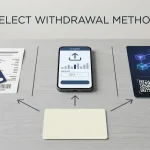
A withdrawal runs in the opposite direction. You copy your wallet’s receiving address, enter it in the operator’s withdrawal form and submit the request. The operator then has to process the request and send Bitcoin to that address. A completed request is not the same as money already received, so keep the withdrawal confirmation and check the destination address associated with your wallet.
A specialist review reports that most Bitcoin withdrawal transactions are completed within an hour. That is a reported transaction timeframe, not a promise about every withdrawal or a measure of how long an operator takes to approve a request. The timing can therefore differ between the operator’s handling of a request and the Bitcoin transfer itself. One clock, several steps.
Bitcoin transfers also incur miner’s fees. Those fees vary over time, so the amount cannot be treated as fixed across transactions. Review the payment details shown by the wallet before sending, and distinguish the network fee from any amount the operator may display in its own payment instructions.
These mechanics do not change the legal position in Australia: real-money online casino services are prohibited from serving people located in the country. Australian consumer protection laws do not apply to offshore operators discussed in this context. This page is affiliate material and may include sponsored links; that disclosure does not change the restrictions or make an offshore service locally protected.
Bitcoin’s payment characteristics can be assessed separately from any decision about gambling. They do not make a casino service lawful in Australia, nor do they establish that a particular game or payment option is available.
Blockchain technology provides strong security for recording Bitcoin transactions. That does not protect you from every risk around a payment. If you send Bitcoin to an incorrect address, the transaction is irreversible and generally cannot be recovered. An operator’s handling of an account or a withdrawal is also a separate matter from the security of the blockchain.
This distinction matters: a secure network cannot correct a mistaken transfer or guarantee that a recipient will resolve a dispute.
A specialist review characterises Bitcoin as offering more anonymity than conventional payment methods. Treat that as relative privacy, not as invisibility. A casino may still ask for identity or wallet checks, and transaction details are recorded on the blockchain. Do not assume that using Bitcoin removes the need to provide information to an operator or makes a transaction untraceable.
A specialist review describes Bitcoin transaction fees as lower than those associated with credit cards and other conventional payment methods. That is a comparison, not a fixed fee promise: network charges can vary, and the cost of a transfer does not determine the total cost or risk of an activity. Check the applicable fees before making any transaction rather than relying on a broad comparison.
| Criterion | Potential advantage | Trade-off |
|---|---|---|
| Blockchain security | Transactions are secured through the blockchain | An incorrect address can mean an unrecoverable transfer |
| Relative privacy | Bitcoin may reveal less directly than conventional payment methods | Operators may still request verification, and blockchain records remain |
| Fees | A specialist review compares them favourably with conventional payment fees | Charges vary and should be checked for the transaction |
For people in Australia, the legal context comes first: the Interactive Gambling Act 2001 prohibits operators from providing real-money online casino games, including pokies, to people physically in Australia. Offshore operators are not covered by Australian consumer protection laws. This is not an invitation to seek out or use such services.
This page is affiliate material and may include sponsored links; that disclosure does not change the legal position or turn a payment comparison into a recommendation. If you are considering gambling, you must be at least 18, and this information should not be treated as encouragement to deposit.
A claimed Dragon Link pokie win and a completed withdrawal are separate events. If a payout request is pending, the delay alone does not show whether the operator has approved it, is checking account details or has placed it in a processing queue. The label on a game or a report of a win does not explain the operator’s payout decision.
Attention! Do not deposit more money if an operator demands it as a condition for releasing a stuck withdrawal, as this will not fix the cause of the delay.
Common causes include an operator-side approval queue, identity checks that have not been completed, or batch processing limited to business hours. These are different problems, so the useful first step is to identify which one applies. Check the account’s messages and the operator’s stated withdrawal status, then ask for a clear explanation of any outstanding requirement. A vague “under review” gives you little to assess; a specific request or reason is more useful.
A substantial win may also prompt a security review. Some operators may use such reviews to stall, particularly when the account is new or the withdrawal is the player’s first large one. That possibility is a reason to keep records of relevant account messages and transaction details, not proof that every review is improper. Keep the distinction clear.
Do not treat tips about a slot bonus or a winning strategy as a way to speed up payment. Game activity does not resolve an approval queue or complete missing verification. Nor should you accept a demand to deposit more money as the price of releasing a stuck withdrawal. Do not deposit more. Adding funds does not fix the stated causes of a delay and may expose you to further loss.
When following up, keep the request factual: ask what step remains, whether the operator needs anything from you, and what status the withdrawal has. Save the response. Avoid sending additional funds or making decisions based on assurances that are not explained in writing. For a claimed Dragon Link slot win, the practical issue is not a supposed “winning tip”; it is whether the operator can give a specific, consistent account of the pending payout.
A phone-friendly label does not establish that an official Dragon Link app exists. The name may appear in a page title, an icon or a description, but those details alone do not confirm who made the software, whether it is authorised, or whether it is available for your device. Treat “Dragon Link app” as a description someone has used, not proof of an official product.
The same distinction applies to a casino app said to include Dragon Link. An operator’s app and a particular game are separate claims: identifying one does not verify the other. Nor does an app label tell you what features a game contains. Do not rely on screenshots or promotional wording as evidence of a title’s identity or operation.
RTP needs the same care. It is a game-specific measure, not a property established by the words “slot app” or by a game name on its own. A percentage shown without a clearly identified game and version cannot tell you which configuration it describes. A number is not more reliable merely because it appears in an app listing.
For Australian readers, there is another important boundary: the Interactive Gambling Act 2001 prohibits operators from providing real-money online casino games, including pokies, to people physically located in Australia. An app label does not change that restriction. Australian consumer protection laws also do not apply to offshore operators discussed in this context.
This page is affiliate material and may include sponsored links. That disclosure does not verify an app or make an offshore gambling service lawful in Australia. If you are checking a phone app, keep the question narrow: what entity is responsible for it, and what exactly does its listing establish? If those points are unclear, the name alone is not enough.
No shortcut.
For an adult considering how Bitcoin payments work, the sequence is straightforward in outline: acquire Bitcoin, move it from a personal wallet to the receiving address supplied by a service, then complete any account checks required before a withdrawal. That describes a payment process, not a recommendation to use an offshore casino.
Bitcoin can be purchased with ordinary currency through a cryptocurrency exchange. After it reaches your wallet, a deposit transfer involves entering the casino’s provided wallet address in the sending wallet and confirming the transaction. Check the address carefully before sending: cryptocurrency transfers to an incorrect address are generally irreversible and the funds may not be recoverable.
Account verification is a separate step from the blockchain transfer. Operators may request registration details first, followed by identity and address documents when a withdrawal is requested or a deposit threshold is reached. Some may also ask for evidence that you control the wallet used to deposit. A specialist review describes possible crypto checks as signing a message from the deposit address or supplying a wallet screenshot showing the outgoing transaction; requirements depend on the operator.
Completing checks before requesting a withdrawal can reduce avoidable processing friction, but it does not guarantee a particular outcome or timing. Keep records of the transfer and use only wallet details you control.
Australia’s legal position matters before any payment step: locally licensed online casinos cannot offer real-money pokies to people in Australia, and the offshore operators discussed are not covered by Australian consumer protection laws. Real-money gambling is for adults aged 18 or older. This page is affiliate material and may contain sponsored links.
“Happy and Prosperous” may look like the name of a particular Dragon Link game, but a matching phrase is not enough to establish what it refers to. It could be a label used in a listing or discussion; without reliable identifying details, it should not be treated as proof of a distinct title.
The same caution applies when the phrase is paired with “slot machine.” That wording may describe the kind of game someone is looking for, but it does not confirm that a physical machine or online version with that exact name exists. Nor does the name establish who made a game, what its symbols or features are, or whether it can be accessed in a particular place.
For a useful comparison, separate the name from verifiable attributes. A game’s identity would need to be supported by clear details that match across trustworthy documentation, rather than inferred from a phrase alone. If those details cannot be matched, comparisons of gameplay, availability or payment options would rest on guesswork. A confident label is not a specification.
That distinction matters because similar wording can be repeated without resolving whether it refers to a defined variant. The careful conclusion is limited: “Happy and Prosperous” is a phrase associated with the Dragon Link search, not confirmation of a particular game’s identity or characteristics. No mechanics should be inferred from the wording.
This is informational material, not an offer to play. Winshark-guide-au.com’s content is affiliate material and may include sponsored links. Affiliate disclosure does not establish that a named game exists or verify any claim about it.