The guide separates operator legality from player liability and explains what payment methods, offers and app claims can—and cannot—establish.

The legal distinction is between the company providing real-money pokies and the person who plays them. Under the Interactive Gambling Act 2001, an operator must not provide these services to people in Australia unless it holds a domestic licence. No Australian licences for online casinos have been issued, so there is no locally licensed online casino offering real-money pokies.
That rule is directed at operators, not individual players. An Australian player does not commit an offence simply by playing on an offshore site that accepts them. This difference matters: the fact that a player is not the target of the prohibition does not make the operator lawful, create an Australian regulator for the service, or give the player the protections that would come with a domestic online casino. The legal position of the two parties is not the same.
A site may present itself as available to Australians, but that does not turn it into an Australian-licensed service. A foreign licence, if a site claims to hold one, is not a domestic licence. It does not change the Interactive Gambling Act’s restriction on companies providing real-money online casino games to people located in Australia.
Choosing real-money pokies online means checking the details that matter to you, including licensing and payment information. Use this list as a starting point and review each operator’s terms before you play.
GoldenCrown
GoldenCrown lists a Curacao Gaming Control Board licence, OGL/2023/176/0095, held by Hollycorn N.V.
Lucky Dreams
Lucky Dreams lists a Curacao licence and a minimum deposit of A$20 via POLi.
House of Pokies
House of Pokies lists an international iGaming licence, though the jurisdiction is not named. PayID payouts are listed at 1–24 hours, and the minimum deposit is A$30, with PayID deposits from A$10.
Vegaz Casino
Vegaz Casino lists Curacao licence OGL/2024/1335/0780 and a minimum deposit of EUR 20.
Rollero Casino
Rollero Casino lists a Curacao Gaming Control Board licence, OGL/2023/176/0095, held by Hollycorn N.V.
MrPacho
MrPacho lists a minimum deposit of A$30. Its stated payout times are 30–120 minutes for crypto and 24–72 hours for fiat.
Ricky Casino
Ricky Casino lists a minimum deposit of A$20, while A$30 is required to qualify for the bonus. Payout times are listed as under an hour for crypto and 1–3 business days for PayID.
DragonSlots Casino
DragonSlots Casino lists a Curacao Gaming Authority licence held by Jumpman Gaming Ltd.
Wild Tokyo
Wild Tokyo lists a Curacao licence and a minimum deposit of A$10. Its stated payout times are 30–60 minutes for crypto and 1–5 days for fiat.
Kingmaker
Kingmaker lists a minimum deposit of A$30. Its stated payout times are about 90 minutes for crypto and 1–5 days for fiat.
Nor does online access settle the question. The Australian Communications and Media Authority (ACMA) enforces the Act and blocks access to illegal offshore gambling sites; internet service providers are required to comply with its blocklist. A website being visible at one moment, or a registration process appearing to accept an Australian customer, is not proof that the service is lawful in Australia or that access will remain available. A screen can load. That is a narrow fact.
For someone comparing real-money pokies, the first criterion should therefore be legal status, not the wording of a site’s claims or the apparent ease of opening an account. In this market, that comparison has a clear result: there is no Australian-licensed online casino. Calling an offshore service “legal” because it accepts Australians confuses the player’s position with the operator’s.
The law does not make every action by an Australian player illegal merely because the service is offshore. Australians can legally play on offshore sites that accept them. But that statement is limited. It describes the player’s legal exposure; it does not endorse the operator, confirm that a site is permitted to serve Australians, or promise that a player can obtain help in Australia if a dispute arises.
The most important practical consequence is what happens when the operator and player disagree. If an offshore casino refuses to pay winnings, the Australian player has no legal recourse in Australia. The service is not backed by an Australian online-casino licence, and the fact that a player was allowed to participate does not create a local route to compel payment.
 Best Pokies in Adelaide: Venue Checks and AccessLearn how to check whether an Adelaide venue and its pokies area are open, compare venues, and understand the limits of online-play…
 Best Casino in Sydney: Rules, Stays and DiningExplore NSW pokie rules, casino stays, dining, rewards and nearby accommodation; poker-machine gambling is restricted to adults aged 18 and over.
That distinction is easy to miss when a site uses familiar language, accepts customers from Australia, or displays credentials from another jurisdiction. None of those details changes the absence of an Australian-licensed online casino. Nor does the player’s lack of liability under the Act turn an offshore dispute into a matter an Australian regulator can resolve on the player’s behalf. The law’s focus on operators should not be mistaken for a local remedy for customers.
This is why “best” cannot be treated as a simple ranking of real-money options. The deciding criterion is what you mean by best. If you mean a locally licensed online casino, there is no such option in Australia. If you mean an offshore site that accepts Australian players, that is a different category: the operator remains subject to the prohibition, and a refusal to pay winnings leaves the player without legal recourse in Australia. A site’s own description cannot erase that gap.
The wording of a search may combine “online pokies” with “real money” and “Australia”, but those words do not establish a legal category of Australian-licensed services. They describe what someone is looking for, not what the domestic system authorises. In legal terms, the useful distinction is between an Australian player’s position and the operator’s conduct. The player is not criminalised merely for playing; the company is prohibited from providing the service to people in Australia without a domestic licence, and none has been issued.
No Legal Recourse
If an offshore casino refuses to pay your winnings, you have no legal recourse in Australia because no Australian-licensed online casinos exist.
So access, legality and recourse are separate questions. ACMA blocking addresses access to illegal offshore sites. The Act addresses operators providing the service. The absence of an Australian licence means there is no local online casino framework behind an offshore offer. And if winnings are withheld, Australian players cannot rely on an Australian legal remedy against that casino. None of these points makes offshore play an endorsed or protected alternative.
PayID is a way to identify a bank account for a transfer, not a separate bank account or a gambling licence. It works as an alias layer on Australia’s New Payments Platform (NPP): a transfer can be directed using an email address, mobile number or ABN linked to an account. The NPP is supported by all major Australian banks and uses end-to-end encryption. Those details describe the payment infrastructure; they do not establish that a gambling service is lawful, fair or suitable.
To use PayID, you first need to link an eligible alias to a bank account through your bank. The account remains the source of the money; the alias gives the transfer a simpler destination identifier. If a site displays PayID as a deposit option, that does not mean you can use the method without this bank-side setup. Nor does the presence of a PayID instruction prove that the recipient is who the page claims it is. Confirm the transfer details with your bank and treat an unfamiliar recipient with care.
 Best Pokies in Melbourne: How to Compare VenuesCompare locations from Melbourne Airport, Melbourne Central and Port Melbourne, assess “open now” listings, and check venue details before choosing.
 Best Casino in Western Australia: What to CheckCompare a casino hotel with nearby accommodation, including total cost and convenience. Check the actual pedestrian route rather than relying on distance…
There is a more fundamental distinction in Australia. The Interactive Gambling Act 2001 prohibits operators from offering real-money online pokies to people in Australia without a domestic licence, and no such licences have been issued. A payment method does not change that position. A site describing itself as PayID pokies, or claiming that it accepts PayID for real-money play, is not thereby authorised to provide the service to Australian residents. PayID is a transfer mechanism, not a regulatory approval.
At most, a completed PayID transfer indicates that the payment instruction was processed. It does not show that a site’s games are independently tested, that a particular pokie uses a particular return-to-player (RTP) setting, or that a withdrawal will be honoured. These are separate questions, and the payment rail cannot answer them.
A specialist review has described PayID as being treated like another qualifying deposit method at the sites it recommends. That is a statement about the scope of that review, not a general rule for Australian gambling services and not evidence of licensing. Conditions can also differ between services. If a page claims that PayID deposits receive particular treatment, read the actual payment terms rather than assuming the same process applies everywhere.
RTP is a property of a game configuration, not a feature certified by the transfer method. Some providers allow casinos to choose between more than one RTP setting for the same pokie, so the game title alone may not settle which setting is in use. PayID acceptance supplies no information about that setting. A payment option cannot certify the odds. That distinction matters.
PayID Nature
PayID is a transfer mechanism that acts as an alias layer on the New Payments Platform; it is not a gambling licence or a regulatory approval.
A transfer may not go through even when you have linked PayID correctly. A specialist review reports that some Australian banks, including members of the Big Four, have at times blocked PayID transfers to gambling merchants they identify. A separate specialist review describes Australian banks and card companies as increasingly blocking transactions to known gambling sites. These are reports about changing payment practices, not a promise that a specific transfer will be approved or declined.
If a bank blocks a transaction, do not assume that repeatedly trying different routes will resolve the issue. Check with the bank about its decision and applicable account terms. The existence of a block is also not a measure of whether a site is fair: it is a bank’s payment decision, not an audit of the game or operator.
Card payments are a separate method, with their own potential costs. A specialist review warns that a gambling card transaction may be classed by a bank or issuer as a cash advance, which can bring a fee of 3–5% and immediate interest. That possibility is not a reason to switch to another method or to treat PayID as a safer alternative; it is a reminder to understand your bank’s terms before any transaction.
If you are comparing payment claims, the useful criterion is what each one actually establishes. PayID can identify a bank account through an alias and carry a transfer over the NPP. It does not prove local authorisation, game fairness, a specific RTP, or guaranteed access to funds later. A familiar payment logo may make a page look ordinary. Appearance is not evidence.
For Australian residents, the legal context remains decisive: operators are prohibited from offering real-money online casino games without a domestic licence, and no Australian online casino licence has been issued. PayID cannot create one. The payment technology and the legal status of the service sit in separate columns; treating them as the same test is a category error.
A free version can help you see how a pokie presents its symbols, features and controls. It cannot tell you what will happen when you stake money. Those are different tests: one is about becoming familiar with a game; the other involves financial risk and results produced spin by spin.
Attention: A run of free spins is not evidence that a paid session will produce similar results, as each spin is generated independently by a Random Number Generator.
The distinction matters when you compare free pokies with pokies for real money. A run of free spins is not evidence that a paid session will produce similar results, and an uneventful demo session does not show that a paid session will be worse. Past spins do not provide a dependable forecast for the next one.
Each spin is generated independently by a Random Number Generator. That means its result is not a response to the previous spin: a win does not make another win due, and a series of losses does not make a win overdue. A pattern you notice during free play is only a record of what happened in that session. It is not a reliable signal about what comes next.
A demo is not a forecast.
| Test | What it can help you assess | What it cannot establish |
|---|---|---|
| Free play | Whether you understand the layout, symbols and stated game features | How a real-money session will turn out |
| Real-money play | What happens during the spins you actually take, with money at stake | What a later spin or session will produce |
This comparison is about the kind of information each test gives you, not about which one is “better” in every situation. If your criterion is learning the interface without risking money, free play is the more relevant test. If you want to understand the experience of staking money, only real-money play involves that stake—but it also exposes you to financial loss. Neither test predicts a future result.
There is another reason not to treat a free version as a direct preview of a paid one: the same named pokie may not have the same return setting everywhere. Some providers give casinos a choice of RTP settings for a particular game. A specialist review has reported that this can mean the game’s return percentage differs between casinos. So the title alone does not establish which setting applies where you are playing.
RTP describes a game setting as a return percentage; it is not a promise about the amount an individual player will get back, nor a timetable for a win. Even if you can confirm the setting for a particular version, it does not turn a short sequence of spins into a dependable prediction. The setting and the outcome of an individual spin are different things.
Do not assume, without checking, that the free version and the real-money version use the same RTP setting. A demo result cannot verify the setting used for paid play, and a display of an RTP figure does not show what your next spins will return. Treat the game’s stated information and your short-term results as separate evidence.
If you are considering free online pokies, use that time for practical questions: can you follow the controls, do you understand what the game displays, and are the stated features clear to you? Those are questions about the interface and information provided. A demo can be useful for that limited purpose without serving as a test of winning potential.
The phrase “free pokies for real money” combines two different conditions. Free play means you are not staking your own money on those spins; real-money play means you are. A free session may be a way to inspect a game, but it is not a real-money session at no cost, and it cannot establish what a paid session would have produced.
If you decide to play pokies for real money, make the decision on the basis that each spin is uncertain and that results can include losses. Do not use a demo win as a reason to expect a repeat, or a demo loss as proof that a game is due to pay. Those conclusions confuse past outcomes with future ones.
For a comparison of the best online pokies for real money in Australia, “best” needs a criterion. Familiar controls may matter when you are learning a game; clearly disclosed RTP information may matter when comparing settings. Neither criterion identifies a game that will deliver a particular result. A useful comparison separates what you can inspect from what remains random. The winner depends on what you need to assess—and no demo can settle the outcome question.
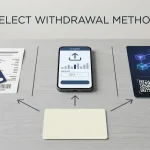
A displayed balance is not the same thing as money already received. Before treating a pokies win as withdrawable, check the site’s withdrawal rules: the amount available per period, any conditions that must be met first, and the documents required to request a payout. Those details affect how much you can claim at once and whether a request can proceed.
A withdrawal cap limits the amount a player can take out during a stated period. A specialist review has reported weekly or monthly caps in the range of $5,000–$10,000 at some casinos. The review’s example was a $50,000 jackpot potentially spread across multiple years under a cap. That is not a rule applying to every site; it shows why a large win and a quick, complete withdrawal are not necessarily the same outcome.
Read the cap wording carefully. A weekly limit and a monthly limit have different effects, and a stated maximum may apply to all withdrawals rather than to each individual request. Check whether the terms explain how the period is defined and what happens when a balance is larger than the permitted amount. If that information is unclear, you cannot reliably estimate when the full balance could be paid.
The comparison criterion is straightforward: a less restrictive cap gives you more room to withdraw a large balance sooner, while a lower cap can extend the process. Do not compare a headline win with another site’s cap in isolation; the relevant question is how the cap applies to the amount you would need to withdraw. Read the terms before depositing, not after a win makes them urgent.
A specialist review reports that casinos commonly ask for identity checks before a first withdrawal. The requested material can include a photo of your identity document and proof of address; some sites may also ask for a selfie holding the identity document. The precise requirements depend on the site, so check its withdrawal instructions rather than assuming that account registration alone will be enough.
Complete the required verification before requesting your first withdrawal. In particular, make sure you can provide both identity and address proof. Check that the information on your account matches your documents, and follow the site’s instructions for submitting them. If a document is rejected or a further item is requested, the withdrawal may remain unresolved until the verification process is complete.
Treat document handling as part of the decision, not as a minor formality. You are being asked to send sensitive personal information to an offshore service; consider whether you are comfortable doing that and whether the submission process is clearly explained. A payment option does not answer questions about a site’s withdrawal terms or how it handles verification.
For a win to become money in your account, two separate checks matter here: the withdrawal cap and the identity requirements. A site may permit a large balance but restrict how much can be withdrawn during each period. Another may have a different cap but require additional documents before processing a request. The terms determine which constraint matters more in your case.
Keep a record of the relevant withdrawal rules and of the documents you submit. If the stated cap or verification requirements are difficult to find, that uncertainty is itself relevant to your assessment. A win is only as usable as the terms governing its release. No shortcut.
A no-deposit offer can sound like a simple exchange: accept free spins, win, then withdraw. The conditions can make that interpretation wrong. Free spins may produce a balance that is subject to wagering requirements, and a cash-out cap may limit how much of the resulting winnings can be withdrawn. The advertised number of spins, on its own, tells you neither how much turnover is required nor what amount can ultimately be cashed out.
Treat the offer terms as a set of separate tests. First, find out whether winnings must be wagered before withdrawal and how the wagering requirement is calculated. Then check whether it applies to the bonus, the winnings, or both. Finally, look for a maximum cash-out amount and any other stated limits. If those details are not clear, the headline offer is not enough to estimate what you could withdraw.
A specialist review suggests treating wagering requirements of 35x or below as a more manageable benchmark, while describing anything above 40x as punishing. That is an assessment, not a universal rule: the practical burden depends on the offer’s exact wording and the amount to which the multiplier applies.
The arithmetic shows why the distinction matters. For a hypothetical $500 bonus with a 40x requirement, applying the multiplier to the bonus means $20,000 in bets must be placed before winnings become withdrawable. If the requirement instead applies to a $500 deposit plus a $500 bonus at 35x, the turnover comes to $35,000. Those figures illustrate how the calculation works; they do not establish that either offer is available.
Read the basis of the multiplier, not just the multiplier itself. A smaller-looking number can still produce substantial turnover when it applies to a combined deposit and bonus. A “no deposit” label does not answer that question: the written terms do.
Free spins may carry their own wagering conditions, and a specialist review notes that such offers can also cap the winnings eligible for cash-out. So even if spins generate a balance, the amount displayed is not necessarily the amount you can withdraw. Check whether a cap applies and whether wagering must be completed before it does.
The same care applies when an offer is presented alongside PayID or described as instant. A payment option does not change the offer’s turnover calculation or remove a cash-out cap. Separate the promotional terms from the payment wording, then assess each on its own. The label “instant” describes neither the value of the offer nor what its conditions permit.
Evaluating Bonus Turnover
Identify the Multiplier
Find the wagering requirement (e.g., 40x).
Determine the Basis
Check if the multiplier applies only to the bonus or to the combined deposit and bonus.
Calculate Total Turnover
Multiply the basis amount by the requirement (e.g., $500 bonus × 40 = $20,000 required bets).
Check the Cash-out Cap
Look for the maximum amount allowed to be withdrawn from the resulting winnings.
A useful comparison is a small table: offer amount, wagering basis, multiplier, required turnover and cash-out cap. If any entry is missing or ambiguous, you cannot make a sound comparison from the headline alone. No free lunch.
Australia’s framework draws a line between gambling regulation and the services available online. The Interactive Gambling Act 2001 prohibits operators from providing real-money online casino-style games, including pokies, to people in Australia. The Australian Communications and Media Authority (ACMA) is the primary domestic regulator responsible for enforcing that law.
ACMA can block access to offshore gambling sites it identifies as illegal, and internet service providers must follow its blocklist. A site being reachable at a particular moment is not evidence that it is lawful or protected by Australian oversight. Blocking is an enforcement measure, not a substitute for local licensing or a guarantee about what happens if a dispute arises.
The minimum legal age for gambling in Australia, including online pokies, is 18. That age limit is a basic boundary, not a signal that every service accessible to an adult is locally regulated. If you are assessing Australian real-money pokies, keep those questions separate: whether you meet the age requirement and whether the service is permitted to operate for Australian customers are not the same test.
BetStop is Australia’s national self-exclusion register, but its reach has an important limit: it applies to Australian-licensed operators and does not bind offshore sites. Since there is no Australian-licensed online casino, you should not treat BetStop as a way to block yourself from every offshore casino site. Its protections cannot be assumed to extend beyond the operators it covers.
That distinction matters if you are trying to create distance from gambling. Self-exclusion is not a complete barrier where a service sits outside the register’s scope. Deposit limits, loss limits and session time limits can also help set boundaries where they are available, but they are not a replacement for support if gambling is causing harm. A boundary only works where it applies.
For a practical comparison, the relevant criteria are different: ACMA’s role concerns enforcement and access blocking; the age rule sets who may gamble; BetStop’s scope determines which operators an exclusion can reach. None of these criteria establishes that an offshore service is safe, locally licensed or subject to Australian casino oversight. Clear distinctions matter.
An app label is not a quality test. For anyone considering real-money pokies on a phone, the relevant distinctions are practical: whether an app is genuinely offered by a service, what it does, and what protections apply. A polished icon or familiar app-store appearance cannot answer those questions by itself.
Australia’s legal position matters regardless of how you access a service. Under the Interactive Gambling Act 2001, companies cannot provide real-money online pokies to people in Australia without a domestic licence, and none has been issued. The law targets operators rather than individual players, but using an app does not create Australian legal recourse if an offshore casino withholds winnings. An app is a doorway, not a local safeguard.
That distinction also sets a limit on what “best” can mean. Best for ease of access is not the same as best for legal protection, fair treatment or clarity about game settings. A useful comparison would need evidence about each of those criteria. Treating a downloadable app as proof of trustworthiness confuses the format with the service behind it. Neat packaging, same uncertainty.
Nor does the word “app” establish how the software behaves. It does not tell you whether it is an official application, how it handles account information, or whether it offers the same functions as another way of accessing the service. Those details should not be inferred from an app name, a promotional description or the fact that a download is available.
The same caution applies to claims about safety. An app cannot, by its presence alone, show that an operator is licensed in Australia, that a pokie is fair, or that its return setting is transparent. Those are separate questions. In this market, there is no Australian-licensed online casino to supply that local licensing assurance.
If you are assessing an app, separate what can be observed from what needs independent proof. A working interface may demonstrate that software opens; it does not establish who is responsible for the service or what happens when there is a dispute. Do not treat convenience, presentation or a familiar payment label as a substitute for those checks.
For a comparison table, “app available” is therefore a narrow feature, not a verdict. It may describe access, but it cannot rank legal protection or establish safer play. The strongest choice depends on the criterion you value—and an app alone cannot settle the important ones.
A phone-friendly page, a downloadable app and access to real-money pokies are separate questions. One does not establish the others. The fact that a service is described as mobile does not tell you whether it has a dedicated app, whether its games work in a mobile browser, or whether a particular device can access them.
That distinction matters when comparing claims about mobile pokies for real money in Australia. A screenshot or an app-store listing, by itself, would not confirm how the service operates, what devices it supports, or whether the games perform as described. Nor does a mobile format establish that a site is licensed, fair or transparent about its games. PayID support would not prove those things either.
Treat each claim as a separate criterion rather than combining them into a single label such as “mobile-ready.” If an operator says it offers an app, that is a claim about an app; it is not evidence of browser compatibility. If it describes browser access, that does not establish that every feature works on your device. Avoid relying on broad assurances about speed or performance when there is no detail to assess.
A downloadable software package; its presence is a narrow access feature, not a trust signal.
Accessing the service via a phone-friendly page without a separate installation.
Under the Interactive Gambling Act 2001, no domestic licenses for online casinos have been issued.
There is also a more basic distinction: technical access is not the same as lawful provision. Under Australia’s Interactive Gambling Act 2001, operators cannot provide real-money online pokies to people in Australia without a domestic licence, and no such licences have been issued. A mobile interface does not change that position, and offshore access does not create Australian recourse if winnings are withheld.
If you are assessing mobile access, keep the checklist narrow: identify whether the claim concerns an app or a browser, what evidence supports it, and what remains unconfirmed. Do not treat an attractive interface as proof of reliability. A smaller screen changes the format, not the underlying uncertainty. That is the useful comparison: app availability, browser access and legal status are different measures, and none should be used as a substitute for another.
A newly launched site can look more current than an established one, but age alone tells you little about whether its claims are reliable. The same applies when a site advertises PayID for real-money pokies. A payment option describes how a transfer may be made; it does not establish who operates the site, whether its games are fair, or whether it has permission to serve Australians.
That distinction matters in Australia. The Interactive Gambling Act 2001 prohibits operators from providing real-money online casino games to people in the country, and no Australian online casino licences have been issued. A new offshore service does not gain local standing by accepting Australian payments or using familiar terminology.
For a comparison, separate the criteria rather than treating them as one signal:
| What you can observe | What it does not establish |
|---|---|
| A site describes itself as new | That its operator is accountable in Australia |
| PayID is listed as a payment option | That the service is licensed, fair or transparent about game settings |
| The site uses polished branding | That winnings would be recoverable through Australian legal channels |
The deciding criterion is not novelty or payment convenience; it is whether the evidence supports the particular claim being made. On these points, the presence of PayID cannot fill the gap. Nor does a recent launch prove that a service has been independently checked.
Treat claims about new PayID pokies for Australian players with that boundary in mind. Do not read payment acceptance as a trust badge, or a launch date as proof of oversight. The label “new” is easy to apply. Accountability is harder.
“PNG” may mean Papua New Guinea, but the abbreviation alone does not establish which country, audience or service a page concerns. That matters because information about the Australian market cannot confirm the rules, availability or terms of a service intended for people elsewhere.
If you are physically in Australia, the relevant boundary is clear: the Interactive Gambling Act 2001 prohibits operators from providing real-money online pokies to people in Australia, and no domestic online-casino licences have been issued. A page mentioning another country does not change that Australian position.
If you mean Papua New Guinea, do not treat Australian information as an answer about that market. The country name, a currency symbol, or a claim that a service accepts local players would not, by itself, verify its legal status or establish what conditions apply. Those details need to be confirmed for the specific jurisdiction rather than inferred from an abbreviation.
Use location as the first comparison criterion: are you asking about services for people in Australia, or about a different country? Then keep the relevant legal context separate. A service described as serving PNG is not thereby shown to be available to Australians, and an Australian-focused page cannot establish its terms or legality in Papua New Guinea.
The distinction is practical, not cosmetic. Country labels can be vague; they are not proof of permission, protection or access. If the intended market remains unclear, pause rather than relying on assumptions drawn from Australian information.
You must be at least 18 to gamble in Australia, including on online pokies.
You are not committing an offence simply by playing on an offshore site that accepts Australians. However, no online casino holds an Australian licence, and offshore operators are prohibited from providing real-money pokies to people in Australia without one.
Each spin is an independent random event generated by a Random Number Generator. The same pokie can also have different return-to-player settings at different casinos.
Yes, PayID is treated like any other qualifying deposit method at the sites described. Check the bonus terms to confirm the offer’s eligibility and wagering requirements.