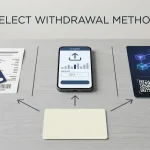
Crypto transfer speed is only one step; verification, bonus conditions and payment handling can affect when funds are credited.

Bitcoin can make a transfer feel quicker than a conventional payment, but speed is only one part of the transaction. A specialist review has described cryptocurrency transfers as capable of being near-instant; that is a report about potential payment speed, not a promise that every Bitcoin transfer will arrive immediately or that a service will credit it at once. The transfer and the recipient’s handling of it are separate steps.
That distinction matters when a service is described as “no KYC”. The label may suggest that you can deposit Bitcoin without providing identity documents, but it cannot guarantee that checks will never be required. In particular, Australian market requirements mean operators must verify a player’s identity before processing a withdrawal. A crypto deposit does not remove that obligation.
Bitcoin is associated with pseudonymous addresses, not with a blanket right to use a service without identity checks. A payment address does not, by itself, establish that an account holder has been verified. Nor does the choice of cryptocurrency decide what information a platform may request as part of its account or withdrawal process.
If you’re looking for a no-KYC casino in Australia in 2026, check the operator’s verification rules directly before depositing: the details here do not confirm whether KYC is required. Use the available licence and payment information as a starting point for your own checks.
GoldenCrown
GoldenCrown lists a Curacao Gaming Control Board licence, OGL/2023/176/0095, held by Hollycorn N.V. The available information does not specify its KYC or payment rules.
Lucky Dreams
Lucky Dreams lists a Curacao licence and a minimum deposit of A$20 via POLi. Its KYC and withdrawal details are not specified here.
House of Pokies
House of Pokies lists an international iGaming licence, though the jurisdiction is not named in the source. PayID payouts are listed at 1–24 hours, and the minimum deposit is A$30, with PayID deposits from A$10.
Vegaz Casino
Vegaz Casino lists Curacao licence OGL/2024/1335/0780 and a minimum deposit of EUR 20. The available details do not state its KYC or payout rules.
Rollero Casino
Rollero Casino lists a Curacao Gaming Control Board licence, OGL/2023/176/0095, held by Hollycorn N.V. No KYC or payment details are provided here.
MrPacho
MrPacho lists crypto payouts at 30–120 minutes and fiat payouts at 24–72 hours, with a minimum deposit of A$30. The available information does not confirm its KYC requirements.
Ricky Casino
Ricky Casino lists crypto payouts in under an hour and PayID payouts in 1–3 business days. The minimum deposit is A$20, or A$30 to qualify for the bonus.
DragonSlots Casino
DragonSlots Casino lists a Curacao Gaming Authority licence associated with Jumpman Gaming Ltd. No payment or KYC details are specified here.
Wild Tokyo
Wild Tokyo lists a Curacao licence, a minimum deposit of A$10, and payout times of 30–60 minutes for crypto and 1–5 days for fiat. Its KYC rules are not stated in the available information.
Kingmaker
Kingmaker lists crypto payouts at about 90 minutes and fiat payouts in 1–5 days, with a minimum deposit of A$30. The available details do not state whether KYC is required.
For you, the practical trade-off is straightforward: a Bitcoin transfer may move quickly, while identity review can still hold up access to funds. Those are different clocks. A rapid payment into an account cannot be treated as evidence that a later withdrawal will be approved just as quickly.
This is why “no KYC Bitcoin” wording needs careful reading. It may describe how an account is presented at sign-up, or the information requested before a deposit. It should not be read as a guarantee of anonymous play, an unconditional right to withdraw, or a promise that checks will be waived. If access to a withdrawal depends on verification, a fast deposit does not solve that issue.
There is a more fundamental point for anyone in Australia. Under the Interactive Gambling Act 2001, it is illegal for operators to provide real-money online casino games, including slots, poker and table games, to people physically located in Australia. The restriction concerns the service being provided, not whether a player funds it with Bitcoin, another cryptocurrency or a conventional payment method.
That means a crypto payment should not be treated as a workaround to the rules governing online casino services. The payment technology does not change the legal character of the activity. A claim that an offshore service accepts Bitcoin, or does not request documents at the outset, does not make the service lawful to provide to people in Australia.
The legal responsibility described here is on operators; Australian players do not incur a fine or criminal prosecution simply for playing at an offshore casino without a local licence. That is not an endorsement of using such services. Online casino-style games remain prohibited services when offered to customers in Australia, and offshore services are actively blocked and enforced against.
If you encounter a Bitcoin payment claim, separate the questions rather than treating “crypto” as one all-purpose feature:
The first item is about moving value; the others concern the service and your ability to use it. Keeping those criteria separate is more useful than ranking a platform by deposit speed alone. A payment can be technically quick and still leave the central questions unresolved.
If a platform’s terms or account process make verification unclear, do not infer that the absence of an early document request means no checks will follow. Read what the service says about identity requirements and withdrawals before relying on any “no KYC” claim. Where identity verification is required, completing it early can reduce avoidable delay later. A fast deposit is not a substitute.
For Australian readers, the decision is not simply whether Bitcoin is faster than another payment route. Real-money online casino provision is prohibited in this market, and changing the payment rail does not alter that boundary. “No KYC” is not a legal exception.
Legal Restriction
Under the Interactive Gambling Act 2001, it is illegal for operators to provide real-money online casino games to people physically located in Australia.
Cryptocurrency changes the payment rail, not the rules that apply to a real-money gambling service. A digital-asset deposit may be handled differently from a card payment or bank transfer, but using crypto does not establish that a platform is available to people in Australia, nor does it make identity checks disappear.
That distinction matters because “no KYC” is often used as a broad label for a service or payment process. It should not be treated as proof that an operator will accept an account without checking who owns it. Identity verification and payment handling are separate questions: one concerns the customer and account, the other concerns how funds are sent and received.
Payment menus vary by operator. A specialist review of Australian-facing payment options describes credit and debit cards, PayPal and Skrill e-wallets, and bank transfers as methods players may encounter, with cryptocurrency available at some services. That is not a promise that any particular platform supports every method, or that a listed method works for every account or transaction.
Crypto can sit alongside familiar payment routes rather than replacing them. Its practical appeal is that a transfer may move quickly through the relevant payment network; a specialist gambling review has described cryptocurrency transactions as potentially near-instant. That timing is not a complete measure of the customer’s experience, however. A transfer reaching an account does not necessarily mean the operator has approved the deposit, and a payment method’s technical speed says nothing by itself about account checks or access in Australia.
A useful comparison is therefore not simply “crypto or cash.” Consider three separate questions: whether the service offers the payment method, whether the method can be used for both deposits and withdrawals, and what verification the operator requires. A payment menu can answer the first question imperfectly; the terms and account procedures are needed for the others.
A blockchain transfer may be associated with a wallet address rather than a bank-card number, but that does not make the account holder automatically unidentifiable to a gambling operator. The operator can still request identity information, and Australian market requirements call for identity verification before withdrawals are processed. A crypto deposit is not a substitute for those checks.
Nor does the phrase “no KYC crypto casino” settle what happens throughout an account’s life. A platform might allow an initial payment before asking for documents, yet require verification later, including when a withdrawal is requested. The payment method does not guarantee that no review will take place. If identity details, payment ownership or account information need to be checked, the fact that the deposit arrived in cryptocurrency does not remove that step.
Identity verification and payment handling are separate processes: one concerns the customer and account, while the other concerns how funds are transmitted.
This is why the label should be read as a claim to examine, not as a dependable description of every transaction. Look for what the operator says about identity checks, when they may occur and what information is required. If the explanation is unclear, treating “no KYC” as a guarantee would be a poor basis for deciding whether to provide funds or personal details.
There is a separate issue before payment choice. Under the Interactive Gambling Act 2001, operators are prohibited from providing real-money online casino-style games to customers located in Australia. That category includes services offering casino games such as slots, poker and table games. A crypto option does not alter the legal status of the service: changing the payment instrument does not turn a prohibited offering into a permitted one.
This also means that a search result describing a “crypto casino” should not be read as confirmation that the service is lawfully offered to Australian residents. A payment method may exist in a general international context while the gambling service itself remains unavailable or prohibited in Australia. Those are different claims, and one does not establish the other.
The practical comparison for an Australian reader is therefore limited. Conventional methods and crypto can differ in how a payment is initiated and transmitted, but neither tells you whether a service may legally provide real-money casino games here. Payment speed is not a legal test. An anonymous-looking transfer is not an exemption.
When a site uses crypto language, separate its statements into categories rather than treating them as one promise:
These checks prevent a common conflation: a transfer can be technically quick while an account remains subject to verification, and a payment option can exist without making the underlying gambling service lawful for Australian customers. Crypto changes the route funds take. It does not settle the more important questions of identity, withdrawal approval or legality.
A “no KYC” label can sound like a promise that you will never be asked to prove who you are. It is safer to read it as a description of an advertised sign-up or account process, not as a guarantee about withdrawals. Identity checks can still be required before funds are released.
This distinction matters in Australia. The Interactive Gambling Act 2001 prohibits operators from providing real-money online casino-style games to people in Australia. A “no KYC casino Australia” label does not change that legal position or make an offshore service authorised to operate here. The term describes a claim made by a service, not a legal status or a reliable assurance about its procedures.
Completing identity verification early can significantly speed up future withdrawals by removing a source of delay at the time of request.
A specialist review reports that first withdrawals often prompt requests for identity verification. That is the point at which an operator may need to confirm the account holder’s identity and check that the withdrawal is being made by the person entitled to receive the funds. Until required checks are complete, a withdrawal may not proceed.
So the useful question is not simply whether a site asks for documents during registration. It is whether it explains what evidence may be required before payment, how the review works and what happens if details do not match. A label cannot answer those questions on its own.
Completing verification early can significantly speed up later withdrawals. If checks are left until you request a payout, the review becomes part of that request rather than a task already completed. Early completion does not guarantee a particular processing time, but it can remove one source of delay from a later withdrawal.
Before relying on a claim of no KYC, read the operator’s terms and account requirements for its withdrawal process. Look for clear information about when identity checks can be requested, what documents may be needed and whether further checks can apply after an account has been opened. If the wording is vague, treat the label as limited marketing language rather than a firm commitment.
You should also check that the account details are accurate and consistent. A difference between the name or other personal information on an account and the details supplied for verification can lead to questions. Do not assume that a successful deposit proves that an account is ready for a withdrawal; the two stages may involve different checks.
A service described as a “no KYC BTC casino” or an “ETH casino with no KYC” is making the same kind of claim about verification. The payment currency does not establish that identity checks will be skipped. Nor does calling a service new make its withdrawal rules clearer. The label, the account process and the applicable terms are separate things.
Use three checks when judging the phrase:
If the only clear statement is “no KYC,” you do not have enough detail to predict what will happen at cashout. The claim should not be treated as permission to avoid checks, a guarantee of anonymity or a promise that a withdrawal will be approved without verification.
For Australian readers, there is a further boundary: real-money online casino services are prohibited from being provided to people physically in Australia. Describing a service as a no-KYC option does not remove that restriction. In operational terms, the key point remains straightforward: identity checks may be required before withdrawal, and completing them ahead of time can help prevent them from holding up a later request.
The label is not the process.
A bonus can change when funds become eligible for withdrawal. Before accepting a promotion, read its terms to see what must be wagered and which balance the requirement applies to. The headline offer tells you what is being credited; the wagering rules determine what stands between that credit and a cashout.
There are two common ways to define the balance subject to wagering. A requirement may apply to bonus funds alone, or it may cover the deposit and bonus together. Those are materially different conditions, even when the promotional amount looks identical.
With bonus-only wagering, the qualifying play is calculated against the promotional funds. Under a combined-balance rule, your own deposit is included in the amount that must be wagered. A specialist review describes bonus-only wagering as the preferable structure because it places less of the combined balance under the condition.
That comparison is useful, but it does not make every bonus-only offer favourable. The terms still decide whether your winnings are restricted, when you may request a withdrawal, and what happens if you withdraw before completing the requirement. Read those details alongside the balance calculation rather than judging an offer by its label.
| Condition to compare | What to establish before accepting |
|---|---|
| Wagering base | Does the rule cover the bonus alone, or the deposit and bonus together? |
| Withdrawal eligibility | Must the requirement be completed before any funds can be withdrawn? |
| Early withdrawal | Does requesting a cashout cancel the bonus or affect associated funds? |
| Eligible play | Which games or forms of play count towards completion? |
Do not infer an answer from the phrase “no deposit bonus”. It describes how a promotion is received, not whether wagering applies or how much of a balance is covered. Likewise, a bonus advertised by a no-KYC casino is not automatically free of withdrawal conditions. Identity checks and promotional rules are separate matters: satisfying one does not satisfy the other.
Look for the wording that defines the wagering base. If it says the deposit and bonus are both included, treat your deposited funds as part of the amount subject to the rule. If it specifies bonus funds only, confirm whether the deposit remains separately withdrawable and whether an early cashout changes that position. If the terms are unclear, do not assume the interpretation that is most convenient.
This applies whether a promotion is presented as a welcome offer, a no-deposit bonus, or a crypto-related incentive. The payment method does not establish the wagering terms. A Bitcoin deposit, for instance, does not tell you whether a bonus rule covers the promotional balance alone or the combined amount. Check the promotion’s own conditions.
Keep a clear distinction between “bonus available” and “withdrawal available”. Promotional credit can appear in an account before the conditions attached to it have been completed. Until you have checked the rule and met any applicable requirement, a displayed balance should not be treated as money ready to cash out.
For Australian readers, this is also a point to keep separate from the legality of the service itself. Under the Interactive Gambling Act 2001, providing real-money online casino games to people in Australia is prohibited for operators; the rule covers casino-style offerings such as slots, poker and table games. Bonus wording does not change that legal position.
The useful comparison is therefore not simply which promotion looks larger. It is which wagering base applies, what counts towards completion, and what withdrawal conditions follow. Bonus-only wagering is the preferable structure on that specific criterion. The fine print decides.
“Instant withdrawal” describes a stage of a payout, not necessarily the time between clicking Withdraw and seeing money in your account. The request may first wait for the casino to check it. Only after approval does the payment method determine how quickly funds move. Those are separate clocks.
A specialist review reported that some sites used “instant” to describe withdrawals that still spent as long as a day in internal review. The label, by itself, does not tell you whether the operator has approved the request, how long its checks take, or when your bank will show the transfer. Instant is not the same as immediate.
A withdrawal can pause while the operator reviews account details or completes identity checks. First-time verification is one reported cause of delay; a review may also be triggered by a larger withdrawal. In the specific cases described by a specialist review, withdrawals above $2,000 were among those that could take longer. That figure is not a universal threshold: the operator’s own terms determine what prompts further review.
Casino policy can also set a maximum withdrawal amount. A separate report notes that those limits may affect how a payout is released. If the requested amount exceeds a limit, the payment may be split or handled differently under the operator’s rules; do not assume that a fast payment network overrides them. The terms should make the limits, fees and processing times clear.
This is why “instant withdrawal, no KYC” needs careful reading. A no-KYC label does not remove the approval stage or promise that the operator will never request identity documents. If a check is required, the payment cannot be treated as complete merely because the withdrawal form has been submitted. The queue comes first.
PayID works through Australia’s New Payments Platform, with transfers processed in real time through Osko. That describes the bank-to-bank payment rail. It does not mean that the casino approves every request in real time.
Attention: PayID enables real-time bank transfers, but this only happens after the casino has internally approved and released the withdrawal request.
A specialist review reported that PayID funds can move instantly once the casino releases them. The distinction is practical: before release, a request may still be waiting on a check; after release, the transfer stage can be near-immediate. A weekend or bank-processing delay may still matter for other payment routes, while an internal review can hold up a PayID payout before it reaches the network.
If you use PayID, keep the details consistent with those linked to your casino profile. A mismatch can create a reason for additional review, and funds should go only to an account associated with that profile. Check the operator’s instructions before submitting a request rather than treating PayID as a shortcut around account checks.
Read the wording as a sequence:
| Stage | What can affect it |
|---|---|
| Request and approval | Identity checks, security review, operator processing and withdrawal limits |
| Payment release | Whether the operator has authorised the transfer |
| Receipt | The payment method and any bank-processing window |
A claim about the final stage says little about the first. Look for separate information on review times, payment release, fees and withdrawal limits in the operator’s terms. If the wording only says “instant,” it leaves the most important timing question unanswered: when does the operator actually approve the request?
For PayID, real-time processing applies after release; it is not a promise that every withdrawal request will be approved and received immediately. That distinction is the useful measure.
Payment methods differ in what they can do: some may fund an account but cannot return a balance, while others support both directions. For Australian readers, there is an important legal limit before comparing those mechanics: the Interactive Gambling Act 2001 prohibits operators from providing real-money online casino games to people in Australia. This is a practical comparison of payment features, not a recommendation to use an offshore casino. Credit cards should not be treated as an accepted route for online gambling.
| Method | Deposit use | Withdrawal use | Speed considerations |
|---|---|---|---|
| E-wallets | PayPal and Skrill are among the payment services Australian players may encounter in listings. | They can support withdrawals where the operator offers them and the account details match. | A specialist review described e-wallet transactions as taking hours rather than days; another payment summary put e-wallet withdrawals within 24 hours. These are reported timings, not guarantees. |
| Bank transfers | Used for moving funds between bank accounts where offered. | A possible route for receiving withdrawals. | A specialist review reported that a traditional bank transfer could take as long as five business days. Other payment summaries describe bank and card payments as potentially taking several days. |
| Cards | Debit cards may appear among payment options. | Card payments may also be used for withdrawals where supported, but the route can take several days. | Credit cards are not an appropriate option for online gambling services in this market. |
| Instant banking | Some specialist reviews have described Australian real-money platforms as offering instant banking through providers such as POLi. Availability is operator-specific. | Deposit access does not by itself establish that the same service can receive a withdrawal. | “Instant” describes the banking connection, not necessarily the operator’s handling of a payout. |
| Prepaid vouchers | A prepaid voucher such as Neosurf may be listed for deposits. | A specialist review described vouchers as generally not supporting withdrawals, so another payout route may be needed. | The key distinction is use, not speed: a deposit voucher may not provide a way to cash out. |
The useful comparison is therefore not simply “fast versus slow.” E-wallets combine a potential withdrawal route with reported processing times that can be shorter than bank transfers, while vouchers may be deposit-only. Bank transfers and card payments can take longer to reach you, and instant banking does not guarantee an instant withdrawal.
Before relying on any payment description, check whether it applies to deposits, withdrawals, or both. Confirm the exact method, any fees and limits, and the processing terms that apply. A method displayed at the cashier is not proof that it can be used for every transaction.
If you are comparing real-money platforms, also distinguish the payment provider’s transfer time from the operator’s own processing. A payment rail can move funds quickly once a transfer is released; it cannot make an unlawful service lawful or ensure that a payout will be approved. Choose by the criterion that matters to you—deposit access, withdrawal capability, or transfer time—rather than by a single “fast” label.
A reference to cryptocurrency in a general payment description does not establish that Ethereum, Tether or Ripple is accepted. A specialist review of Australian payment options reports that some casinos offer cryptocurrency, alongside conventional methods such as bank transfers and e-wallets. That broad statement does not identify particular coins or confirm that any named asset can be used at a specific operator.
Treat each asset as a separate question. Ethereum, Tether (often called USDT) and Ripple are not interchangeable labels for one payment option. Before relying on a claim, look for the exact asset in the operator’s own payment information, and check whether it applies to deposits, withdrawals or both. A logo, a general mention of crypto, or a page discussing one coin does not establish support for the others.
The same distinction applies to the phrase “no KYC.” It describes a claim about identity checks, not a payment method, and it does not prove that a casino accepts a particular cryptocurrency. Nor should it be read as a guarantee that verification will never be requested.
There is also an important Australian context: the Interactive Gambling Act 2001 prohibits operators from providing real-money online casino games to people in Australia. A crypto payment option does not change that legal position. This is not a recommendation to use an offshore service.
The useful comparison is therefore not “which of these three coins is available?” unless a specific operator’s current terms answer that directly. It is whether the payment details identify the asset, explain the transaction conditions and distinguish deposits from cashouts.
A payment option and a game catalogue answer different questions. A site mentioning cryptocurrency does not establish that it accepts USDT, and a USDT deposit option would not show that crash games are available. Check each claim separately; neither follows from the other.
A specialist review describes cryptocurrency transfers as capable of near-instant movement, but that observation does not confirm support for a particular coin or service. Before treating USDT as an option, you would need clear payment terms identifying it. A generic crypto label is not enough.
The same distinction applies to “no KYC” claims. A payment method does not prove that a provider waives identity checks, and a game title does not establish the conditions for using an account. Treat claims about payment, verification and available games as separate items to verify—not as a package deal.
There is also an Australian legal boundary. The Interactive Gambling Act 2001 prohibits operators from providing real-money online casino-style services to people in Australia, including slots, poker and table games. That restriction concerns the operator; it does not make a player liable merely for playing offshore. Online casino services are also subject to active blocking and enforcement, so a payment description should not be read as an invitation or assurance of access.
“No deposit” is another separate claim, not proof that a particular offer exists or that it can be used without checks. Read the terms attached to any promotion rather than inferring them from a payment label. Labels do not settle the details.
A “free spins” label does not tell you whether winnings can be withdrawn straight away. Promotional funds may carry wagering conditions, and those conditions can apply to the bonus alone or to the combined value of the deposit and bonus. A specialist review describes bonus-funds-only wagering as the preferable arrangement: it leaves your deposited money outside that wagering calculation. Read the terms to see which balance is covered before treating a promotion as useful.
Check the wording for what must be wagered, which funds the requirement applies to, and what conditions govern any resulting winnings. If the offer does not make those points clear, you cannot reliably judge how it affects access to funds. The word “free” does not settle the matter.
A promotion aimed at players in another country is not evidence that the same offer is available or applies in Australia. Nor does a “no KYC” label change the bonus terms. These are separate questions: one concerns verification, the other concerns restrictions attached to promotional funds.
There is also a more basic Australian context. Under the Interactive Gambling Act 2001, it is illegal for operators to provide real-money online casino games to people physically located in Australia. A promotion’s wording does not alter that legal position. Check the law and the offer’s terms rather than assuming that a free-spins headline makes participation suitable. Free is a label, not a withdrawal rule.
A live casino search may describe a real-time, dealer-led format, but the label does not establish that the service is legally available to people in Australia. The relevant distinction is where the player is located and what the operator provides—not whether a page calls itself “no KYC” or presents games as live.
Under Australia’s Interactive Gambling Act 2001, operators are prohibited from providing real-money online casino games to people physically in Australia. Casino-style games such as roulette, blackjack, poker and slots fall within that restriction. A live presentation does not, by itself, change the nature of a real-money casino service.
That makes “no KYC” a separate issue from availability. A claim about identity checks does not demonstrate that an operator may lawfully offer real-money casino games to Australian players, nor does it verify that a live-dealer option is accessible. Treat promotional wording cautiously; it is not proof of local authorisation or access.
If you are assessing a service, separate three questions: what game format it describes, whether it accepts players located in Australia, and whether the underlying real-money service is permitted here. Those questions should not be collapsed into one label. The legal boundary matters more than the branding.
You should not choose a real-money online casino serving people in Australia: providing those games to people physically located there is prohibited, and using crypto does not change that. If you are assessing payment claims, check the withdrawal limits, identity-verification requirements, fees and rules on returning funds to the deposit method.
Methods used by Australian players include credit and debit cards, PayPal and Skrill, bank transfers and, at some services, cryptocurrency. PayID is also used for bank-to-bank transfers.
The term generally describes casinos that release withdrawals quickly and make their limits and payment rules clear. However, real-money online casino services are prohibited for people physically located in Australia.
Timing varies by payment method and checks: e-wallet withdrawals are typically processed within 24 hours, while bank transfers and card payments may take several days. PayID transfers can be near-instant once released, but internal reviews and first-time identity checks can cause delays.