Encryption, identity checks and payment methods answer different questions, and none alone confirms that a gambling service is permitted in Australia.

“Secure” is not a single status that a casino earns and keeps. It can refer to the way a website protects information, how it verifies account holders, how it handles transactions, or whether it is legally allowed to offer the service to people in Australia. Those checks answer different questions. A reassuring result in one area does not settle the others.
For example, encryption can help protect information sent between your device and a website. It does not show that the operator is authorised in Australia. An identity check may be part of account controls, but it does not establish that deposits or withdrawals will be handled as you expect. A payment method may work technically while the underlying gambling service remains prohibited. Treating any one feature as a complete security badge is an easy way to miss the more important distinction.
A useful comparison starts by keeping four categories apart:
If you’re choosing an online casino for security, check what licensing information is provided and what practical payment details are available. This list gives you those stated details without treating them as a guarantee of safety.
GoldenCrown
GoldenCrown lists a Curaçao Gaming Control Board licence, OGL/2023/176/0095, held by Hollycorn N.V. That gives you a specific licensing detail to consider.
Lucky Dreams
Lucky Dreams lists a Curaçao licence and a minimum deposit of A$20 via POLi. You can use those details when reviewing its licensing and deposit options.
House of Pokies
House of Pokies states that it has an international iGaming licence, though the jurisdiction is not named in the source. You’re also given a PayID payout estimate of 1–24 hours and a minimum deposit of A$30, with PayID deposits from A$10.
Vegaz Casino
Vegaz Casino lists Curaçao licence OGL/2024/1335/0780 and a minimum deposit of EUR 20. These are the stated licensing and deposit details for you to check.
Rollero Casino
Rollero Casino lists a Curaçao Gaming Control Board licence, OGL/2023/176/0095, held by Hollycorn N.V. This provides you with a specific licensing detail, but no payment details are provided here.
MrPacho
MrPacho lists crypto payouts at 30–120 minutes and fiat payouts at 24–72 hours, with a minimum deposit of A$30. These details give you stated timing and deposit information to consider.
Ricky Casino
Ricky Casino lists crypto payouts in under 1 hour and PayID payouts in 1–3 business days. The minimum deposit is A$20, or A$30 to qualify for the bonus.
DragonSlots Casino
DragonSlots Casino lists a Curaçao Gaming Authority licence associated with Jumpman Gaming Ltd. That is the licensing detail available for you to review.
Wild Tokyo
Wild Tokyo lists a Curaçao licence, crypto payouts in 30–60 minutes, and fiat payouts in 1–5 days. Its stated minimum deposit is A$10.
Kingmaker
Kingmaker lists crypto payouts at approximately 90 minutes and fiat payouts in 1–5 days. You can also note its stated minimum deposit of A$30.
The fourth check changes how the other three should be read. A site can display security features and still be an unauthorised casino service for Australian residents. “Most secure” therefore has no useful meaning unless you first say what kind of security you mean—and whether the activity itself is lawful.
The Interactive Gambling Act 2001 prohibits operators from providing real-money online casino games to people in Australia. The restriction applies to casino-style games such as slots and table games. A website’s offshore licence, if it has one, does not make it licensed in Australia or turn the service into an authorised local casino.
ACMA is responsible for regulating online gambling in Australia. It can take enforcement action against operators that breach the Act, including issuing fines and seeking to block websites. ACMA may ask internet service providers to block sites offering prohibited interactive gambling to Australian customers, as well as unlicensed services to adults in Australia. Blocking orders can be used as a last resort when customer safety is considered at risk. A site being reachable at one moment is not evidence that it has approval to operate here.
The law does not explicitly make individual players criminally liable simply for using an offshore casino site. That point should not be confused with permission: the prohibition is directed at operators, and it does not authorise them to serve Australian residents. Nor should you assume that Australian law will provide the protections you might expect if an unlicensed service withholds winnings. The legal position and the practical risks are separate, but both matter when judging what “secure” means.
Using a VPN to reach a casino does not change its legal status or make the service authorised in Australia. It may also lead to voided winnings, account closure or loss of your deposit under the operator’s terms. A technical workaround is not a legal safeguard.
A “secure casino” claim may refer only to a site’s connection, or it may bundle together verification, payment procedures and other controls. Unless the claim identifies the criterion, it is too broad to support a decision. Look for the specific protection being described, then keep its limits in view.
For a technical claim, ask what data protection it refers to. For an account claim, distinguish identity checks from authorisation. For a payment claim, separate the deposit process from the route for withdrawals. For legal status, do not treat an offshore licence or a security symbol as an Australian licence. These distinctions are not fine print; they prevent one kind of evidence from being mistaken for another.
The phrase “secure online casino in Australia” can suggest a locally authorised market that does not exist for real-money casino games. A careful assessment begins with that boundary, then considers what the site’s technical and account measures actually establish. None can erase the legal restriction.
Keep the categories separate. A lock icon is not a licence.
A casino’s offshore licence and permission to provide gambling services in Australia are not the same thing. A licence issued elsewhere may show that an operator is subject to rules in that jurisdiction. It does not make the operator licensed in Australia, or authorise it to offer online casino games to people here.
That distinction matters once real money is involved. Under the Interactive Gambling Act 2001, it is illegal for operators to provide real-money online casino games, including slots and games such as blackjack, to people physically located in Australia. An offshore licence does not change that position. A site may describe itself as licensed, but the useful question for an Australian is whether it is licensed in Australia for the service it offers. For online casino games, there is no basis to treat an offshore licence as local authorisation.
The law’s focus is on providers, not on treating individual players as criminals. The Act does not explicitly criminalise an Australian for using an offshore casino. That does not turn the service into an authorised one, nor does it create the protections a player might expect when dealing with a locally regulated business. Legal exposure and practical protection are separate questions.
When a service operates under an offshore licence, its licensing obligations arise under the rules of that jurisdiction. That may matter to how the operator is supervised there, but it does not establish that Australian authorities oversee the service as an Australian casino. Nor does the licence guarantee that a dispute about withheld winnings will be resolved in your favour.
If an offshore service refuses to pay, closes an account or disputes a balance, Australian law may not assist you in recovering the money. This is a practical limit, not a claim that every operator behaves the same way. Your ability to pursue a complaint can depend on where the operator is based and which rules apply to it. The key point is that an offshore licence is not a substitute for Australian authorisation or a promise of effective recourse from Australia.
A site can also use reassuring language about security or present a licence badge prominently. Those statements address different issues. A licence claim, even if genuine in the jurisdiction named, does not make online casino play lawful for Australian customers. A secure connection cannot alter that either. The distinction is easy to miss because both claims can appear together on a website. They answer different questions.
Attention: An offshore licence does not make online casino play lawful for Australian customers, and a secure connection cannot alter that legal status.
ACMA is the regulator responsible for online gambling in Australia. It has urged people to consult its website and the national register to understand which gambling products are legal. Australians can use ACMA’s public register to check whether a wagering service holds a valid Australian licence.
Use that register for the question it can answer: whether a wagering service holds an Australian licence. Do not treat an offshore licence or a listing outside that register as proof that online casino games are authorised here. The existence of licensed wagering services does not mean that online slots or casino table games are lawful services for Australian customers.
This is why a search for a safe and secure real-money casino in Australia needs a legal check before any assessment of the site’s other claims. If the service is offering online casino games to people in Australia, its offshore credentials do not resolve the central issue. “Secure” may describe how a site handles information; it does not mean the service is licensed in Australia. Different test. Different answer.
Offshore sites may remain visible or accessible for a time, but access should not be mistaken for approval under Australian law. ACMA can ask internet service providers to block sites offering prohibited interactive gambling services to Australian customers. Blocking activity is an enforcement measure; it is not a complete test of whether a particular service is safe, nor does a site’s availability confirm that it is authorised.
Using a VPN to reach a casino does not change the service’s legal status. It may also lead to an account being closed, winnings being voided or a deposit being lost, depending on the site’s terms. A workaround is not a licence.
For a real-money decision, keep the checks in order: establish whether the product is legally available in Australia, then consider what recourse you would have if a dispute arose. If a site relies on an offshore licence to imply Australian approval, that implication should not be accepted. A badge is not permission.
A payment method can tell you something about how money moves, but it cannot establish that an online casino is secure or authorised in Australia. Real-money online casino games are prohibited services under Australian law. Treat payment descriptions as information about transaction handling, not as a reason to use a service or evidence that you will have effective recourse if a payment goes wrong.
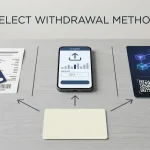
For any payment route, separate the stages: submitting a deposit, the operator approving it, the payment network processing it, and a withdrawal being released and received. “Fast” can refer to only one of those stages. A transfer may clear promptly after release, while waiting for approval or a later withdrawal can add time. Read the payment terms for both directions before treating a deposit option as a workable way to get funds back.
For any payment route, the process involves separate stages: submitting a deposit, operator approval, network processing, and the release and receipt of a withdrawal.
A specialist review describes PayID transfers as using Australia’s New Payments Platform and says they can clear within minutes once released. That is a conditional description, not a promise of a particular arrival time. It does not say how long an operator takes to approve or release a transaction, and a quick deposit does not establish that withdrawals follow the same route or speed.
Specialist payment reviews also describe PayID and some e-wallets as potentially quick after approval, while bank transfers may take several business days. The approval stage matters: a network’s ability to process a transfer quickly does not remove an operator’s separate handling time. Check whether the displayed processing estimate refers to approval, release, or arrival in your bank account. Those are not interchangeable.
PayID’s familiar name should not be mistaken for a security rating. The useful comparison is practical: what stage is being timed, whether the route supports withdrawals, and what happens if the payment is delayed or returned. No transfer method makes a prohibited casino service lawful.
Cards can have a different route back than the one used for a deposit. A specialist review notes that card withdrawals may be slower or unavailable, depending on the processor. Before depositing, look for an explicit withdrawal method and its conditions; do not infer that a card accepted for deposits will also receive payouts.
E-wallets may be quick after approval, according to specialist payment reviews, but the same distinction applies: speed after approval is not a complete estimate of the transaction. Confirm that the wallet is supported for withdrawals and that the account details match the payment route offered.
POLi is described in a specialist review mainly as a deposit method. Do not assume that money can be withdrawn through it simply because it appears at the deposit stage. The route out may be different, or the method may not support withdrawals at all. That difference is material, not fine print.
A useful payment comparison records the deposit method, any approval stage, the stated withdrawal route, and whether the estimate concerns release or receipt. If a page names a fast deposit option but gives no clear account of withdrawals, you do not yet have a complete picture of the transaction.
Searches for a secure PayID casino or a secure cryptocurrency casino do not change the test. A payment label alone cannot show how the operator handles a transaction, whether withdrawals are available through that route, or whether the service is authorised for Australians. Do not treat crypto wording as proof of protection; the payment name is not a safety assessment.
The simplest route is not necessarily the safer one. Compare the whole path back to your bank, including approval and processor handling, and avoid treating a quick deposit as evidence of a reliable withdrawal. A short transfer time answers only one question.
A “best” label hides the test being applied. One site may appear stronger on encryption, another may describe its identity checks more clearly, and a third may make confident claims about withdrawals. None of those points changes the first criterion for an Australian reader: whether the service is authorised to offer the product here.
Legal Risk
Real-money online casino games are prohibited for operators serving people in Australia, and offshore licences do not provide Australian authorisation.
Real-money online casino games are prohibited for operators serving people in Australia. An offshore licence is not an Australian licence, and it does not make casino play here authorised. ACMA can block prohibited gambling websites. So treat claims of safety as separate from legal status; a polished site or a foreign licence cannot substitute for Australian authorisation.
| Criterion | What to check | What it does not prove |
|---|---|---|
| Legal status | Whether the service is authorised in Australia for the product it offers | An offshore licence does not establish local authorisation |
| Connection security | Whether the site uses SSL encryption to protect information sent through it | Encryption does not establish that the operator is legitimate or authorised |
| Identity checks | Whether the operator explains its KYC process and the documents it may request | Verification does not guarantee a withdrawal will be approved |
| Withdrawal handling | Whether the terms explain identity checks, review steps and possible reasons for delay | A fast-payout claim alone does not establish secure or lawful service |
This comparison is useful because the criteria answer different questions. SSL encryption protects data moving between your device and the site, including sensitive information and transactions. It does not tell you who controls the site or what recourse you have if something goes wrong. A secure connection is a technical safeguard, not a licence.
KYC checks are another distinct measure. Casinos may require identity verification before releasing a withdrawal, and the requested material commonly includes photo identification, proof of address and evidence that you own the payment method used. Read the explanation before submitting documents: it should make clear what is requested and how verification fits into withdrawal processing. A request for documents is not, by itself, proof that the site is trustworthy.
For withdrawal handling, look for clear terms rather than a headline promising speed. Check whether verification can occur before funds are released, what review stages are described, and whether the rules explain how a withdrawal can be delayed or declined. This is a transparency check, not a prediction of how quickly money will arrive. The winner depends on your criterion; clarity is not the same as legality.
Do not use a VPN to reach a casino that is blocked or unavailable in Australia. Accessing a site this way may lead to voided winnings, account closure and loss of your deposit. Nor should an offshore operator’s security claims be mistaken for Australian consumer protection: unlicensed services lack those protections, and Australian laws may not assist if winnings are withheld.
A practical comparison therefore starts with legal status, then records the site’s technical and account safeguards separately. If the service is not authorised in Australia, a strong result on encryption or verification cannot make it a suitable legal choice for Australians. Secure-looking is not enough.
A welcome offer can make a site look attractive, but it does not establish that the service is secure or allowed to operate in Australia. Bonus wording is a sales claim, not evidence of Australian authorisation. The same applies to claims about secure pokies or a “safe” casino: the offer and the legal status are separate questions.
Attention: Bonus wording is a sales claim and does not serve as evidence of Australian authorisation or legal status.
The legal check matters first. Under the Interactive Gambling Act 2001, operators cannot provide online casino games to people in Australia. A bonus does not change that rule, and describing a site as “licensed” does not show that it is licensed in Australia. Offshore licensing is not Australian authorisation.
ACMA’s public register can help you check whether a wagering service holds a valid Australian licence. Treat the result narrowly: a listing is evidence about the service and licence shown there, not proof that an online casino game is authorised. If a promotion points you toward real-money casino games, do not treat the offer as a reason to proceed.
When you see a bonus advertised to Australians, separate what it claims from what it proves:
This is a more useful comparison than asking which offer is largest or which welcome package sounds easiest to claim. The better criterion is whether the service is legally available to Australian customers. For online casino games, the law sets a clear boundary.
Unlicensed gambling services do not provide the consumer protections associated with authorised Australian services. If winnings are withheld, Australian law may not help you recover them. That risk is not offset by a bonus, a polished promotion or a claim that a site is safe.
Do not use a VPN to reach a casino that is blocked or unavailable to you. Accessing it that way may lead to voided winnings, account closure and loss of your deposit. A workaround is not authorisation.
A bonus can describe an offer. It cannot establish that an online casino is safe for Australians or licensed in Australia. Check the legal status independently, and do not let promotional language answer a question it cannot settle.
A wallet can make a payment route feel more separate from your bank account, but it does not establish that a casino is secure, trustworthy or licensed in Australia. Convenience and protection are different criteria. An e-wallet may simplify how you send funds; it does not verify how an operator handles your personal information, whether it will process a withdrawal, or whether the service is lawful for Australians.
That legal distinction matters before you share documents or payment details. Under the Interactive Gambling Act 2001, operators cannot provide real-money online casino games to people in Australia. An offshore licence does not make such a service licensed in Australia. Using a wallet does not change the status of the gambling service or add Australian consumer protections. If winnings are withheld, Australian laws may not assist you in resolving the dispute.
Casino operators conduct know-your-customer checks and require identity verification before withdrawals. A request may include photo identification, proof of your address and evidence that the payment method belongs to you. These checks are intended to connect the account, the person and the funding method; they are not a guarantee that the operator itself is safe.
Operators may request photo identification, proof of address, and evidence that the payment method used belongs to the account holder to connect the account to a person.
Before providing documents, consider what information is being requested and whether the payment account is in your own name. Do not treat a successful deposit as proof that verification is complete. An operator may accept funds and still request documents when you seek to withdraw. Keep copies of relevant communications and read the service’s stated verification requirements before sharing sensitive material.
A payment-method ownership check can also affect access to funds. If the name on an e-wallet or bank account does not match the casino account, the operator may ask for more evidence or delay processing. That is why wallet convenience should not be confused with withdrawal certainty.
A specialist review describes PayID and some e-wallet payments as potentially quick after approval, while card and bank-transfer processing may take several business days. That is a reported timing comparison, not a dependable promise for every transaction. Approval stages, identity checks and the operator’s own handling can matter as much as the payment method.
A wallet also does not make online casino games fair or protect an account from every problem. Those are separate questions from how a deposit is routed. If you are considering an offshore casino, remember that real-money online casino services are prohibited for operators serving people in Australia. A VPN does not change that position and may lead to closed accounts, voided winnings or lost deposits. The payment tool is not a shield.
Account security protects your information; safer-gambling controls address a different risk: losing control of time or spending. A site can have technical safeguards and still offer little practical help when gambling stops being manageable. Treat these checks as a separate part of your assessment.
Deposit limits can help you set a boundary before you play. A specialist review describes online casino limits that players can set daily, weekly or monthly. Check the actual controls available and how they work rather than assuming every site offers the same options. A limit is useful only if you understand when it takes effect and whether you can change it. Do not treat a setting on an offshore casino as proof that the service is safe or authorised for Australians.
The legal distinction matters here. The Interactive Gambling Act 2001 prohibits operators from providing real-money online casino games to people in Australia. A site’s responsible-gambling tools do not change that status. Nor does a limit replace independent help if gambling is causing harm.
Look for clear information about gambling-related harm and direct links to professional support services in Australia. Reputable platforms provide this kind of information, but the quality and prominence of support details are worth checking. If a site makes it difficult to find help, that is a relevant weakness in its player-safety approach.
You can also consider your own warning signs: gambling interfering with everyday responsibilities, chasing losses, or feeling unable to stop. If you are concerned, pause and contact a professional support service rather than relying on a casino’s tools alone. Gambling Help Online is one Australian service offering support.
Do not use a VPN to access an offshore casino. Doing so may lead to winnings being voided, your account being closed, or your deposit being lost. A workaround is not a safety feature.
For comparison, separate the criteria: limits help with spending boundaries; harm information and support links help you find assistance; legal status determines whether an online casino may offer its service in Australia. These measures are not interchangeable. Stronger controls may matter to your personal needs, but they cannot make prohibited real-money casino gambling lawful. A useful distinction.
A polished app can make a game easy to navigate; it cannot tell you whether the game’s return information is the version actually in use. For a secure mobile experience, separate what the game screen shows from what the app’s appearance suggests.
When a pokie is open, look for its information or help screen. The RTP, or return to player, is commonly listed there. On a phone, the relevant control may be an “i” icon or a menu button. If you cannot find the game rules and RTP, do not treat the title or its graphics as a substitute for that information.
A game’s name alone may not identify its RTP. Some providers release a title in several RTP versions, and the operator selects which version to run. That means the figure associated with a familiar game elsewhere may not match the version displayed in the game you are viewing.
Read the information panel for the specific game instance, rather than relying on a general description, an app-store listing or a memory of the title. If the displayed details are unclear or absent, you cannot make a meaningful comparison from the game name alone.
RTP is a comparison point, not a promise about an individual session. It does not tell you what a particular player will receive, and it does not establish that an app or service is secure, fair in every respect, or authorised in Australia. Useful information; limited scope.
For a mobile check, use a simple order: open the game’s help or information menu, locate the RTP and rules, and confirm that the details belong to the version currently loaded. Treat a mismatch or missing detail as a reason to pause, not as a puzzle to solve by trusting the app’s branding.
There is also a separate legal issue that a game screen cannot resolve. Under the Interactive Gambling Act 2001, operators must not provide real-money online casino games, including pokies, to people in Australia. An RTP display does not change that position or make an offshore service licensed in Australia. It answers a question about the game; it is not a safety badge for the service.
A site described as Canadian, or presented as a secure option for Canadian players, is not thereby authorised to provide real-money casino games to people in Australia. The country named in a website’s branding, terms or promotional material does not settle its legal status where you are physically located.
A site's branding or focus on another country, such as Canada, does not establish its legal status or authorisation to provide services to people located in Australia.
The relevant distinction is between a service’s claims about its security and whether it may legally offer casino games in Australia. Under the Interactive Gambling Act 2001, operators are prohibited from providing real-money online casino games to people in Australia. An offshore licence or a Canadian focus does not change that position. Nor does a polished site, an Australian-facing payment option or reassuring language about player protection amount to Australian authorisation.
That is the limit of what a Canadian label can tell you: very little about your position as an Australian user. It does not establish that Australian consumer protections apply, or that Australian laws will help if a service withholds winnings. Unlicensed services do not provide the consumer protections associated with services authorised under Australian law.
Using a VPN to reach a casino does not make the service authorised in Australia. It may also breach the site’s terms, with possible consequences including voided winnings, account closure and loss of your deposit. A location change is not a legal workaround.
Keep the two questions separate. A site might describe security measures or refer to rules in another country; those claims do not answer whether it can offer real-money casino games to Australians. Conversely, a Canadian search result cannot verify the site’s security, identity checks or payment handling. Those are separate matters, and none of them turns an offshore casino into an Australian-authorised service.
For Australian readers, geographic relevance is the first filter: ask whether the service is permitted to offer the product to people in Australia, rather than relying on the country named in its marketing. ACMA provides information about legal gambling products available in Australia. A Canadian label is not a substitute for that check. Different country, different question.
A secure-looking page is not proof that a gambling service is lawful in Australia. Check observable safeguards separately from legal status: encryption can protect information moving between your browser and a site, while identity checks help connect an account and its withdrawals to the person and payment method involved. Neither establishes that the operator is licensed in Australia.
Look for a secure connection when entering sensitive information. Casinos use SSL encryption to protect transactions and personal details in transit. That is a useful technical measure, not a guarantee that the operator will handle information responsibly, honour a withdrawal or provide effective recourse. A padlock is a narrow signal. It cannot do the whole job.
Identity requests can also be part of ordinary account checks. Before allowing a withdrawal, a casino may require KYC verification, commonly including photo identification, proof of address and evidence that you own the payment method used. Treat a request for these documents as a prompt to assess who is collecting them and why; the request itself does not verify Australian authorisation.
The legal check is separate. The Interactive Gambling Act 2001 makes it illegal for operators to provide real-money online casino games to people in Australia. An offshore licence does not make that service licensed in Australia. Unlicensed gambling services lack Australian consumer protections, and Australian laws may not assist if winnings are withheld. Using a VPN to reach one may lead to voided winnings, account closure and loss of your deposit.
ACMA’s blocking activity gives useful enforcement context, but it is not a complete safety test for an individual site. Since its first blocking request in November 2019, ACMA has taken action affecting 1,369 illegal gambling and affiliate websites; around 1,011 have been blocked. Blocking orders have also permanently restricted access to 1,154 illegal gaming and affiliate websites. These figures describe enforcement over time, not a live certificate for every site. A site that loads is not thereby authorised, and a blocked address is not the only warning worth noticing.
Use ACMA’s public register to check whether a wagering service holds a valid Australian licence, and consult ACMA’s information on legal gambling products. For online casino games, the core point remains plain: encryption and identity checks can be present without Australian authorisation. Separate the signals; do not mistake one for the other.
Australian law does not explicitly make individual players criminally liable simply for using an offshore casino. However, the service is not authorised to offer real-money online casino games in Australia, and you may not have the consumer protections you expect if a dispute arises.
Licensed gambling operators provide tools such as daily, weekly or monthly deposit limits, along with information about gambling-related harm and links to professional support services in Australia.
You may be asked for photo identification, proof of address and proof that you own the payment method used.
Options may include PayID, e-wallets, bank transfers and cards. POLi is mainly used for deposits, while card withdrawals may be slow or unavailable; check the operator’s rules to confirm which methods support withdrawals.
PayID transfers and some e-wallet withdrawals can be quick after approval; PayID may clear within minutes once released. Bank transfers and card withdrawals can take several business days, and card withdrawals may not be available.