A practical overview of access, bonuses, withdrawals and safety, alongside the legal distinction between operators and Australian players.

“Online play” means accessing casino-style games through a website or app rather than at a physical venue. For someone in Australia, that description is not enough to settle the legal position: the important distinction is between the provider’s conduct and the player’s choice to access an offshore service.
The Interactive Gambling Act 2001 prohibits operators from providing real-money online casino games to people in Australia. Pokies, roulette and blackjack are among the games covered. The rule is directed at the businesses supplying the service, not at the individual who plays. In other words, the Act makes offering these games to people here unlawful for operators; it does not make an Australian player break the law merely by playing on an offshore site.
That distinction is easy to lose in broad claims that online casino play is either “legal” or “illegal”. Those labels can refer to different people and actions. For a reader, the practical way to understand the framework is to ask who is being regulated and what they are doing. The operator’s provision of casino games to customers in Australia is the issue addressed by the Act. The player’s act of using an offshore service is not treated the same way.
If you’re looking at house of pokies options in Australia in 2026, this list gives you a concise reference to help assess the details available for each operator. Use the information provided to decide which options merit a closer look.
GoldenCrown
GoldenCrown is listed with a Curacao Gaming Control Board licence, OGL/2023/176/0095, held by Hollycorn N.V.
Lucky Dreams
Lucky Dreams is listed as Curacao-licensed and has a minimum deposit of A$20 via POLi.
House of Pokies
House of Pokies lists an international iGaming licence, though the source does not name the jurisdiction. PayID payouts are stated as taking 1–24 hours; the minimum deposit is A$30, with PayID deposits from A$10.
Vegaz Casino
Vegaz Casino lists Curacao licence OGL/2024/1335/0780 and a minimum deposit of EUR 20.
Rollero Casino
Rollero Casino is listed with a Curacao Gaming Control Board licence, OGL/2023/176/0095, held by Hollycorn N.V.
MrPacho
MrPacho lists crypto payouts of 30–120 minutes and fiat payouts of 24–72 hours. Its minimum deposit is A$30.
Ricky Casino
Ricky Casino lists crypto payouts in under an hour and PayID payouts in 1–3 business days. The minimum deposit is A$20, or A$30 to qualify for the bonus.
DragonSlots Casino
DragonSlots Casino lists a Curacao Gaming Authority licence associated with Jumpman Gaming Ltd.
Wild Tokyo
Wild Tokyo lists a Curacao licence, a minimum deposit of A$10, and payout times of 30–60 minutes for crypto and 1–5 days for fiat.
Kingmaker
Kingmaker lists crypto payouts at approximately 90 minutes and fiat payouts in 1–5 days. Its minimum deposit is A$30.
An offshore site is operated from outside Australia. That location does not, by itself, show that the operator is entitled to offer casino games to people here. The relevant Australian rule concerns the service being provided to people in Australia, not simply the address from which a website is run. Moving the business offshore does not turn a prohibited offer into an authorised one.
Nor does the fact that a website can be viewed from Australia establish that its casino service complies with Australian law. Technical availability and legal permission are separate questions. A page may load, display game information or present account features without that resolving the operator’s position under the Act. Treating access as proof of approval confuses two different things.
This is why searches for House of Pokies online, a House of Pokies casino login or mobile access should not be read as a legal endorsement of any particular service. Those phrases describe what a person may be trying to find; they do not establish who operates a site, where the operator is based, or whether its offer complies with Australian rules. Those are separate matters from the general legal distinction set out here.
The same caution applies to broad descriptions such as “available to Australian players”. Availability may describe a site’s own presentation or technical reach. It does not change the legal framework governing operators that provide online casino games to people in Australia. A label on a page is not a substitute for understanding who the law regulates.
For Australian players, the key point is narrow but important: the Interactive Gambling Act targets providers, not individual players. Playing on an offshore site does not, on that basis alone, mean you are breaking this law. That is different from saying the service is authorised in Australia, or that every aspect of using it is protected by Australian rules.
These statements should not be collapsed into one another:
The distinction prevents two common errors. One is to assume that because a player is not committing an offence under this rule, the operator must be acting lawfully. The other is to assume that the prohibition on operators makes the player personally liable simply for using an offshore site. Neither conclusion follows from the Act’s provider-focused approach.
For the same reason, a general explanation of the law should not be mistaken for advice about a particular account or website. A brand name, a login page or a reference to Australian customers cannot settle the legal status of an operator. The governing question remains the nature of the service and whether it is being provided to people in Australia.
So, when considering House of Pokies casino play online from Australia, keep the legal frame separate from the site’s presentation. “Online” describes the method of access; “offshore” describes the operator’s location; and the Australian law focuses on the provider offering casino games to people here. The player’s position is different from the operator’s. That is the essential distinction.
Legal Distinction
The Interactive Gambling Act 2001 prohibits operators from providing real-money online casino games to people in Australia, though it targets providers rather than individual players.
“House of Pokies” is a name, not evidence of who operates a gambling service, where it is based or what rules apply to it. If you have arrived at a page labelled House of Pokies Casino Australia, treat that wording as a description of the destination being reviewed—not as proof that the brand is Australian, locally licensed or officially connected to an Australian business.
That distinction matters because a familiar-sounding name can carry more meaning in a reader’s mind than it can establish on its own. “Australia” may indicate that a page is written for Australian readers; it does not, by itself, show that an operator is based in Australia or authorised to offer online casino games here. Likewise, “casino” describes the kind of service a reader may be looking for, but does not verify the identity behind a website.
The name also does not confirm whether there is an official House of Pokies app. A page or promotion that uses the brand wording is not enough to establish that an app exists, who published it or whether it is associated with a particular operator. The same caution applies to variations such as “House of Pokies AU” or “House of Pokies Casino AU”: changing the wording does not settle the identity question.
 Inclave Casinos in Australia: Legal and Access GuideLearn what Australian law says about offshore casino services and why login, bonus and catalogue claims may remain unverified; the ban was…
 NetEnt Casinos in Australia: Games and ChecksCompare NetEnt games by paytables and stated RTP, then assess casino bonuses, mobile play, verification and withdrawal conditions separately.
For a useful review, keep three things distinct: the brand name, the website presenting that name and the company responsible for any gambling service. They may be related, but the name alone does not demonstrate how. A review can describe the destination a reader is trying to assess without treating its branding as independently verified credentials.
This is a practical way to read claims, not a finding that a particular claim is true or false. Statements about ownership, location, licensing, game range, app availability or service features need to be assessed on their own terms. A logo, Australian wording or polished presentation cannot establish those details by itself. Nor does the phrase “the House of Pokies” identify a company uniquely.
The distinction is especially useful when similar names appear in unrelated contexts. “House of Fun Pokies,” for instance, should not be assumed to mean the same thing as House of Pokies merely because the phrases share words. Names can look alike without proving a shared operator, product or affiliation. When the relationship is not clear, treating the names as interchangeable would go further than the available information supports.
Brand names, logos, and the use of "Australia" in a title do not verify an operator's identity, licensing status, or legal authorization to provide services.
The relevant rule concerns operators, not a brand label. The Interactive Gambling Act 2001 restricts operators that offer casino-style games to people in Australia. It is therefore important not to read a review of an offshore gambling destination as proof that the destination is authorised to provide those games to Australians. The name cannot answer that question.
This operator-focused scope should also not be turned into a claim about individual players. The law described here addresses the provision of casino-style services; it does not make a brand’s marketing language a legal assessment of a player. For a reader, the key distinction is between identifying what a website calls itself and understanding what the law governs.
Age is a separate threshold: players must be at least 18. That requirement does not depend on whether a site uses “casino,” “pokies” or another label, and an age threshold does not establish an operator’s identity or status. Branding and eligibility are different questions.
The page is about the House of Pokies destination that readers are seeking to understand. The name gives a clue to the subject, but it cannot verify brand-specific claims. Keep that boundary in mind when interpreting any description: a general explanation of Australian rules is not evidence of a particular operator’s credentials, and a reference to Australia is not proof of local authorisation.
A clear review should therefore distinguish what is being discussed from what the name alone can support. That is the more useful comparison criterion: not whether the branding sounds familiar, but whether each claim about the service is actually established. A name can point you toward a destination. It cannot do the checking for you.
A useful House of Pokies review should make clear what it has actually checked. A description of free play, a claim about free spins and an explanation of a pokie’s return are different kinds of information; none proves the others. Treat them as separate rows in your comparison rather than as one general sign of quality.
For free play, look for a plain description of what the option lets you do. Can you try a game without staking money, or does “free” refer to spins attached to a promotion? Are the games named, and can you tell whether the feature is available now or merely mentioned in general terms? If a review uses broad language without explaining the feature, it gives you little to compare.
The same distinction matters when you see references to House of Pokies free spins or a free chip. Those phrases describe possible promotional features, not proof that a particular offer is active or that every reader can access it. A careful review identifies what it has observed and separates that from general statements about casino promotions. If the wording does not say what the feature applies to, do not treat the label as a complete description.
Free play can help you inspect a game’s interface and understand its basic rhythm without putting money at stake. It does not establish how a game will perform when played for money, nor does it show that a particular result is likely to recur. A review that presents a short demo as evidence of future returns is making a stronger claim than the demonstration can support. Interesting to watch; limited as evidence.
A theoretical percentage indicating how much of the total money wagered on a pokie would be returned to players across an infinite number of spins.
RTP, or return to player, is a theoretical percentage: it indicates how much of the total money wagered on a pokie would be returned to players across an infinite number of spins. The phrase “infinite number” matters. RTP describes a long-run model, not the result you should expect from a short session.
It is not a promise that a set share of your own bets will come back. Nor does it say when a return will occur, how large a particular win might be, or whether your next spins will be favourable. Two players can have very different short-term outcomes while playing a game with the same stated RTP. The figure is useful for comparing the theoretical return attached to games; it is not a forecast for an individual player.
When a review quotes RTP, check what the number is being used to compare. A higher stated RTP can be a relevant criterion if your priority is the game’s theoretical return, but it does not automatically make that game more entertaining or suitable for you. If the review gives no context, the number risks becoming decoration. A percentage without a clear connection to the game being discussed is not much of a review.
Also keep the comparison like for like. RTP can help you examine one game against another when the figures are stated for the specific pokies under consideration. It cannot tell you which game you will prefer, and it cannot turn a short run of results into reliable evidence about future play. The winner depends on your criterion: theoretical return, access to a free-play option, or simply whether you enjoy the game’s presentation.
For a House of Pokies Australia review, separate claims into three categories: features directly described, figures attached to particular games, and opinions about the overall experience. The first two can be checked against the relevant feature or game information; the third is an assessment, not a measurable result. This simple sorting makes enthusiastic wording easier to judge.
A review can be useful without settling every question. Look for precise wording: does it name the game when discussing RTP, explain what “free play” means in that context, and distinguish a firsthand observation from a general statement? If it does not, record the claim as unclear rather than silently treating it as confirmed. That is a small table with a useful job.
You may also encounter a House of Pokies withdrawal review while comparing opinions. Keep that topic separate from free play and RTP. A comment about someone’s cash-out experience does not verify the accuracy of a game’s RTP, just as a theoretical return figure says nothing about a withdrawal. Reviews often sit beside one another on a page; their subjects do not thereby become evidence for one another.
So, is House of Pokies real? The wording of a review alone cannot answer that by proving every feature it mentions. Assess each claim on its own: a named game and its stated RTP are one matter, a free-play description another, and a reviewer’s opinion a third. The more clearly those are separated, the more useful the review is—and the less work you have to do interpreting its adjectives.
A no-deposit offer describes how you qualify for a promotion: it suggests that a qualifying deposit is not required to access the stated spins or free chip. It does not, by itself, tell you whether any resulting balance can be withdrawn. That depends on the terms attached to the offer, so treat “free” as a description of the entry point, not proof that winnings are cash.
The key distinction is between a cash balance and bonus funds. A specialist review reports that winnings from no-deposit spins are credited as bonus funds rather than cash, with a separate wagering requirement that may be higher. That is a report about an offer, not a rule that can be assumed to apply to every promotion. Check the specific offer terms before playing, and look for a clear explanation of how any winnings are classified.
If the terms say a win becomes bonus funds, find out what must happen before those funds or winnings derived from them can be withdrawn. The wagering requirement is central: it sets the qualifying bets that must be made under the promotion’s rules. Also check whether the requirement applies to the bonus, the winnings, or both. Those are materially different conditions, even when the headline offer looks similar.
Read the conditions as a small comparison table, not as a slogan:
| Check | What it tells you |
|---|---|
| What triggers the offer? | Whether it is genuinely available without a deposit, or tied to another qualifying action. |
| What happens to a win? | Whether the balance is cash, bonus funds, or subject to another status. |
| What is the wagering requirement? | What must be completed before withdrawal eligibility. |
| Which games count? | Whether the spins or later play qualify under the promotion. |
| When does the offer expire? | How long the stated conditions remain available. |
If any of these points is unclear, the offer’s advertised value is difficult to compare. A large number of spins, or a free chip described prominently, says little about practical value if the conversion rules are restrictive or hard to locate. The better offer depends on your criterion: for someone prioritising a transparent route to eligible winnings, clear terms matter more than an eye-catching label.
Do not assume that a no-deposit promotion works like a signup bonus funded by a deposit. The starting point differs, but both can involve conditions that affect whether winnings become withdrawable. Keep the comparison focused on the actual terms for the particular promotion, rather than carrying assumptions from one offer to another.
Names can also create false confidence. A search for House of Pokies no-deposit promotions may surface references to codes, free chips, or similarly named games and sites. A shared phrase such as “House of Fun” does not establish that a game or site is affiliated with House of Pokies, nor does a “sister site” label establish common terms. Check that the promotion’s own description identifies the relevant operator and explains the offer conditions.
Before you accept a spin, make sure you can identify what you receive, how a win is treated, and what conditions stand between that win and a withdrawal. If the wording only celebrates the free entry and leaves the balance rules vague, you cannot judge the offer by its headline alone.
Free entry is not cash.
A signup bonus is easier to compare when you translate its wagering requirement into the total amount you must stake. The headline value tells you what is offered; the wagering rule tells you how much play may be needed before bonus-derived winnings become withdrawable. Those are different measures.
A specialist review gives a concrete illustration: a 35x requirement on a $100 bonus means placing $3,500 in bets before withdrawing winnings derived from the bonus funds. The multiple is applied to the bonus, not treated as a cash amount you receive outright. And $3,500 in wagers does not mean you must lose that amount: it is the cumulative value of bets placed, while results can vary from spin to spin.
Treat that calculation as an illustration of how a stated condition works, not as confirmation of a current House of Pokies signup offer. A promotional headline can change, and a review’s example does not establish the terms attached to an offer you see. Read the promotion itself and identify the exact wagering base before deciding whether the bonus is worth accepting.
For each signup offer, record the bonus amount, the wagering multiple, and what the multiple applies to. If the condition applies to the bonus alone, multiply that amount by the stated multiple. If it applies to the bonus and deposit together, calculate from that combined base instead. The same multiple can produce very different totals depending on the rule.
| Check | Why it matters |
|---|---|
| Wagering base | Establishes which amount the multiple is applied to |
| Wagering multiple | Determines the total betting requirement |
| Eligible games | Shows which bets count towards clearing |
| Bonus expiry and other conditions | Can affect whether you have a realistic chance to complete the requirement |
Do not assume every game contributes equally, or that every wager qualifies. The promotion’s terms determine what counts. A bonus with a larger headline value may be less attractive if its wagering total is higher or its eligible-game rules are narrower. The better offer depends on the criterion you care about: lower required turnover, fewer restrictions, or a larger bonus amount.
This is separate from a no-deposit offer: here, the useful comparison is the wagering attached to a signup bonus and the amount of betting it entails. It is also separate from entering a bonus code; code instructions do not tell you whether the underlying terms are favourable.
Before opting in, check the current promotion wording and calculate the total from its stated base. If that total does not fit your budget or the conditions are unclear, the headline is not a reason to proceed. Do the arithmetic first.
A bonus code is an eligibility label, not the bonus itself. It may identify a promotion, but the promotion’s terms determine who can use it, what it adds to an account and what restrictions apply. Treat the code and its conditions as one package: a code without matching terms tells you very little.
Calculating Wagering
Identify the base
Determine if the wagering requirement applies to the bonus alone or the combined bonus and deposit.
Apply the multiple
Multiply the identified base amount by the stated wagering multiple (e.g., $100 bonus × 35 = $3,500).
Determine the total
Calculate the cumulative value of bets required before winnings can be withdrawn.
Before opting in, check that the promotion is available to you and that the code belongs to the offer you intend to assess. Read the stated conditions before making any deposit. If the offer requires a code or activation, confirm that step is complete first; a deposit made before activation may not qualify for the bonus. Do not assume that entering a code automatically attaches every advertised benefit.
The practical comparison is between the headline and the rules beneath it. Check which deposit or account activity qualifies, whether the promotion is limited to particular games, and how bonus funds may be used. Look for any stated wagering requirement and note what it applies to: the bonus, the deposit, or both. Also check the rules for withdrawing winnings linked to the bonus. These details can change the value of an offer more than the code itself.
A specific example in an affiliate review describes a $100 bonus with a 35x wagering requirement applied to the bonus amount. Under those stated terms, the player would need to place $3,500 in bets before withdrawing winnings derived from those bonus funds. That is an illustration of one reviewed offer, not a general rule for House of Pokies codes or a promise that the same terms apply now.
Keep a record of the promotion’s wording when you decide whether to opt in. If the terms do not clearly explain eligibility, activation, qualifying play and withdrawal restrictions, the code is not enough to resolve the uncertainty. A code can unlock an offer; it cannot make unclear conditions clearer.
For Australians, this is also not an invitation to treat a promotion as an endorsement. The Interactive Gambling Act 2001 prohibits operators from providing real-money online casino games to people in Australia. Review code conditions as information about the offer, not as assurance that it is lawful for an operator to provide those games locally. The distinction matters.
A failed sign-in does not always mean that your password is wrong or that your account has been closed. An offshore gambling website can become unreachable from Australia because of access restrictions, as well as ordinary technical faults. ACMA actively enforces the rules by blocking access to non-compliant offshore gambling sites, so availability should not be treated as permanent.
Attention: A failed login may be due to ACMA network-level blocks rather than incorrect credentials; avoid entering passwords on unfamiliar domains.
That distinction matters when you try to log in to House of Pokies. A loading error, blank page or connection timeout gives you little information about the cause. Repeatedly submitting your details is unlikely to resolve a network-level block and may create unnecessary account-security concerns. Check that you have entered the address you already know to be genuine, then pause rather than trying random alternatives.
Do not treat a different address as a reliable fix. Lookalike pages and copied login screens can be used to collect credentials, and an unfamiliar domain is not proof that it belongs to the same operator. If you cannot verify that an address is official, do not enter your password or payment details there. A familiar logo is not verification.
The same caution applies when comparing casinos like House of Pokies. Similar names, layouts or game menus do not establish a shared operator, and one site being reachable does not show that another will remain available. Compare only information you can attribute to the specific service; do not assume that a login route, support channel or account will carry over between brands.
If access returns, use the normal sign-in route you previously verified and avoid saving credentials on a shared device. If it does not, waiting or contacting the operator through a contact method already confirmed as genuine is safer than following unsolicited messages. No login method can guarantee continued access when enforcement or technical changes intervene. Availability is conditional—not a feature you can bank on.
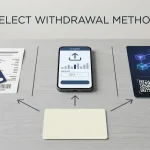
A withdrawal estimate is useful only when you know what it measures. The time a payment method takes to deliver funds is not necessarily the same as the time an operator takes to approve a request. For House of Pokies, treat any stated processing window as something to confirm against the current cashier terms, rather than as a guaranteed arrival time.
One specialist review reports these method-specific ranges: e-wallets, 1–24 hours; credit or debit cards, 3–5 business days; and bank transfers, 5–7 business days or longer. These are reported estimates, not confirmed House of Pokies service times. The difference between methods is clear in that review: e-wallets are listed as the quickest, while bank transfers may take longer. Your actual wait can also include the operator’s review of the withdrawal.
Prepare for identity checks before requesting a payout. KYC verification generally takes place once, often before your first withdrawal. You may need to submit identity documents and proof of address; proof that you own or use the payment method may also be requested. If those checks are incomplete, the payment process can be held up, regardless of the method’s stated delivery range. Routine paperwork, less routine patience.
For a practical comparison, separate the steps:
| Step | What to check |
|---|---|
| Account verification | Whether your identity and address documents have been accepted |
| Payment-method check | Whether evidence for the method used is required |
| Processing estimate | Which method-specific range is stated, and whether it is an operator estimate or a delivery estimate |
Before relying on a House of Pokies withdrawal time, read the current terms and confirm what starts the clock: submitting the request, approval, or release of funds. Keep copies of any documents you submit and check that their details match your account. A delay may relate to verification or processing, so identifying which stage is pending is more useful than comparing the request date alone.
Modern online pokies run on software governed by a Random Number Generator (RNG). In real-money play, the RNG determines the outcome of each spin; a result is not chosen because of what happened on the previous turn. That distinction matters when you are trying to make sense of a short run of wins or losses.
Each spin is independent. A losing streak does not make a win “due”, and a recent win does not make another one more likely. The previous outcome has no influence on the next spin. A sequence can look patterned to a person watching it, but that appearance does not establish that the machine is following a pattern.
This also limits what you can conclude from a brief session. A handful of results cannot reliably tell you what future spins will do, whether a pokie is about to pay, or whether changing your stake will alter the outcome. Those are interpretations, not information contained in the last result. The RNG keeps no sense of balance.
If you are comparing a named game or a real-money pokie experience, separate the game’s stated mechanics from claims about a particular session. Search wording that combines House of Fun, pokies and real-money play does not itself establish that a specific title, feature or offer is available through House of Pokies. Check the actual game information rather than assuming two names refer to the same product.
The useful criterion here is what you can verify: the game rules and the way outcomes are described. Recent results are not a forecasting tool. If you choose to play, set a spending limit in advance and treat each spin as a separate outcome, not a step toward recovering a previous loss.
No streak-reading shortcut.
“Safe” depends on the criterion. For an Australian reader, the key regulatory question is whether the service operates within the rules that apply here—not whether a website looks polished or carries reassuring language. The Interactive Gambling Act 2001 prohibits operators from providing online casino-style gambling to people in Australia.
The Australian Communications and Media Authority (ACMA) enforces that law and monitors compliance with federal interactive gambling rules. It can ask Australian internet service providers to block websites that provide prohibited gambling services or advertise them in Australia. That power is part of enforcement, not a certification process for individual casino brands.
The recorded scale is substantial: following enforcement actions, ACMA has blocked more than 1,455 illegal gambling and affiliate websites since November 2019. Reports differ on the number of illegal services that have left the Australian market since enforcement began in 2017: one figure is more than 210, while another is over 190. Those counts should not be combined or treated as the same measurement.
These figures describe regulatory activity across the market. They do not establish that House of Pokies has been assessed, approved or endorsed by ACMA, and they do not settle whether a particular offshore operator is trustworthy. Nor should you assume that Australian consumer protections will resolve a dispute with an offshore gambling site.
A practical safety comparison therefore has two separate criteria: what Australian law says about the service, and what evidence exists about the specific operator. ACMA’s enforcement record gives clear context for the first; it is not a guarantee about the second. Polished branding proves little.
E-wallet withdrawals can take 1–24 hours, card withdrawals 3–5 business days, and bank transfers 5–7 business days or longer. Crypto, POLi and Neteller withdrawals typically process faster, with POLi and Neteller usually clearing within 24 hours.
Bonus funds are not cash, and winnings from them are subject to wagering requirements. For example, a 35x requirement on a $100 bonus means you must place $3,500 in bets before withdrawing winnings derived from that bonus.
Withdrawal timing depends on the payment method: e-wallets are generally fastest, while cards and bank transfers take longer. Identity checks may also require ID, proof of address and sometimes proof of the payment method.
The Interactive Gambling Act 2001 prohibits operators from providing online casino games to people in Australia; it targets providers, not individual players. Playing on an offshore site does not, on that basis alone, mean you are breaking this law, but offshore location does not make the service authorised.