A practical overview of wallet transfers, casino processing, bonuses, Australian legal boundaries and the risks of Bitcoin play.

A Bitcoin payment has two separate clocks: the casino’s own processing time and the time the transaction takes to move through the blockchain. Keeping those stages separate makes a pending balance easier to interpret. A casino may still be reviewing a withdrawal even though no Bitcoin transaction is visible yet; once it sends the payout, the network’s confirmation time becomes relevant.
After you request a payout, the casino handles it on its side before sending Bitcoin to your personal wallet. The length of this stage depends on the operator’s processing, rather than on Bitcoin confirmations. A specialist review has reported casino-side processing windows of 12–48 hours, but that is one source’s account, not a reliable timetable for every service. Treat it as a reported possibility, not a market-wide standard.
Until the casino broadcasts the transaction, waiting for a blockchain confirmation will not explain the delay: there is no transaction for the network to confirm. An account may show a request as pending or under review during this period. The meaningful change comes when the operator sends the payout and a transaction record becomes available. Then you can distinguish a casino-side hold from a network delay.
Use this list as a starting point when looking for casinos that accept Bitcoin in Australia in 2026. Check each casino’s current BTC availability and payment terms before you deposit.
GoldenCrown
GoldenCrown is listed with a Curacao Gaming Control Board licence, OGL/2023/176/0095, held by Hollycorn N.V.
Lucky Dreams
Lucky Dreams is listed with a Curacao licence and a minimum deposit of A$20 via POLi.
House of Pokies
House of Pokies has an international iGaming licence, though the jurisdiction is not named in the source. PayID payouts are listed at 1–24 hours, and the minimum deposit is A$30, or A$10 when using PayID.
Vegaz Casino
Vegaz Casino is listed with Curacao licence OGL/2024/1335/0780 and a minimum deposit of EUR 20.
Rollero Casino
Rollero Casino is listed with a Curacao Gaming Control Board licence, OGL/2023/176/0095, held by Hollycorn N.V.
MrPacho
MrPacho lists crypto payouts at 30–120 minutes and fiat payouts at 24–72 hours. Its minimum deposit is A$30.
Ricky Casino
Ricky Casino lists crypto payouts in under an hour and PayID payouts in 1–3 business days. The minimum deposit is A$20, or A$30 to qualify for the bonus.
DragonSlots Casino
DragonSlots Casino is listed with a Curacao Gaming Authority licence, associated with Jumpman Gaming Ltd.
Wild Tokyo
Wild Tokyo is listed with a Curacao licence and a minimum deposit of A$10. Its stated payout times are 30–60 minutes for crypto and 1–5 days for fiat.
Kingmaker
Kingmaker lists crypto payouts at approximately 90 minutes and fiat payouts at 1–5 days. Its minimum deposit is A$30.
This separation matters whether you are checking a casino on a desktop or a mobile device. The screen may show a balance or status, but the underlying sequence remains the same: casino processing first, then the blockchain, then receipt in your wallet. A live Bitcoin casino interface cannot make those stages one event. The interface is not the network.
Once broadcast, a Bitcoin transaction waits for confirmation. Specialist reviews have described a single confirmation as taking 10–60 minutes, with congestion and the transaction fee affecting where within that range it may fall. That figure is a reported estimate, not a promise or a fixed duration. Network conditions change, and a transaction’s progress can therefore differ from one payout to another.
A transaction can also appear in a wallet before the casino or wallet treats it as sufficiently confirmed. The distinction is between seeing that a transaction exists and having it counted as settled under the relevant service’s rules. Specialist reviews report that casinos may wait for 1–3 confirmations before crediting deposits. That concerns funds arriving at a casino account; withdrawal handling can involve the casino’s own checks as well as the receiving wallet’s display and confirmation policy. Do not assume that a visible transaction means every service has marked it complete.
 Casinos That Accept Bitcoin Cash (BCH) in AustraliaLearn how Australia’s Interactive Gambling Act 2001 treats online casino operators, and how to check BCH support, bonuses, games and withdrawal terms.
 Casinos That Accept Mastercard in Australia: Key ChecksLearn how Australia’s online gambling rules affect Mastercard deposits, what to verify before paying, and why ACMA enforcement matters for offshore casino…
For a withdrawal, specialist reviews have also reported that Bitcoin can reach a personal wallet within an hour after casino processing. Read that as a reported network-side outcome, not a guaranteed total turnaround. If processing itself takes longer, the wallet cannot receive the payout sooner; if confirmation takes longer, the casino may already have sent it while your wallet still shows it as pending.
When a casino online Bitcoin payout seems slow, check which stage the status describes. A request still being processed points to the casino. A transaction that has been broadcast but has not gained the required confirmation points to the network or the confirmation threshold. A confirmed transaction that does not appear as spendable in the wallet may be subject to the wallet’s own display or handling rules. These are different explanations, not interchangeable labels for “late.”
If the operator provides a transaction identifier, it can help you see whether the payout has been broadcast and whether confirmations are accumulating. That record does not explain why an operator has not yet sent a payment, and it does not promise when the remaining confirmations will arrive. It does, however, help separate an unissued withdrawal from a transaction already travelling through the network.
For a Bitcoin casino in Australia, a mobile-friendly account page may make it easier to check status while away from a computer, but it does not shorten the blockchain process. The same is true if the service presents casino games or a live table beside the cashier: game access and payout timing are separate matters. A fast-looking interface is not evidence of a faster transfer.
A live Bitcoin casino interface cannot make casino processing and blockchain confirmation one event; the interface is not the network.
Think of the full journey as a sequence, not a single countdown: the casino reviews the request, broadcasts the payout, the Bitcoin network confirms it, and the wallet records receipt. The total wait combines the casino’s processing and the network’s confirmation time. A specialist review’s reported processing window and reported wallet-arrival estimate describe different stages; adding them as if they were a guaranteed schedule would be misleading.
For the same reason, an estimated arrival time should be treated as conditional. Congestion and the fee associated with a transaction can affect confirmation, while the casino controls when it submits a withdrawal. If a status has not changed, identify whether the transaction has actually been sent before drawing conclusions from a blockchain estimate. Two clocks. Different causes.
A useful comparison starts by separating what a service claims from what its position in Australia actually means. Crypto casinos do not hold Australian licences and sit outside the country’s regulatory framework. That is a central comparison criterion, not a footnote: an offshore licence, if a site claims to have one, does not make it part of Australia’s domestic system.
 CashtoCode casinos in Australia: acceptance checksLearn why a casino’s CashtoCode listing is not proof of availability, and what must be confirmed for the operator, location and account.
 Casinos That Accept Neosurf in Australia: Payment ChecksLearn how to assess Neosurf payment claims, distinguish deposits from withdrawals, and understand why a listing does not verify an operator or…
The Australian Communications and Media Authority (ACMA) works to restrict access to unlicensed offshore gambling services. It has taken action against multiple operators, including banning them from Australia and blocking their sites. So access is not a dependable measure of legitimacy. A page loading today does not establish that the service is authorised to operate here or will remain accessible.
| Criterion | What to assess | Why it matters |
|---|---|---|
| Australian status | Does the service clearly explain that it operates offshore and outside Australia’s regulatory framework? | Clear wording helps you distinguish a commercial claim from domestic authorisation. |
| Access and enforcement | Is access affected by blocking, or does the service discuss restrictions on Australian residents? | ACMA action means availability can change; a functioning website is not proof of approval. |
| Account and identity rules | Are the account conditions and identity checks stated before you register? | You need to know what information may be required and what could affect access to your account. |
| Payment compatibility | Does the cashier specify the coins and networks it supports for both deposits and withdrawals? | A payment option shown for one transaction type may not necessarily cover the other. |
| General terms | Are the service rules, complaint route and account conditions easy to find and understand? | Vague or hard-to-locate terms make it difficult to judge what you are accepting. |
Treat the table as a screening tool, not a scorecard that can turn an offshore service into a locally regulated one. If Australian status is your deciding criterion, no crypto casino can meet it through an Australian licence: Australia does not issue domestic licences for online casino games. That makes the comparison less about finding a compliant local option and more about recognising the limits and risks attached to offshore services.
There is no single best Bitcoin casino for every reader. If your priority is clarity, favour a service that plainly describes its operating status, account conditions and payment rules. If your priority is predictable access, consider ACMA blocking and enforcement before treating a site’s current availability as a stable feature. If your priority is control over your funds, compare the stated coin and network support before committing money.
These criteria do not cancel one another out. A polished site may still be outside Australia’s framework; a wide choice of payment methods would not settle the question of access; and a claim about an offshore licence is not an Australian licence. The winner depends on what you need, but the status criterion should come first because it defines the limits of every other comparison.
Regulatory Risk
Crypto casinos do not hold Australian licences and operate outside the country's regulatory framework; ACMA may block access to these unlicensed offshore services.
Be cautious with pages that present an offshore service as “Australian licensed” without identifying a valid domestic authorisation. A familiar Australian-facing design, local currency display or available Bitcoin option does not establish that status. Nor does inclusion on a casino list show that ACMA has approved the service. The regulator’s blocking activity points in the opposite direction: offshore availability is subject to enforcement, not a guarantee.
A practical shortlist should therefore record each service’s stated jurisdiction, its explanation of Australian access, the visibility of its rules and whether its payment information is specific enough to check. Remove a service from consideration if essential conditions are unclear rather than filling the gaps with assumptions. That is not a ranking; it is a way to avoid mistaking presentation for protection.
Compare the evidence, not the adjectives. “Best” is a criterion-dependent verdict. The regulatory boundary remains.
A live dealer game may look different from a digital table game: a real person appears on screen and deals cards or spins a wheel. But the legal question in Australia is not whether the dealer is live, whether the table is streamed, or whether you pay with Bitcoin. It is whether an operator is providing an online casino-style game to someone in Australia.
The Interactive Gambling Act 2001 prohibits operators from providing online casino-style games to Australian residents. The games expressly covered include blackjack, roulette, poker and slots. A live presentation does not turn blackjack or roulette into a different kind of service simply because a human dealer is on camera.
Payment method and game offering are separate issues. Bitcoin may be a deposit or withdrawal method at an offshore site, but using it does not alter the rules governing the operator’s provision of casino-style games to Australian residents. The Act does not create a different boundary for a live dealer table paid for with BTC.
That distinction matters when assessing claims about a live casino accepting Bitcoin. A payment option answers only how funds may move; it does not establish that the casino may lawfully offer its games to people in Australia. Nor does an offshore licence amount to an Australian licence. Australia does not provide a domestic licensing route for online casino games offered to residents under an Australian licence.
Using Bitcoin or having an offshore licence does not make the provision of online casino-style games lawful for operators offering them to residents in Australia.
So there is no sound basis for treating a live dealer service as suitable for Australian play merely because it accepts cryptocurrency, advertises an offshore licence, or can be opened from a local device. Access and legality are not the same thing.
If a site describes its tables as live, identify the underlying game rather than relying on the label. A live-streamed blackjack table remains blackjack; a wheel game remains roulette. Those are among the casino-style games named in the Act. The format may affect how the game is presented, but it does not erase the operator’s legal boundary.
Keep the questions distinct:
| Question | What it tells you |
|---|---|
| Does the site accept Bitcoin? | It describes a payment option, not permission to provide games in Australia. |
| Is the table live-streamed? | It describes the game’s presentation, not a separate legal category. |
| Is the underlying game casino-style? | This is relevant to the prohibition on operators offering such games to Australian residents. |
| Does the operator claim an offshore licence? | That claim does not make the service Australian-licensed. |
The table is deliberately plain. Payment branding can be elaborate; the legal distinction is not.
Searches for a live dealer casino that accepts Bitcoin, or for an online casino with BTC payments, often combine two separate interests: the type of game and the way an account is funded. Keep them separate when evaluating what a site says. A Bitcoin option cannot make a prohibited offering permissible, and a live dealer label cannot establish that the service is available lawfully to Australian residents.
Do not treat an accessible website as proof of approval, or use a VPN to get around location restrictions. A site’s ability to load says nothing by itself about whether its operator may provide those games to people in Australia. The relevant boundary concerns the operator and the games it offers, not the coin selected at checkout.
For Australian readers, the key point is therefore not which live casino is “best” for Bitcoin payments. No payment feature changes the legal status of an operator offering online casino-style games to residents. Keep that boundary in view before considering any promotional claim or table format.
A Bitcoin casino deposit bonus can look generous until its conditions determine how much of the balance you can actually use or withdraw. Treat the offer as a set of rules to check, not as extra money. The relevant comparison is between the bonus’s restrictions and the way you intend to play and cash out.
Start with the wagering requirement. It states how much qualifying play is required before bonus funds, or winnings connected to them, can be withdrawn. Check what balance the requirement applies to: the bonus alone, the deposit, or both. Also look for a deadline, if one is stated, and confirm which bets count. If the wording is unclear, do not assume that every wager will contribute.
Next, inspect the game restrictions. Bonus rules may exclude certain games or count play on different games unequally. A promotion described as suitable for Bitcoin slots, for instance, does not by itself establish that every online slot or video slot qualifies. Find the actual eligible-game list and any contribution rules before accepting the offer. If the eligible games do not match what you planned to play, the bonus may be a poor fit even if its headline sounds appealing.
Then find the maximum cashout condition. This determines whether a cap applies to funds or winnings withdrawn after using the promotion. Read whether the cap concerns bonus winnings, the whole balance, or another defined amount. Check what happens to any balance above the stated cap; do not infer the answer from promotional wording.
Payment eligibility needs its own check. Some promotions exclude particular deposit methods, and a Bitcoin deposit may not qualify even where the site accepts Bitcoin for ordinary transactions. Confirm that the exact payment method is eligible, whether the bonus must be claimed before or after depositing, and whether using it affects withdrawals. Also verify that the casino supports Bitcoin withdrawals before sending funds. A deposit route and a withdrawal route are not automatically the same.
For a no-deposit Bitcoin bonus, check the same conditions rather than treating “no deposit” as “no restrictions.” Review wagering rules, eligible games, cashout limits, and any identity-verification conditions. Players must provide identity documents before withdrawals can be processed, so a bonus does not remove that requirement.
A compact comparison helps:
| Term | What to establish |
|---|---|
| Wagering | Which funds count, which bets qualify, and whether a deadline applies |
| Games | Which categories are eligible and how play is counted |
| Cashout | Whether winnings or balances are capped |
| Payment | Whether Bitcoin deposits qualify and Bitcoin withdrawals are supported |
| Verification | What documents are required before a payout |
Do not accept an offer if its key conditions are missing or ambiguous. “Free” is a marketing label, not a description of withdrawal rights. The most suitable bonus is the one whose restrictions you understand and can meet—not necessarily the one with the largest headline.
There is also a legal boundary behind the payment choice: the Interactive Gambling Act 2001 prohibits operators from providing online casino-style games to people in Australia. Bitcoin does not change that rule, and an offshore licence does not make the service part of Australia’s regulatory framework. Check the law as well as the promotion. A bonus cannot fix a bad fit.
The legal question around Bitcoin casinos in Australia is not whether a payment uses BTC. The Interactive Gambling Act 2001 does not specifically name Bitcoin or cryptocurrency. Its focus is the service being provided and the operator providing it, rather than the technology used to transfer funds.
That distinction matters. The Act makes it unlawful for operators to provide certain online casino services to people in Australia. A platform accepting Bitcoin does not avoid that rule simply because its payments use a blockchain, and a crypto payment method does not create a separate legal category for online casinos.
The position of an individual player is different from the position of the operator. Australian law does not specifically prohibit an individual from using an offshore crypto gambling site, and the prohibition under the Act is directed at the entity offering the service. That does not mean an offshore site is authorised to serve people in Australia. A foreign licence is not an Australian licence, and it does not bring an online casino within Australia’s regulatory framework.
In practical terms, the legal risk described by the Act falls on the provider, not on the player for simply accessing an offshore casino. But that distinction should not be mistaken for a sign that a Bitcoin casino is locally approved or protected by Australian regulation. Australia does not issue a domestic licence for online casino games, and ACMA works to block unlicensed offshore gambling sites.
Different sides of the rule.
For someone comparing casino sites that accept Bitcoin, the payment option answers only a narrow question: whether the service processes BTC. It says nothing by itself about whether the operator may lawfully offer online casino gambling to Australians, whether the service is within local oversight, or whether a player can rely on Australian regulatory protections. Those are separate considerations.
This is also why “offshore-licensed” needs careful reading. A licence issued elsewhere may describe the operator’s status in that jurisdiction, but it does not convert the service into one licensed under Australian law. The Interactive Gambling Act’s restriction on operators offering online casino services to Australians remains the central point.
 POLi Casinos in Australia: What Payment Evidence ShowsLearn why a POLi mention does not confirm casino deposit support, and how to assess payment claims, withdrawal restrictions and other options.
 Casinos That Accept Neteller in Australia: What to CheckLearn how to assess Neteller deposit and withdrawal claims and how Australia’s Interactive Gambling Act affects access to offshore casino games.
So, if you are looking at a casino with Bitcoin, separate three issues: the payment method, the operator’s status where it is licensed, and the Australian rules governing the service. Treating them as one question leads to the wrong conclusion. BTC is not the legal switch. The operator and the service are.
ACMA’s blocking activity can also affect access to offshore sites. Do not try to bypass geographic restrictions to reach a blocked service; a payment option does not change the legal status of the offering or remove the practical access restriction. Be clear about the boundary: the law targets the provider, while the fact that a player is not specifically prohibited from using an offshore crypto site is not an endorsement of that site or a claim that it operates legally in Australia.
Payment is not permission.
The coin is only one part of a payment choice. The network matters too: a casino may accept Bitcoin but require it through a particular network, while another route or token format may not be supported. Before choosing, compare the casino’s stated deposit and withdrawal options with the network shown in your wallet. A mismatch can send funds somewhere they cannot be recovered.
Bitcoin’s confirmation time and network fee are separate considerations. A specialist review has reported that a Bitcoin confirmation can take 10–60 minutes, with the wait affected by congestion and the fee attached to the transaction. The same kind of review reported that Bitcoin may take longer to confirm than Litecoin or Ethereum. These are reported observations, not a promise about what a particular payment will take: network conditions change, and a casino may wait for its own required confirmations before crediting an account.
Fees also move with demand. One specialist review reported Bitcoin network charges reaching AUD 10–20 per transaction during peak periods. That is a reported peak, not a standard fee or a forecast. The review also noted that Ethereum fees can exceed Bitcoin’s when the network is busy, while Litecoin may clear with lower fees than either. It described Litecoin as broadly accepted by crypto casinos, but acceptance is not universal; check the specific casino’s supported coins and networks before deciding.
| What you are comparing | What to check |
|---|---|
| Confirmation delay | Whether the casino states how many blockchain confirmations it waits for |
| Network fee | The fee displayed by your wallet before you authorise the transaction |
| Coin and network compatibility | Whether the casino supports the exact coin and network you intend to use |
| Withdrawal route | Whether the same coin and network are available for withdrawals |
The lowest displayed fee is not automatically the best choice if the casino cannot receive that route or return funds through it. Likewise, a faster confirmation estimate is not useful if you select the wrong network. Check the casino’s requirements and your wallet’s network label side by side; never assume that two options with the same coin name are interchangeable.
Crypto prices can change while funds are held, so the value of a deposit or any eventual payout in Australian dollars may shift independently of the network fee. That is a separate cost from sending the transaction.
Treat the final confirmation screen as a last check, not a formality. Crypto transfers are irreversible: funds sent to the wrong address or network may be permanently lost. And choosing a coin does not change Australia’s rules on online casino games. Network choice solves a payment compatibility problem, not a legal one.
Bitcoin changes how money is sent; it does not change what a casino game is under Australian law. A game does not become permissible because a player funds an account with BTC, another cryptocurrency or a conventional payment method. The relevant distinction is between the activity being offered and the way a payment is made.
The Interactive Gambling Act 2001 prohibits operators from providing online casino-style games to people in Australia. The categories named in the Act include slots, poker, blackjack and roulette. The rule concerns the provision of those games, not whether the account uses Bitcoin or whether a game is described as a “Bitcoin game”. A crypto payment is still just a payment route.
That means a search for casino games playable with Bitcoin needs two separate checks. First, identify the game category: does the service offer online casino-style play for money? Then consider the payment method independently. Matching a wallet to a payment option cannot change the legal status of the underlying service. Two games with different themes or interfaces can still fall within the same prohibited category if they are online casino-style games offered to Australian residents.
Online casino-style games remain subject to prohibition under the Interactive Gambling Act 2001 even if they are bundled with other activities or branded as "crypto gaming".
ACMA has responsibilities across gambling activities such as sports betting, lotteries, bingo and casino games. That does not mean every online product labelled “gaming” is treated alike, or that a payment method determines whether it may be offered. The legal question depends on the kind of service and how it is provided. Online casino-style games remain subject to the prohibition even when they are bundled with other activities or presented through a crypto-focused site.
Australia does not issue a domestic licence for online casino games. So a Bitcoin casino should not be treated as an Australian-licensed service simply because it accepts Australian customers or displays a foreign licence. A payment feature is not a local authorisation.
If you are comparing game descriptions, read past labels such as “casino”, “arcade” or “crypto gaming”. Look at whether the product involves online casino-style play for money, including the named categories. The wording on a site may be broad; the legal category is not decided by its branding.
Keep the comparison criteria separate: game type tells you what is being offered, while Bitcoin tells you how funds may move. Neither should be used as a shortcut for the other. Different labels; same boundary.
Using Bitcoin for casino payments does not remove the financial and account risks of gambling. Separate the tax treatment of a gambling result from the tax treatment of the cryptocurrency itself: they are not the same thing.
The ATO generally treats recreational gambling winnings as windfalls rather than income, so those winnings are generally not taxable. That does not mean every later transaction involving the Bitcoin is automatically tax-free. The ATO treats cryptocurrency as an asset for capital gains tax purposes.
If you acquire BTC, use it for gambling, then withdraw BTC and later sell it for more than its relevant cost base, the increase may have CGT consequences. Keep records that let you distinguish the gambling outcome from any change in Bitcoin’s value while you held it. The useful comparison is between the value of the gambling result and the later price movement—not simply whether the funds originally came from a casino.
A Bitcoin balance is not a fixed-value balance in Australian dollars. Its value can rise or fall between a deposit, a withdrawal and a later sale. A displayed win in BTC may therefore be worth less in AUD by the time you convert it; a deposit may also lose value while you hold it. That exposure sits alongside the gambling risk, not in place of it.
Crypto transfers are irreversible. A mistaken transaction can mean a permanent loss, so price checks do not replace careful handling of funds. Keep gambling money separate from money needed for ordinary expenses, and do not treat a temporary price gain as a guaranteed return.
If you are registered with BetStop or a state-based self-exclusion program, you must also self-exclude directly with each offshore platform you use. Registration in one scheme does not itself enrol you with every offshore operator. If gambling is causing harm, Gambling Help Online can provide support.
Registration with BetStop or state-based programs does not automatically enrol you with offshore platforms; you must self-exclude with each operator directly.
The legal boundary is separate from the payment method: the Interactive Gambling Act 2001 prohibits operators from providing real-money online casino-style games to people in Australia. Using Bitcoin does not change that rule, and an offshore licence is not an Australian licence. The Act primarily targets the service provider; it does not make an Australian player’s use of an offshore crypto site a criminal offence.
Treat access, account controls and finances as separate checks. If you choose to engage with an offshore service, do not assume that a self-exclusion registration elsewhere will protect you there, or that a BTC balance will hold its AUD value. Two risks, not one.
Before sending Bitcoin, check that the casino accepts it for deposits and supports it for withdrawals. Open the cashier’s deposit option, select Bitcoin and copy the designated address. Compare the address shown in your wallet with the casino’s details before confirming: a transaction sent to the wrong address cannot be reversed.
Also check the required network. The asset and network selected in your wallet must match the casino’s instructions; a mismatch can permanently cost you the funds. Send only after checking both details, and keep the transaction record so you can verify its status on the blockchain.
A specialist review describes offshore casino deposits as being credited after blockchain confirmations. Some operators may allow play once a deposit is detected, before it is fully confirmed, but that depends on the operator’s rules; detection is not the same as final settlement. Read the cashier’s instructions rather than assuming instant access.
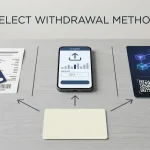
For a withdrawal, enter a wallet address you control and check it carefully before submitting the request. Confirm that the casino will pay out in Bitcoin, and that the chosen network matches the receiving wallet. A wrong address or network can mean permanent loss. The platform may also require identity documents before processing a withdrawal, so check its verification requirements and complete them through its stated process.
Crypto transfers are not a substitute for checking whether a service may lawfully offer casino games to people in Australia. The Interactive Gambling Act 2001 prohibits operators from providing online casino-style games to Australian residents; using Bitcoin does not change that rule. Australia does not issue a domestic licence for online casino games.
Treat each transfer as a deliberate payment, not a reversible card purchase. Verify the address, network and withdrawal support before funds leave your wallet.
Bitcoin changes how a casino account may be funded; it does not change what the game is under Australian law. The Interactive Gambling Act 2001 explicitly prohibits operators from providing online casino-style games, including slots, to people in Australia. Paying in BTC rather than Australian dollars does not remove that prohibition.
“Bitcoin slots” and “Bitcoin pokies” describe a payment option attached to a game, not a separate legal category. A site may present familiar reels and crypto balances, but the relevant distinction is whether an operator is offering online slots to Australian residents. The currency used to deposit or withdraw does not decide that question.
There is no Australian licence for online casino games. So the phrase “licensed Bitcoin casino” needs careful scrutiny: a foreign licence is not an Australian authorisation to provide slots to people in Australia. Nor does a site appearing online establish that its service is lawful here or that it has been verified for Australian players.
Keep the legal point separate from payment mechanics. A Bitcoin balance may be displayed in a casino account, but that does not make the underlying slot service permissible. Likewise, calling a game a “pokie,” a crypto game or a provably fair game does not change its classification if it is an online casino-style slot offered to someone in Australia.
If you encounter a site promoting BTC slots, do not treat the payment method or a claimed offshore licence as proof of local approval. The operative issue is the offer of the game to Australian residents, not whether the site accepts Bitcoin. The distinction is simple. The consequences are not.
Crypto casinos do not hold Australian licences and operate outside Australia’s regulatory framework. The Interactive Gambling Act targets operators offering online casino games to Australians; it does not explicitly mention cryptocurrency.
Bitcoin casinos may accept Bitcoin, Litecoin and Ethereum. Litecoin is widely accepted across crypto casinos, while Bitcoin and Ethereum transaction times and fees can vary.
Australian players are not specifically prohibited from using offshore crypto gambling sites. The Interactive Gambling Act’s prohibition is directed at operators offering online casino games to Australian residents.
Yes. You request a payout to your Bitcoin wallet address; the casino must process it before broadcasting the transaction. Casino processing has been reported to take 12–48 hours, and the transfer may reach your wallet within an hour after processing, depending on network conditions.