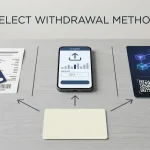
Payment methods, operator processing, bonus conditions and withdrawal limits can all affect when winnings reach an account.

Payment speed depends partly on the route used, but a fast payment method does not make an unlawful service lawful. In Australia, operators are prohibited from providing real-money online casino games—including slots, poker and table games—to people located in the country. This comparison is therefore informational, not a recommendation to use an offshore casino.
A specialist review of payment options for Australian players describes bank transfers, debit cards, PayPal and Skrill as methods that may be offered, with cryptocurrency available at some operators. The options are not interchangeable: a method that accepts a deposit may not be available for sending winnings back. Credit cards also require a clear distinction: credit card payments must not be accepted for online gambling services in Australia.
PayPal and Skrill are e-wallets. A specialist review reports that e-wallet transactions can be completed within hours rather than days. That makes them comparatively quick on the payment side, but the claim is not a guarantee and does not tell you how long an operator will take before releasing a withdrawal. E-wallet availability also depends on the specific service and account.
For a simple comparison, an e-wallet’s advantage is the reported transfer speed after a withdrawal has been approved. Its limitation is that it must be supported for withdrawals, not merely deposits. A payment logo on a deposit page does not settle that question.
A traditional bank transfer can take longer to reach an account. One specialist review gives a possible completion window of up to five business days. Treat that as a report about a possible timeframe, not a fixed promise for every bank or transaction. Bank processing can differ, and the withdrawal still depends on the operator releasing the funds.
Bank transfers may suit someone who wants funds sent directly to a bank account and is less focused on speed. If timing matters, compare the stated withdrawal timeframe with the payment method itself. A quick bank network cannot shorten time spent waiting for the sender to approve a payment.
Debit cards may appear among payment options described for Australian players, but their presence does not mean a withdrawal can be returned to the same card. The operator’s stated withdrawal policy determines whether a card can receive funds or whether another route is required. Credit cards should not be treated as an available gambling payment option in Australia.
This distinction matters because payment pages often present deposit methods most prominently. Before assuming a card is a cashout route, check whether the terms explicitly list it for withdrawals. If they do not, the apparent convenience may stop at the deposit stage.
Neosurf and similar prepaid vouchers are generally described in specialist reviews as deposit options rather than withdrawal destinations. A voucher can help load an account, but it does not necessarily provide a way to receive a cashout. You may need a different supported method for any return payment.
That makes prepaid vouchers a poor fit if your main criterion is a straightforward withdrawal route. Check the withdrawal options before depositing; discovering that a method only works in one direction is a dull surprise.
Some operators are reported to offer cryptocurrency, and a specialist review describes crypto transactions as capable of being near-instant. That refers to the transaction characteristic, not an assurance that a withdrawal request will be released immediately. Support for a particular currency, wallet and withdrawal route can vary, so the label alone does not establish the full process.
If you compare only reported transfer speed, e-wallets and cryptocurrency may appear faster than traditional bank transfers. If you compare whether a method can actually receive a withdrawal, the operator’s terms matter more than its deposit menu. A method can be quick in principle yet unavailable for cashouts—or wait for approval before any payment begins.
For Australian readers, the legal position comes first: real-money online casino services are prohibited when offered to people in Australia. The practical distinction among payment methods does not change that. And “instant” describes, at most, the payment phase after release; it should not be read as a promise that the entire request-to-receipt process is immediate.
Legal Prohibition
In Australia, operators are prohibited from providing real-money online casino games, including slots, poker and table games, to people located in the country.
A withdrawal has two separate clocks: the time an operator takes to review and release a request, and the time the payment system or bank takes to deliver the funds. The amount of time shown for a payment method may describe only the second stage. It does not necessarily tell you when the casino will approve the request.
First, the operator receives the request and checks whether it can be processed. That may involve confirming your account details, reviewing the transaction and completing identity checks. A specialist review notes that first withdrawals can prompt requests for identity documents. If you have not completed verification, or if the information supplied does not match your account, the request may wait while the operator asks for more information and reviews your response.
After approval, the operator sends the payment through the selected provider. Only then does the provider or bank’s processing time begin. An e-wallet may receive a released payment within 24 hours, whereas a card payment or bank transfer can take several days. These are different time windows, not competing promises: a relatively short provider processing period cannot make up for time spent waiting for operator approval.
When an offer describes an “instant” withdrawal, check what event starts that clock. It may mean that a payment is transmitted quickly once approved, rather than that money arrives immediately after you press the withdrawal button. The distinction is practical. A request submitted outside an operator’s review window, or one held for additional checks, can remain pending before the payment provider has anything to process.
The full timeline can also depend on the operator’s review process, the payment route, and whether further information is required. A specialist review identifies several factors as relevant to casino payment speed; the label attached to a method is therefore only one part of the timing picture. Banks and providers may also have their own processing steps after release.
Look for separate wording about approval and delivery in the terms. “Processed” can mean that the operator has approved or sent a payment, not necessarily that the funds are already available in your account. If the status changes to approved but the balance has not updated, the remaining wait may sit with the payment provider or bank. If the request is still pending, the delay is more likely to be at the operator stage.
For a quick win casino withdrawal time, the useful question is not simply how fast a method sounds. It is how long the request may take to clear review, and what timing applies after release. A casino with quick withdrawal claims should make that distinction clear. If the terms provide only one overall speed claim, you cannot tell which stage it covers.
Keep your account information accurate and respond promptly if documents are requested. Completing identity verification before you need to withdraw can reduce avoidable back-and-forth on a later request, although it does not remove the payment provider’s processing time. For Australian readers, this is general information about timing; real-money online casino services are prohibited when provided to people physically located in Australia.
Two clocks. Different owners.
A balance shown on screen does not automatically mean every dollar is ready to withdraw. If a promotion is attached to slot play, the terms may require wagering before the bonus-related funds become eligible for cashout. The key distinction is what the requirement applies to: the bonus alone, or the bonus together with your deposit.
Wagering Calculation
A specialist review describes bonus-only wagering as preferable to requirements covering both the deposit and bonus, as including the deposit increases the total amount subject to the condition.
A specialist review of bonus conditions describes bonus-only wagering as preferable to a requirement covering both the deposit and bonus. The reason is the calculation base: when the deposit is included, more funds may be subject to the condition. Read the wording carefully rather than relying on a short promotion label. “Wagering applies to the bonus” and “wagering applies to the deposit and bonus” describe materially different conditions.
Before playing with an offer, find out how the platform separates cash funds from bonus funds, and which part of the balance is subject to wagering. Check whether the terms explain when funds become withdrawable and how progress is displayed. If the account shows a single total, do not assume that the full figure is available to cash out; confirm what portion is eligible under the offer rules.
The same check matters after a slot session. A win can increase the displayed balance without resolving an outstanding wagering condition. Treat the balance and withdrawal eligibility as separate questions: the first is what the account displays, while the second depends on the applicable terms and completed wagering.
Look for the specific wording attached to the promotion, not just a headline promising extra play. Confirm whether wagering applies to bonus funds only or to the combined deposit and bonus, what activity counts toward completion, and whether any other offer conditions affect eligibility. If the terms are unclear, ask the operator to explain them before accepting the bonus or continuing to play.
Also check what happens if you decline or leave an offer unfinished. Do not assume that a bonus can be removed without affecting the balance or that a withdrawal request automatically cancels all conditions. Those outcomes depend on the terms. A useful comparison is therefore not simply “how quickly can winnings be paid?” but “what must be completed before these funds qualify for withdrawal?”
Choosing a payment method cannot make funds eligible while a wagering condition remains unmet. First establish whether the amount is withdrawable under the promotion rules; only then does the payment route become relevant. This keeps two separate issues from being confused: conditions on the funds and the time taken to transfer eligible funds.
There is an important Australian context. The Interactive Gambling Act 2001 prohibits operators from providing real-money online casino games, including slots, to people located in Australia. This section is not an offer to play or a recommendation to use an offshore service. The practical point is narrower: wherever bonus terms are being assessed, read the full conditions before treating slot winnings as ready for withdrawal.
A quick cashout claim is no substitute for clear eligibility rules. If the bonus wording leaves you unsure whether the deposit is included, pause and get clarification rather than assuming the most favourable interpretation. That is the better criterion for judging whether a displayed win is actually ready to withdraw.
A withdrawal policy has three separate parts: the route funds can take back to you, the amount you may request at once, and any charges attached to the transaction. A “quick withdrawal” claim tells you little about those conditions. A payment may move promptly after approval and still be constrained by the operator’s rules.
Operators generally expect funds to go back to the method used to deposit, where that route is available. This can make the choice of deposit method relevant later: a method that accepts deposits may not be able to receive withdrawals. If the original route cannot be used, the operator’s terms should explain what alternative is permitted.
Keep the destination consistent with your casino profile. Players should withdraw only to accounts linked to that profile, and changing the destination can prompt additional checks. Use the same PayID details for a withdrawal as for a deposit made with PayID; a mismatch can trigger a security review. That is a routing condition, not a question of how quickly the payment network moves funds.
Before depositing, check whether the method is eligible for both directions. If you have already deposited, read the withdrawal instructions before submitting a request rather than assuming you can nominate any account. A route that looks convenient at the deposit stage may be less useful at cashout.
An operator may set a maximum for an individual withdrawal, as well as a minimum amount that can be requested. A report by *FilmInk* notes that casino policy can restrict withdrawal amounts. Treat the published terms as the controlling reference, not a general claim about payout speed.
There may also be a separate cap on the total you can cash out over a stated period. A specialist review has reported weekly or monthly limits that apply in addition to per-transaction maximums. Check how the policy describes both: a request can fall within the single-withdrawal ceiling and still be affected by a broader limit.
Where a large withdrawal is released in instalments under the operator’s policy, the total balance and the amount sent at each stage are not the same thing. Read the wording for the actual release schedule and any conditions. Do not infer a limit from a payment-method description; the operator’s terms determine what it will authorise.
A fee can reduce the amount that reaches you, even when the requested withdrawal is approved. Check whether the terms describe a charge by the operator, a payment-provider fee, or both, and whether the amount depends on the route. If the wording is unclear, ask for the applicable charge before confirming. “Free” should be explicit, not an assumption based on the absence of a fee on the deposit page.
A useful comparison records the withdrawal route, minimum and maximum per request, any period-based cap, possible fees, and rules for returning funds to the original method. Those criteria matter more than a speed label when you need to know what amount can actually be sent and where it can go. The winner depends on your priority: flexibility of destination, fewer charges, or a limit that fits your intended cashout.
These details are practical, but they do not change the legal position in Australia: the Interactive Gambling Act 2001 prohibits operators from providing real-money online casino games to people physically in the country. Terms and payment descriptions are not an endorsement or a route around that prohibition.
When quick withdrawals matter, you should check the stated payout methods and timings before choosing a casino. This list gives you the available withdrawal, deposit and licence details for each operator.
GoldenCrown
GoldenCrown is listed with a Curacao Gaming Control Board licence, OGL/2023/176/0095, held by Hollycorn N.V.
Lucky Dreams
Lucky Dreams lists a Curacao licence and a minimum deposit of A$20 via POLi.
House of Pokies
House of Pokies lists PayID payouts in 1–24 hours and an international iGaming licence, though the jurisdiction is not named. Its minimum deposit is A$30, with PayID deposits available from A$10.
Vegaz Casino
Vegaz Casino lists Curacao licence OGL/2024/1335/0780 and a minimum deposit of EUR 20.
Rollero Casino
Rollero Casino is listed with a Curacao Gaming Control Board licence, OGL/2023/176/0095, held by Hollycorn N.V.
MrPacho
MrPacho lists crypto payouts in 30–120 minutes and fiat payouts in 24–72 hours. Its minimum deposit is A$30.
Ricky Casino
Ricky Casino lists crypto payouts in under an hour and PayID payouts in 1–3 business days. The minimum deposit is A$20, or A$30 to qualify for the bonus.
DragonSlots Casino
DragonSlots Casino is listed with a Curacao Gaming Authority licence held by Jumpman Gaming Ltd.
Wild Tokyo
Wild Tokyo lists crypto payouts in 30–60 minutes and fiat payouts in 1–5 days. It also lists a Curacao licence and a minimum deposit of A$10.
Kingmaker
Kingmaker lists crypto payouts at approximately 90 minutes and fiat payouts in 1–5 days. Its minimum deposit is A$30.
PayID can make the transfer stage of a withdrawal quick, but it cannot make the entire process instant. The distinction matters: a payment network can move money rapidly after a provider sends it, while the operator may still need to review and approve the request first.
PayID is Australia’s bank-to-bank payment system, operating through the New Payments Platform (NPP). Transfers sent through the Osko network are processed in real time. That describes the movement of funds between accounts; it does not set the time an operator takes to release a withdrawal.
A specialist review of Australian payment options reported withdrawals taking under five minutes at the fastest PayID operators, compared with one to three business days for standard bank transfers. Treat those figures as reported results, not a general service standard or a promise about any particular transaction. The comparison is useful for one criterion only: the payment phase after approval. If a request is waiting for an operator’s decision, the speed of the bank transfer has not yet become relevant.
Verification Tip
Completing identity verification before you need to withdraw can reduce avoidable back-and-forth and delays on a later request.
The same kind of review described automatic approval for withdrawals below $5,000 AUD at some top-tier operators. That is a reported practice, not a rule built into PayID. It does not mean every request below that amount will be approved automatically, nor that approval removes other checks. Policies and processing arrangements can change, so a speed claim should be read alongside the operator’s current terms.
This separation gives you a practical way to assess a claim. Ask what the stated time measures: submission to approval, approval to arrival, or the whole request-to-receipt period. “Instant” may refer only to the transfer after release. If a page does not explain that boundary, its headline is doing more work than its detail.
There is also a legal context specific to Australia. The Interactive Gambling Act 2001 prohibits operators from supplying real-money online casino games, including slots and table games, to people located in Australia. PayID’s availability as a bank payment service does not change that restriction or make a casino transaction lawful for an operator to provide. The payment technology and the service using it are separate matters.
Where a withdrawal process is described, the PayID identifier must match the details used for the deposit to avoid a security review, and funds should go only to an account linked to the player profile. A mismatch can add a review stage before any transfer begins. PayID cannot speed up that check; it only handles the bank-to-bank movement once funds are released.
For a meaningful speed comparison, keep two clocks in view: the time before release and the transfer time afterward. PayID’s advantage concerns the second clock. The first remains dependent on the operator’s process and applicable checks. Fast rail, separate gate.
For Australians, the first distinction is legal, not technical: under the Interactive Gambling Act 2001, operators must not provide real-money online casino games to people in Australia. The payment routes below describe how services may be presented, not an endorsement or invitation to use them.
Some specialist reviews report that certain real-money platforms have offered instant banking through providers such as POLi. That label describes a banking connection, not a promise that a withdrawal will arrive immediately. A provider may be available for deposits without being available for cashouts, so the payment method shown in a deposit menu does not establish that it can receive a withdrawal.
Attention: An "instant banking" label describes the banking connection and does not guarantee that a withdrawal will arrive immediately, as the operator must still complete its own checks.
If a service lists an instant banking option for payouts, check the exact route and the conditions attached to it. The operator must complete its own checks before releasing money; only after approval does the payment channel become relevant. A fast bank connection cannot shorten a review that has not yet finished. The word “instant” has a narrow job.
You should also confirm that the destination account is yours and linked to your profile. Casinos must verify identity through KYC procedures before processing withdrawals. If documents are requested, unanswered requests or mismatched account details can interrupt the process, regardless of how quickly the banking provider moves funds. Completing identity verification early can significantly speed up later withdrawals, because the operator is less likely to need to begin that check at the point you ask to cash out.
POLi is therefore worth treating as a possible banking route, not as evidence of a guaranteed payout speed. The relevant comparison is between the full withdrawal process and the payment phase after release. If the operator has not approved the request, a fast transfer network has nothing to transfer.
A specialist review has described cryptocurrency transactions as capable of near-instant movement. That can make crypto appear attractive when the criterion is the time taken for a released payment to travel. But the same distinction still applies: a casino’s internal approval comes before the transaction reaches a network, so a quick transaction does not make the entire request-to-receipt process instant.
Before considering this route, check whether the service supports crypto withdrawals as well as deposits, and whether the withdrawal destination must match details already attached to your account. The payment method’s presence on a cashier page does not, by itself, answer either question. Keep the details accurate and complete any identity checks promptly; verification can affect when a withdrawal is approved, even when the eventual transfer is rapid.
The practical winner depends on what you mean by “fast.” If you are comparing how quickly funds can move after approval, crypto may offer near-instant transactions according to specialist reporting. If you mean the time from submitting a request to receiving funds, neither crypto nor instant banking removes the operator’s review stage. A payment label is not a clock for the whole process.
For any route, read the service’s stated withdrawal terms rather than relying on a speed claim alone. Confirm that the method accepts withdrawals, that your account details meet the operator’s requirements, and that identity verification is complete. These checks do not make a payment network faster; they reduce avoidable pauses before a payment can be released.
A balance labelled “real money” does not by itself establish that the full amount is ready to withdraw. If a bonus was accepted, its terms may still restrict a cashout until the attached wagering requirement has been completed. Check the account’s bonus status and the applicable terms before submitting a withdrawal request.
The key distinction is what the wagering condition applies to. A specialist review describes two possible structures: wagering may be calculated on the bonus funds alone, or on the deposit and bonus combined. The first is the more favourable structure for a player because it does not add the deposit to the amount that must be wagered. The wording matters; a headline offer cannot tell you which calculation applies.
Read the conditions for the specific bonus you accepted. Look for the definition of eligible wagering, whether the requirement applies to bonus funds or the combined balance, and what happens to funds if you withdraw before completing it. Do not assume that a cash balance is unrestricted simply because it appears separately from bonus funds on screen. If the terms are unclear, seek clarification before requesting payment rather than relying on an interpretation that may not match the operator’s rules.
A payment method cannot make funds withdrawable while an active bonus condition remains unmet. Once you have confirmed that all applicable wagering requirements are complete, review the balance and bonus status again before proceeding. Small screen labels can carry large consequences.
There is also an important Australian context: providing real-money online casino games to people in Australia is prohibited under the Interactive Gambling Act 2001. This includes casino-style games such as slots and table games. The information above explains how bonus conditions can affect withdrawal eligibility; it is not an endorsement or invitation to use an online casino service.
A payout label is not a complete comparison. In Australia, real-money online casino games are prohibited services when offered to people in the country, so this is not a recommendation to use an offshore platform. If you are assessing a withdrawal policy, read its limits, fees and processing language together rather than treating “instant” as a measure of the whole request.
Start with the stated minimum and maximum withdrawal amounts. A specialist review reports that some PayID operators publish these limits clearly; check the relevant terms yourself, since policies can change. Also look for separate caps that apply over a period, as well as conditions that may affect how much can be requested in one transaction. A limit that is easy to find is more useful than a speed claim without practical detail.
Next, check fees. A report by filmink.com.au notes that a fee may apply to PayID withdrawals. The important comparison is not simply whether a fee exists, but whether the terms say when it is charged and how it affects the amount you receive. If the fee information is absent or unclear, the stated payout speed tells you little about the full cost.
Then separate operator approval from the payment stage. “Instant” may describe the movement of funds after release, not the time from submitting a request to receiving money. A specialist review reported cases where withdrawals promoted as instant took up to 24 hours because of internal review. That is a useful reminder to look for wording about review and approval, not just the payment method.
A practical comparison therefore has three columns: published limits, disclosed fees, and the point from which the quoted processing time is measured. If the terms explain all three, you can judge the policy more clearly. If they mention speed but leave the limits, charges or approval stage vague, the claim is incomplete.
No single policy is “best” for every reader. A lower fee may matter more to you than a faster payment phase; clear limits may matter more than either. Compare the criteria that affect your own decision, and do not mistake a promotional speed label for a promise about the full withdrawal process.
A “no verification” claim can sound like a promise that a cashout will proceed without identity checks. It is safer to treat it as a marketing label, not a dependable description of the withdrawal process. Casinos must verify a player’s identity before processing withdrawals, and a specialist review reports that the first withdrawal can prompt a request for verification.
That request can arise even if you have already used an account to play. A payment request and an identity check are separate parts of the process: submitting a withdrawal does not itself establish that the account holder’s identity has been confirmed. If a check is still outstanding, the casino may not process the withdrawal until it is complete.
Completing identity verification early can significantly speed up later withdrawals. The practical difference is readiness: if the casino has already completed its check, that step is less likely to interrupt a future request. If you wait until you want to withdraw, the check may become an additional task at that point.
Read the casino’s verification requirements and follow its stated process before relying on any claim about withdrawals without checks. Do not assume that an account can receive a payout simply because registration or deposits were accepted. A “no verification” headline does not override the requirement to verify identity before processing a withdrawal.
For Australian readers, there is also a legal distinction that should not be obscured by payment language. The Interactive Gambling Act 2001 prohibits operators from providing online casino-style games, including slots and table games, to people in Australia. A claim about verification does not change that position or make a real-money casino service lawful.
The useful test is therefore not whether a platform uses the words “no verification”. It is whether its withdrawal terms explain identity checks clearly and whether you understand that verification may be required, particularly before a first withdrawal. Completing checks ahead of time can reduce one avoidable source of delay later. The label is not the process.
An “instant” label on a slot cashout does not mean money reaches you the moment you submit a request. It may describe only the payment stage after the operator has reviewed and approved the withdrawal. Until that approval happens, the request can remain pending, even if the advertised transfer method is designed to move funds quickly.
A specialist review reported cases in which sites promoted instant withdrawals but took as long as 24 hours because of internal checks. That is a reported example, not a reliable timetable for every service. The useful question is what the stated time actually covers: submission to approval, or approval to receipt. Those are different measures.
The review stage can involve checking account details, transaction activity or identity documents. First-time KYC checks are among the delays identified in specialist reporting. Casinos must verify a player’s identity before processing withdrawals, so having requested documents ready may help avoid preventable back-and-forth. It cannot guarantee immediate approval.
The same reporting identifies withdrawals above $2,000 and bank processing windows as possible sources of delay. Operators must disclose a manual review process for withdrawals exceeding $2,000. A bank’s processing window is separate from the operator’s decision: approval does not itself ensure that the receiving account is credited straight away. The word “instant” does not erase either stage.
For a clear comparison, look for separate descriptions of review time and transfer time, and check whether the stated speed applies to slot withdrawals or only to a payment method in ideal conditions. A broad promise without those details tells you little. Dry, but important.
There is also a legal point specific to Australia: the Interactive Gambling Act 2001 prohibits operators from providing real-money online casino games, including slots, to people physically in Australia. A promotional claim about a quick slot cashout should not be read as an endorsement or assurance that such a service is lawful or available. If you encounter one, treat its advertised timing as a claim, not a guarantee.
Compare the time needed for approval with the payment method’s delivery time, and check that the method is supported for withdrawals—not just deposits. Review verification requirements, withdrawal limits and any fees; real-money online casino services are prohibited when offered to people in Australia.
The total time includes both the operator’s review and the payment provider’s delivery. Once released, e-wallet payments may arrive within 24 hours, bank transfers can take up to five business days, and cryptocurrency transactions may be near-instant; identity checks can delay a first withdrawal.
Options described include bank transfers, debit cards, PayPal, Skrill and, at some operators, cryptocurrency. PayID and POLi are also mentioned as banking options; prepaid vouchers such as Neosurf are generally for deposits, while credit cards must not be accepted for online gambling services in Australia.
They are casinos that aim to make cashouts straightforward, with clear withdrawal terms and supported payment methods. A fast payment method does not make an online casino service lawful in Australia, where real-money online casino services are prohibited.