Follow how SOL moves from an Australian exchange to a casino and what to check about deposits, bonus terms, withdrawals and tokens.

For an Australian player, the route from dollars to a Solana casino generally has several steps: add AUD to an exchange, buy SOL, send it to the casino’s deposit address, and later withdraw SOL back to a wallet or exchange before converting it to AUD. Most Solana casinos do not take AUD deposits by bank transfer or card, so the exchange is the practical on-ramp.
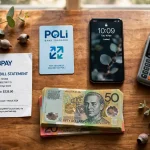
Start by choosing an Australian exchange that supports AUD deposits and SOL withdrawals. Swyftx, CoinSpot and Coinbase AU support AUD funding through PayID or bank transfer. The exact payment options and account steps depend on the exchange, so check them before transferring money.
Expect KYC checks when opening or using an exchange account. On-ramp and off-ramp services that convert between SOL and AUD are subject to KYC/AML requirements. You may need to provide identity details before the exchange lets you deposit, trade or withdraw. That is part of using the exchange, not a casino deposit requirement; an offshore casino may have its own checks as well.
Once AUD has arrived, you can place an order to buy SOL. The amount shown in your exchange balance is not necessarily the amount that will arrive at the casino: check the withdrawal screen for any exchange-side charges and the final SOL amount. SOL’s price can move between purchase and withdrawal. It can also move while winnings are held in SOL, reducing their AUD value before you cash out.
At the casino, locate the deposit instructions and confirm that the selected asset is SOL on the Solana network. Copy the displayed address carefully, then compare it with the address in your exchange withdrawal form. Do not assume an address for another coin or network will work. SOL transfers are irreversible: if you send funds to the wrong address, they may be permanently lost.
Check any minimum deposit and make sure the amount you send meets it after exchange charges. If the casino requires a memo or other identifying detail, follow its instructions exactly. Keep the withdrawal confirmation from the exchange and the transaction record. These details can help you trace a transfer, but they cannot reverse one.
After you submit the withdrawal, the exchange may show it as pending before broadcasting it to Solana. A network confirmation is only one step: the casino must also recognise and credit the deposit. If the balance has not updated, check the transaction status and casino instructions before sending a second payment. Repeating a transfer without understanding the first one can create a larger problem, not a faster fix.
A casino withdrawal reverses the route: request SOL to a wallet or exchange address you control, then sell it for AUD and withdraw the proceeds through the exchange’s available method. Verify the destination address and network before confirming. A casino’s “approved” status does not mean the SOL has arrived; check the transaction and the receiving wallet separately.
Casino-side handling can take longer than the Solana transfer itself. Published withdrawal information describes automated processing in the range of 5–15 minutes, while manual processing may take as long as 72 hours. These are not promises for a particular operator or transaction. Internal review, congestion and account checks can affect timing. Some casinos also charge their own withdrawal fee; inspect the terms and the amount shown before confirming.
Larger withdrawals or bonus-related cash-outs may trigger KYC checks requiring identity documents. If a platform asks for verification, that can delay access to funds. Read the withdrawal terms before depositing, including any conditions that could apply to a cash-out, rather than waiting until a withdrawal is pending.
An exchange account and an offshore casino account are separate services. Passing KYC at an exchange does not verify the casino, guarantee that it will process a withdrawal, or give you recourse if it withholds funds. Offshore casinos are prohibited from providing online casino games to Australian residents under the Interactive Gambling Act 2001; the absence of a player prosecution does not make using one legally safe. Australian players also lack legal protection if an offshore casino freezes an account or withholds winnings.
Avoid treating a wallet connection or a fast transaction as proof that the whole payment route is dependable. Do not use a VPN to get around a platform’s access rules: doing so may lead to account seizure and loss of funds. Before sending anything, confirm the asset, network, address, minimum deposit and cash-out conditions. Small details matter here.
Choosing a Solana casino in Australia calls for checking the available licensing and payment details, not just the games. Use these notes as a quick reference when deciding what to look into further.
GoldenCrown
GoldenCrown lists a Curacao Gaming Control Board licence, OGL/2023/176/0095, held by Hollycorn N.V. Check the licence details as part of your review.
Lucky Dreams
Lucky Dreams lists a Curacao licence and accepts POLi deposits from A$20. That gives you a concrete payment option and minimum to check.
House of Pokies
House of Pokies lists an international iGaming licence, though the source does not name the jurisdiction. PayID payouts are stated at 1–24 hours, and deposits start at A$30, with PayID from A$10.
Vegaz Casino
Vegaz Casino lists a Curacao licence, OGL/2024/1335/0780. Its stated minimum deposit is EUR 20.
Rollero Casino
Rollero Casino lists a Curacao Gaming Control Board licence, OGL/2023/176/0095, held by Hollycorn N.V. You can use the licence information as a point to verify.
MrPacho
MrPacho states crypto payouts of 30–120 minutes and fiat payouts of 24–72 hours. Its minimum deposit is A$30.
Ricky Casino
Ricky Casino states crypto payouts under 1 hour and PayID payouts in 1–3 business days. The minimum deposit is A$20, or A$30 to qualify for the bonus.
DragonSlots Casino
DragonSlots Casino lists a Curacao Gaming Authority licence under Jumpman Gaming Ltd. That licensing detail is the available point to consider.
Wild Tokyo
Wild Tokyo lists a Curacao licence and a minimum deposit of A$10. Its stated payout times are 30–60 minutes for crypto and 1–5 days for fiat.
Kingmaker
Kingmaker states crypto payouts of about 90 minutes and fiat payouts in 1–5 days. Its minimum deposit is A$30.
A comparison is useful when it separates observable terms from promises. For an Australian reader, that means checking how a platform describes withdrawals, fees and bonus conditions, then deciding which of those criteria matters most. A table can make differences easier to see. It cannot turn an offshore casino into a safe or legally authorised choice.
That distinction matters here: the Interactive Gambling Act 2001 prohibits offshore operators from providing online casino games to people in Australia. A comparison does not change that position. Nor does the absence of a reported prosecution make using an offshore casino legally safe. If an operator freezes your account or withholds winnings, you have no legal protection under Australian law.
A stated withdrawal time is only one part of the process. Ask whether the casino explains when a request is reviewed, what happens after approval, and whether its published estimate refers to internal handling or the network transfer. A specialist review notes that withdrawal timing can depend on both the operator’s processing and network congestion. That is why a fast blockchain should not be treated as proof of a fast payout.
Look for terms that distinguish a pending request from a completed transfer. Check whether the site describes conditions that can delay or prevent withdrawal, and whether it applies a fee. Record the exact wording and date you checked it; terms can change, and a comparison made from old information can give a false impression of consistency.
A casino’s own payout estimate is not a guarantee that funds will arrive by that time. Platform-side approval remains outside your control. Larger withdrawals or bonus-related cash-outs may also trigger KYC checks requiring identity documents. If the operator has not made its withdrawal and verification policy clear, that uncertainty is itself a comparison point—not a reason to assume the process will be straightforward.
A low stated network fee says little about fees imposed by the casino. Check whether the operator deducts a withdrawal charge, how it calculates that charge, and whether the terms differ by payment asset or withdrawal method. Compare like with like: a fee expressed as a percentage is not directly comparable to a fixed charge without considering the amount being withdrawn.
Also account for the possibility that SOL’s market price changes between deposit and withdrawal. The number of coins returned and their value in Australian dollars are different measures. A comparison can record the stated fees and supported assets, but it cannot predict the value of SOL when you cash out.
A large bonus figure is not a measure of usable value. Check what funds the offer applies to, what must be wagered before winnings can be withdrawn, which games count toward that requirement, and whether a deadline or maximum cash-out cap applies. These conditions work together. A generous headline can be narrowed by restrictive playthrough terms or a cash-out ceiling.
Winnings generated from bonus funds must be wagered with real money before withdrawal. That makes the distinction between bonus balance and withdrawable balance essential: funds shown in an account are not necessarily available to cash out.
A specialist review describes assessing bonus value by considering playthrough, game contribution, time limits and maximum cash-out caps together. Use that same logic when comparing offers. If a casino does not state one of those conditions clearly, mark it as unclear rather than filling the gap with an assumption. The apparent winner can change once every condition is counted.
There is no single “best” Solana casino for every reader. If your priority is a clearly described cash-out process, compare the withdrawal terms first. If you are considering a bonus, compare its complete conditions rather than the advertised amount. If fee clarity matters most, look for explicit charges and rules that explain when they apply.
Even a careful comparison has limits. It cannot verify that an operator will honour its terms in a future dispute, guarantee a cash-out, or provide recourse if the platform closes. Offshore operators offer limited consumer protection, and Australian authorities cannot recover funds for you if they are withheld. A VPN may also lead to account seizure and loss of funds, so it is not a workaround to rely on.
Treat the comparison as a record of what you can check, not a safety certificate. Read the cash-out terms before depositing, and do not send funds on the assumption that a ranking, bonus or advertised processing estimate guarantees their return. A comparison can make trade-offs visible. It cannot remove them.
The key legal distinction is between buying or holding SOL and using it to gamble. Australians can legally acquire, hold and transfer SOL. That does not make an offshore casino’s services lawful to provide in Australia. Under the Interactive Gambling Act 2001, overseas operators are prohibited from offering online casino services to people in Australia. The rule applies to the service, not to the cryptocurrency used to fund it.
The Act’s focus is the operator rather than the individual player. Australian punters are not directly penalised under it merely for using an offshore casino. That difference matters, but it is not a declaration that the activity is lawful or safe. A lack of player prosecutions does not override the prohibition on operators providing casino services to Australian residents.
The Australian Communications and Media Authority (ACMA) enforces the Act, including by seeking to block access to unlicensed offshore gambling websites. ACMA also maintains a public Gambling Prohibition Register. A blocked site may be harder to reach, but a block is not a guarantee that every offshore site is unavailable, nor does access to a site establish that its service is permitted.
For you, the practical point is that an offshore operator may be outside the Australian system of oversight and complaint handling. If it freezes an account or withholds winnings, you have no legal protection under Australian law through which to compel payment, and Australian authorities do not provide the consumer recourse available for a locally regulated service. If the platform closes, recovering funds may be difficult or impossible. Fast blockchain transfers do not change that position.
Using a VPN may also expose you to account seizure and loss of funds. It does not turn a prohibited service into a lawful one or create Australian consumer protections. Access is not approval.
Legal Risk
Offshore casinos are prohibited from providing online casino games to Australian residents under the Interactive Gambling Act 2001, leaving players without legal protection if funds are withheld.
As of mid-2026, a specialist review of the Australian market reports that no specific licensing framework for crypto-gambling operators has materialised. That should not be read as a regulatory gap that makes these services acceptable. The Interactive Gambling Act still prohibits overseas operators from offering online casino games to people in Australia, whether deposits are made in SOL or another asset.
A licence issued overseas, if an operator claims to hold one, does not amount to Australian authorisation. Nor does accepting SOL establish that a platform has been assessed by an Australian regulator. A site’s own description of its status is not a substitute for local legal permission.
This distinction is important when comparing Solana casinos: a comparison may describe visible features, but it cannot make an offshore operator legally safe for an Australian resident. It cannot promise that an account will remain open or that a withdrawal will be honoured. The legal and consumer-protection risks remain even if a platform is accessible and a transaction appears to work.
Treat the legal position as a threshold issue, not a box to tick after choosing a site. Australian law permits you to hold and transfer SOL; it does not permit overseas operators to provide online casino services to Australian residents. The fact that the Act targets operators rather than punters reduces the player’s direct exposure to penalties, but it does not remove the risks of using an offshore service or create a route to recover funds if things go wrong.
A slot bonus is not the same as withdrawable money. If a casino credits bonus funds to your balance, any winnings made from those funds may still have to meet a wagering requirement before you can cash out. The displayed balance can therefore include money that remains conditional. Check how the offer defines bonus funds, winnings and withdrawable funds before accepting it.
The key calculation is the wagering base. A requirement may apply to the bonus amount, the deposit, or both; those rules produce different totals. For a clear illustration, a specialist review describes a 40x requirement on a 5 SOL bonus. That means 200 SOL in qualifying bets must be placed before withdrawal. The number is a worked example, not a standard offer across Solana casino sites.
A slot’s contribution rate determines how much of each qualifying bet counts towards clearing the requirement. Slots typically count at 100%, so a qualifying slot bet contributes its full amount. Table games such as blackjack or roulette may count at only 10–20%. This matters even if you intend to focus on slots: the offer’s rules determine which games qualify and how much they count.
Do not assume that the contribution rate is the only restriction. Read the terms for excluded games, any bet-size rules and the deadline for completing playthrough. A generous-looking bonus can be less useful if your preferred play does not qualify, or if only part of each bet counts. The multiplier alone is not the whole calculation.
Free spins need a separate check. Their winnings may be added as bonus funds rather than cash, then carry their own wagering condition. A specialist review describes one offer with a separate 50x requirement on free-spin winnings; that is an example of a term to look for, not a claim about every offer. Find out whether the condition applies to the winnings, how those winnings are credited, and whether they can be withdrawn before the requirement is met.
Bonus Wagering Example
Identify the Base
Determine the bonus amount, such as 5 SOL.
Apply the Multiplier
Multiply the bonus by the requirement (e.g., 40x).
Calculate Total Bets
Determine the total qualifying bets needed, which in this case is 200 SOL.
Read the bonus terms in this order: identify the wagering base, check the slot contribution rate, confirm how free-spin winnings are treated, then look for exclusions and time limits. Also check whether clearing the requirement makes the full balance withdrawable or whether another condition applies. If the terms do not explain these points plainly, the bonus value is difficult to assess.
Keep bonus funds and cash funds distinct in your own calculation. A balance that looks larger after a bonus is credited does not mean the same amount is ready to leave the account. The useful comparison is not the headline bonus, but the amount of eligible slot betting needed to satisfy its stated rules.
The arithmetic is simple. The terms are not.
The label “NFT casino” does not, by itself, establish what an NFT does on a platform. It does not prove that an NFT is required to access a service, affects gameplay, represents a share of an account, or can be exchanged for cash. Those are separate claims, and each needs clear support in the operator’s own terms. Without that detail, treat the label as a description, not evidence of a feature or benefit.
If a site presents an NFT as part of its offer, look for a precise explanation of its role before you deposit. The terms should say what you would receive or hold, whether any use depends on maintaining that asset, and what happens if the platform changes its offer or closes. If the explanation is vague, you cannot reliably assess what the NFT adds—or whether it adds anything at all. A polished page is not a substitute for specific terms.
Separate the NFT claim from the payment route. A casino may refer to Solana and NFTs in the same promotion, but that does not establish how the NFT relates to a SOL deposit, a casino balance or a withdrawal. Nor does the presence of an NFT demonstrate that winnings can be cashed out through it. Check the cash-out conditions independently and read them before depositing, not after a balance appears on screen.
The same caution applies to claims about ownership or value. A token or NFT label does not, on its own, establish that you control an asset outside the platform, that another party will buy it, or that it has a stable price. Do not treat a promotional description as proof of those points. If the operator does not explain the arrangement plainly, the practical value remains uncertain.
This uncertainty sits alongside the broader risks of using an offshore casino. Under the Interactive Gambling Act 2001, offshore operators are prohibited from providing online casino games to Australian residents. The fact that a platform uses Solana or mentions NFTs does not make its service legally safe for Australians. Offshore operators also offer limited consumer protection, with no Australian-authority recourse if funds are withheld or a platform closes.
Before sending funds, remember that SOL transfers cannot be reversed; a mistaken address can mean permanent loss. SOL’s price can also move between deposit and withdrawal, reducing the Australian-dollar value of winnings. Larger withdrawals or bonus cash-outs may prompt KYC checks requiring identification, so check the operator’s stated process in advance. Using a VPN may lead to account seizure and loss of funds.
Attention: SOL transfers are irreversible, and a mistaken address can lead to the permanent loss of your funds.
A useful comparison is therefore not “which NFT casino has the most impressive claim?” It is “which claims can you verify in written terms, and what remains unclear?” If the NFT’s purpose, conditions or relationship to cash-out cannot be established, leave that uncertainty out of your deposit decision. The label alone proves little.
A Solana casino may accept SOL, and a specialist review reports that some platforms also accept USDC on Solana for deposits and play. That gives you two payment assets to check, not a universal choice across every site. Confirm the accepted asset and network in the casino’s cashier before sending anything: a token with the right name on the wrong network is not a substitute for the specified payment route.
The network-fee figure is small. One reported average for a Solana transaction is US$0.00025, a near-zero charge in ordinary terms. But that is a network fee, not a full measure of what a deposit or withdrawal costs you. It does not establish whether a casino charges its own fee, what an exchange charges to buy or sell an asset, or what conversion rate applies when you move between crypto and AUD. Check each part separately rather than treating “low network fee” as “no cost.”
SOL and USDC also expose you to different asset-price considerations. SOL’s AUD value can move between deposit and withdrawal, so winnings measured in SOL may be worth less in Australian dollars by the time you cash out. Using USDC does not remove the need to check the platform’s rules or the transaction details; acceptance alone says nothing about withdrawal conditions. The useful comparison is therefore not just the fee per transfer, but the asset you must hold, the casino’s stated charges, and the value you may receive when converting back.
Crypto transfers are not reversible. Check the destination address and selected network before confirming; a transfer to the wrong address can mean permanent loss. A successful network transfer also does not guarantee that the casino will credit or release funds on your preferred schedule. Larger withdrawals or bonus cashouts may trigger KYC checks requiring ID verification, so read the cash-out terms before depositing, not after a balance appears.
There is no risk-free option here. Offshore casinos are prohibited from providing online casino games to Australian residents under the Interactive Gambling Act 2001, and an absence of prosecutions does not make their use legally safe. If an operator withholds funds or closes, you have no recourse through Australian authorities. A low transaction fee does not soften that point.
Dice-style play can make the difference between a blockchain transaction and a casino’s own handling especially visible. A specialist review reports that Solana transactions can confirm in around 400 milliseconds, with balances updating as soon as confirmation appears. That describes activity on the network, not a promise that an offshore platform will credit a deposit or approve a withdrawal at the same pace.
A casino has its own steps between receiving a transaction and showing funds in your account. A withdrawal also has to be initiated and released by the operator before the network can process it. The time you experience therefore reflects both the platform’s internal queue and conditions on Solana. A quick confirmation cannot make a slow casino review quick. Separate clocks.
Solana network transactions are reported to confirm in around 400 milliseconds with an average fee of US$0.00025, though this does not include casino-side processing times.
The network fee is reported at an average of US$0.00025 per transaction, a near-zero cost by comparison with many payment methods. But a low fee does not remove the larger risks. SOL transfers cannot be reversed: if you send funds to the wrong address, they may be lost permanently. Check the destination carefully before confirming.
Nor does a fast balance update mean the funds are protected. Offshore casinos are prohibited from providing online casino games to Australian residents under the Interactive Gambling Act 2001. The law focuses on operators, but that does not make using an offshore site legally safe. Australian players have no legal protection if an operator freezes an account, withholds winnings or closes. A VPN may also lead to account seizure and loss of funds.
KYC checks can add another delay. A casino may request identity documents before releasing a larger withdrawal or bonus cashout, so read its cash-out terms before depositing, not after a win. Even if a platform processes a payout promptly, SOL’s price can move between deposit and withdrawal, reducing the winnings’ value in Australian dollars.
When assessing a dice casino that uses Solana, separate the network’s confirmation time from the operator’s decision time. Look for clear withdrawal steps, stated KYC conditions and terms that explain when funds can be held. Those details are more useful than a claim about instant play. A fast chain is not a fast cashier.
A bonus wagering requirement is only part of the calculation. The game you choose can determine how much of each bet counts towards clearing it, so the same bonus terms can create a very different workload across casino games.
Slots typically count their full bet towards wagering. Table games such as blackjack and roulette may count only a fraction: the stated contribution can be 10–20%. If a game contributes 10%, for instance, only a small share of your stake advances the requirement. A table-game session can therefore clear the same bonus more slowly than slot play, even when the money wagered is similar.
The distinction matters when comparing Solana casino games. A large contribution percentage is not automatically a better deal, and a low one does not make a bonus worthless. The relevant question is how much eligible wagering you must complete, using the games you actually intend to play. If you prefer table games, terms that appear generous on the headline may be less useful when those games contribute less.
A specialist review reports one set of terms with a 35x requirement applied to the bonus alone. That wording matters: a requirement calculated on the bonus is not the same as one calculated on the bonus plus your deposit. Check the stated basis before comparing offers; the multiplier alone does not tell you the total playthrough.
A sound comparison also accounts for game contribution, any time limit, and a maximum cashout cap. These conditions affect whether winnings can be withdrawn and how much qualifying play is needed. A bonus that looks larger can have less practical value if your preferred games count at a lower rate or a cap restricts the cashout.
Put the conditions side by side: requirement basis, eligible games, contribution rate, expiry, and cashout cap. Then judge the offer against your own play pattern, not its headline figure. A casino comparison cannot make those terms interchangeable; the better fit depends on which games count and what you are willing to wager to clear the bonus.
Read the full bonus rules before opting in. If a game is excluded or its contribution is unclear, do not assume every bet moves the requirement forward. The headline is the easy part.
The word “token” can describe a balance shown inside a casino account, but it does not tell you whether that balance can be withdrawn, what it is worth outside the platform, or how a tax outcome is assessed. Treat a displayed casino token and SOL as separate things unless the operator’s terms clearly explain their relationship. A label is not a cash-out.
The Australian tax distinction matters when gambling with SOL. Recreational gambling winnings are generally not taxable as ordinary income, but SOL is treated as an asset for capital-gains purposes. That means a gain connected with gambling using SOL may create a capital gains tax obligation, even though recreational gambling winnings are generally not taxed. The two rules address different things: the gambling result on one hand, and changes in the value of a crypto asset on the other.
That difference can be easy to miss when a balance moves between a wallet and a casino account. Keep records of relevant SOL transactions and values so you can assess the asset-related tax position; do not assume that a win is automatically tax-free because it came from recreational gambling. Nor does a token shown by an operator automatically inherit SOL’s treatment. Its tax position depends on what the token represents and how it is handled.
Losses need equal care. A specialist tax review describes gambling losses as deductible against gains only where the player qualifies as a professional gambler, a status that is difficult to establish. Do not build a plan around offsetting losses unless you have confirmed that the rule applies to your circumstances with appropriate tax advice.
There is also a practical value gap between a casino balance and money in your hands. SOL’s price can move between the time you deposit and the time you withdraw, reducing the AUD value of a winning balance. A platform-issued token may have its own terms, but its name alone cannot establish convertibility or a reliable cash-out value.
So compare three things separately: the asset used for play, any token credited by the casino, and the amount you can actually withdraw. They are not interchangeable tax or payment categories. Keep the records. Check the terms.
A specialist review puts minimum SOL deposits in a range of 0.01 to 0.1 SOL, equivalent to approximately AUD$2.80–$28 at April 2026 prices. Treat that as a dated estimate, not a fixed market standard: the AUD value moves with SOL, and each operator sets its own threshold. A low entry amount says nothing about whether you can withdraw smoothly.
Read the cash-out terms before depositing. Check the minimum withdrawal, any operator fee, processing conditions and whether bonus-related rules could restrict a payout. Larger withdrawals or bonus cashouts may trigger KYC checks and a request for identification. If you cannot accept those terms before sending funds, do not rely on being able to resolve them after a win.
SOL transfers are irreversible. Check the address and network carefully; a transfer to the wrong address can mean permanent loss. SOL’s price can also fall between deposit and withdrawal, reducing the AUD value of winnings even if the casino balance has increased. A displayed balance is not the same as money received in your bank account.
There is a separate legal issue: under the Interactive Gambling Act 2001, offshore operators are prohibited from providing online casino games to Australian residents. Using one is not legally safe simply because a player has not been prosecuted. Offshore operators offer limited consumer protection, and Australian authorities cannot provide recourse if funds are withheld or the platform closes. A VPN may also lead to account seizure and loss of funds.
The minimum deposit is only the first figure to check. The cash-out conditions matter more.
Australians can legally buy, hold and transfer SOL, but the Interactive Gambling Act 2001 prohibits offshore operators from providing online casino services to Australian residents. Individual players are not directly penalised under the Act, but using offshore casinos is not legally safe and you have no Australian legal protection if a casino withholds your funds.
You typically buy SOL with AUD through an Australian exchange, then transfer it to the casino’s Solana deposit address to play. To cash out, you request SOL to a wallet or exchange address you control and can sell it for AUD through the exchange.
Buy SOL on an Australian exchange, then select SOL on the Solana network in the casino’s deposit instructions and send it to the displayed address. Check the address, any required memo and the minimum deposit before confirming, as transfers to the wrong address may be permanently lost.
Minimum SOL deposits typically range from 0.01 to 0.1 SOL, approximately AUD $2.80–$28 at April 2026 prices. Check the casino’s deposit instructions and account for any exchange-side charges before sending.
Some Solana casinos also accept USDC on the Solana network. Check the casino’s deposit instructions to confirm which assets and networks it supports.